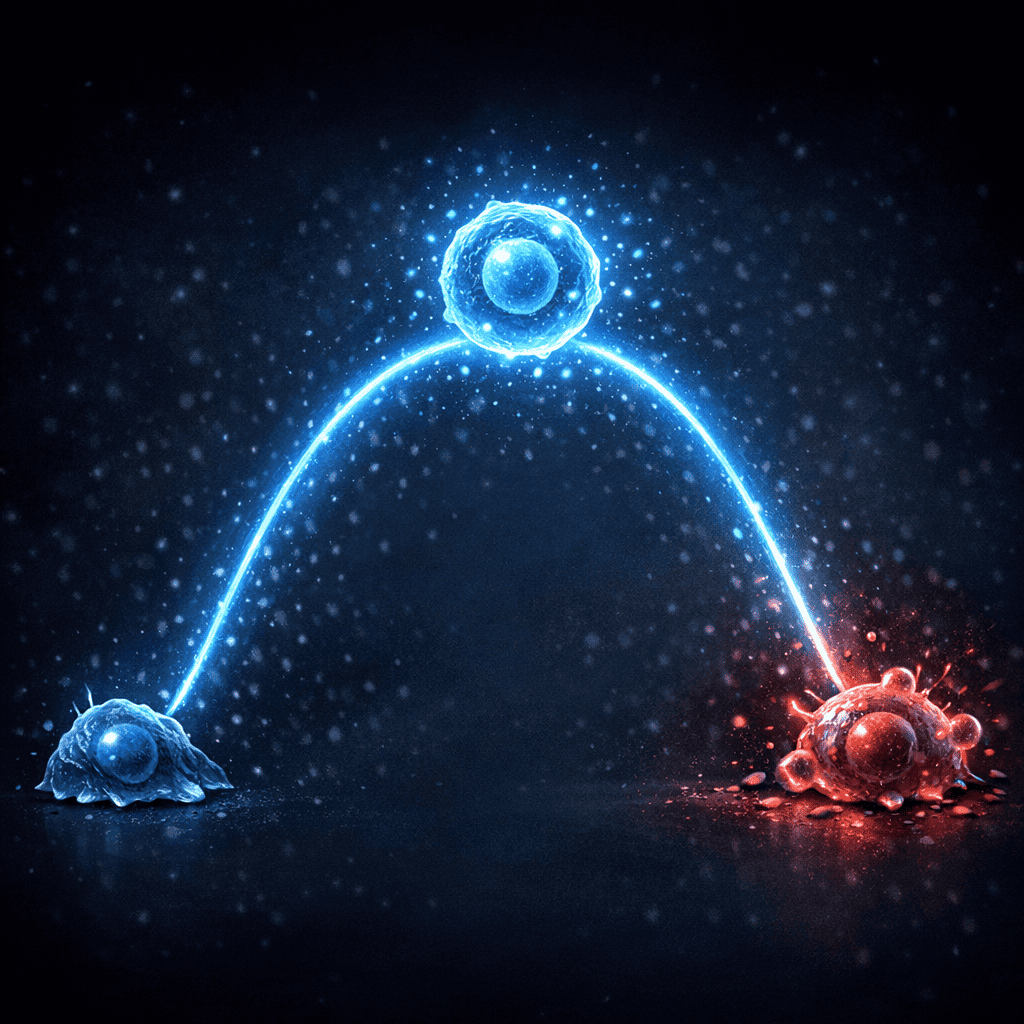

Liver cancer cells behave like con artists. They’ve learned to flip switches inside themselves that should trigger their own death, then they hide from the immune system by manufacturing molecules that look like white flags. Researchers studying a red pigment called astaxanthin have started mapping exactly which switches these cancer cells are flipping, and what happens when astaxanthin intervenes in those conversations.
What is astaxanthin
Astaxanthin is a carotenoid, the same class of pigment that makes carrots orange and flamingos pink. You’ll find it in salmon, shrimp, and certain algae. Unlike beta-carotene or lycopene, astaxanthin has an unusual chemical structure: it sits right at the membrane boundary where water meets fat, letting it intercept free radicals at the most critical locations inside cells.
The molecule works through a dual mechanism. First, it donates electrons directly to stabilise free radicals, converting them to harmless molecules. Second, and this is where the cancer research gets interesting, astaxanthin appears to activate key regulatory proteins that control whether a cell lives, divides, or dies. In liver cancer cells specifically, researchers have been tracking how astaxanthin affects the signalling pathways that normally force damaged cells into programmed death.
What the research shows
In laboratory studies on hepatocellular carcinoma cells, astaxanthin treatment triggers a cascade of events. Cancer cells show increased markers of apoptosis, which is the biological equivalent of a cell self-destructing in an orderly fashion. The pigment appears to do this by activating pro-death signalling pathways while simultaneously suppressing anti-death pathways that cancer cells usually depend on.
Research indicates astaxanthin influences the ERK/MAPK pathway, a fundamental communications route that cancer cells hijack to tell themselves to keep dividing. When astaxanthin enters the picture, this pathway seems to downshift. Simultaneously, the molecule activates p53 signalling, which researchers call the “guardian of the genome” because it forces cells with DNA damage into shutdown mode. Cancer cells have usually disabled p53’s ability to work, so getting this pathway active again is significant.
In some studies, astaxanthin also reduced expression of survival proteins like Bcl-2, which normally act like life support systems for cells. Without these proteins backing them up, cancer cells become vulnerable to death signals they would normally ignore. The pigment additionally appears to reduce inflammatory signalling molecules that create a protective microenvironment around tumours.
Why cells need this
The mechanisms astaxanthin engages evolved to defend healthy cells against oxidative damage. Your liver processes everything you eat and drink, which generates enormous amounts of free radicals as a byproduct. Cells that can’t neutralise these radicals accumulate DNA damage, which creates inflammation and pushes cells toward either death or transformation.
Over millions of years, evolution built sophisticated systems to handle this. When a liver cell detects oxidative stress, it activates transcription factors like NRF2, which open up defence genes. It also maintains constant surveillance for DNA damage through p53 pathways. These systems work in parallel: reduce oxidative stress through antioxidants, and eliminate cells that have already been damaged.
Cancer cells have essentially sabotaged these systems. They’ve mutated p53 or found ways to inactivate it, they’ve turned up signalling pathways that keep them dividing, and they’ve learned to suppress the inflammatory alarm that would normally alert the immune system. Astaxanthin’s activity is interesting precisely because it tries to reactivate these abandoned defence mechanisms. It’s not attacking the cancer cell directly so much as reminding it that it should be dead.
What affects astaxanthin activity
Concentration matters significantly. Laboratory studies typically use doses that deliver substantial amounts of astaxanthin directly to cells in culture. How those doses translate to whole organisms remains unclear. Cell culture is a controlled environment where astaxanthin reaches every cancer cell efficiently, which isn’t how biology works inside a living body.
The presence of other antioxidants influences astaxanthin’s effectiveness. Some research suggests that when cells are already protected by multiple antioxidant systems, adding astaxanthin produces less dramatic effects. This makes biological sense: if oxidative stress is already low, there’s less work for the antioxidant to do, and the cell may not experience the metabolic changes that trigger the signalling cascades researchers observe.
Cell type variation is real. Hepatocellular carcinoma cells respond differently than other cancer types. The genetic background of the cells matters too. Cancer cells with functional p53 might respond better to astaxanthin because that pathway is still available to be reactivated. Cells that have lost p53 entirely might be resistant, since that death switch isn’t just turned off but permanently deleted.
What remains unknown
The biggest gap is bioavailability. What percentage of astaxanthin actually reaches cancer cells in a living organism? How does the liver’s own metabolism affect the molecule? Does astaxanthin degrade before reaching where it needs to go, or does it interact with other liver compounds in ways we haven’t measured?
Resistance is another open question. If astaxanthin works in cell culture, why don’t we see dramatic tumour shrinkage in animal models? Cancer cells are notorious for developing workarounds. Do they mutate to ignore the signalling pathways astaxanthin activates? Do they upregulate other survival signals that compensate?
The off-target effects need serious investigation. Astaxanthin affects many cell types, not just cancer cells. Could it interfere with normal liver function or immune cell activity at the concentrations needed to impact tumours? Most importantly, we don’t know whether the effects researchers observe in cultured cells represent something meaningful for actual cancer progression in patients.
What this points toward
Astaxanthin research illustrates why oxidative stress and cancer signalling are inseparable. Cancer cells don’t just mutate randomly; they mutate specifically to suppress the defence mechanisms that would kill them. Understanding which signalling pathways cancer cells have disabled, and which molecules might reactivate them, is central to how researchers approach treatment discovery.
The pigment itself might prove useful, but the real value lies in understanding the signalling architecture it exposes. Each pathway astaxanthin influences is a potential target for other interventions. Each cancer cell’s resistance mechanism is information about which pathways actually matter in that particular cancer. Studying how molecules like astaxanthin work is how we map the communication systems inside cancer cells, and that map is the foundation for developing more effective strategies to disrupt them.

Matt Elliott is the editor of Redox News Today, an independent publication covering peer-reviewed research on cellular health, redox signalling, and related biomedical science.