Cancer treatments work by overwhelming tumour cells with damage they cannot repair. But some cancer cells have learned to turn this attack against them into a survival advantage. They hijack the same stress response systems that normally protect healthy cells, using oxidative stress and a molecular alarm system called NF-κB to become virtually indestructible.
What is oxidative stress and NF-κB signalling
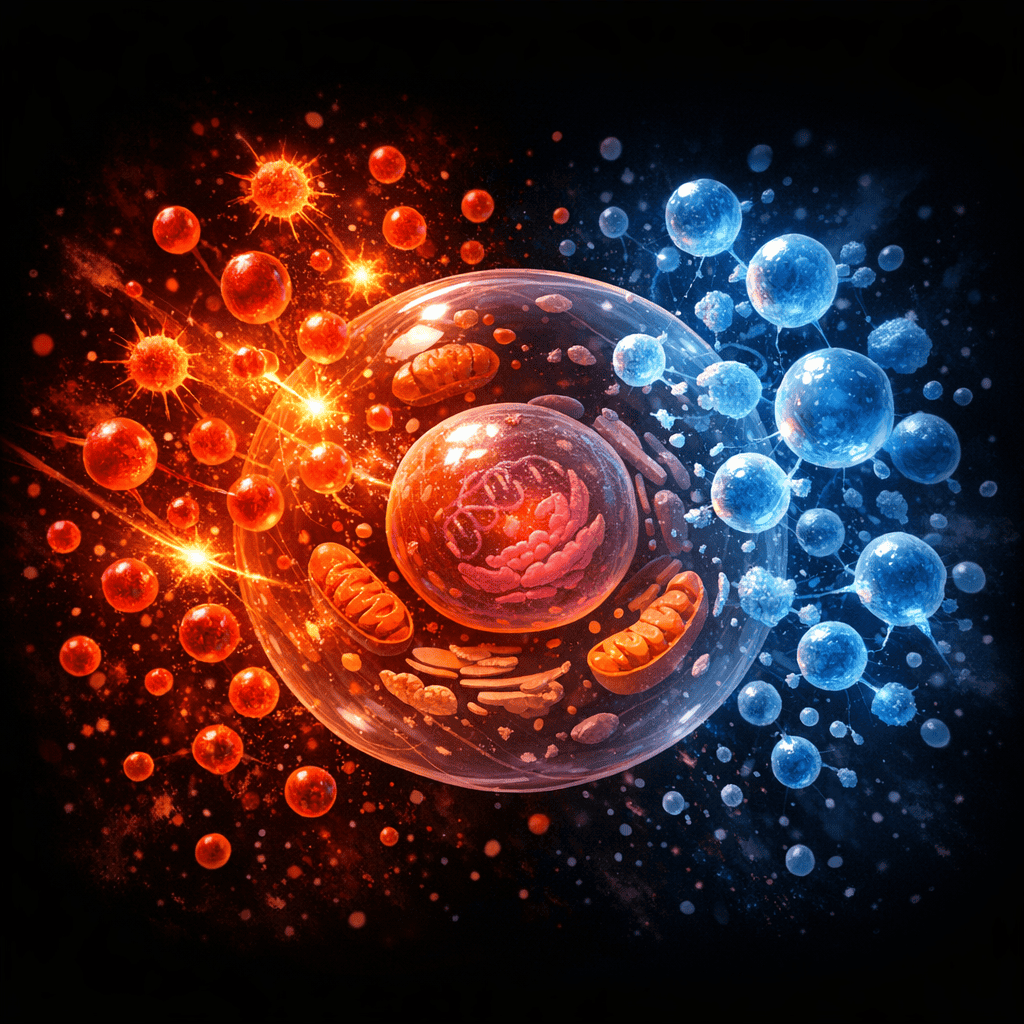
Oxidative stress happens when cells produce more reactive molecules than their antioxidant systems can handle. Think of it like rust forming on metal. These reactive molecules, called free radicals, can damage DNA, proteins, and cellular membranes if left unchecked.
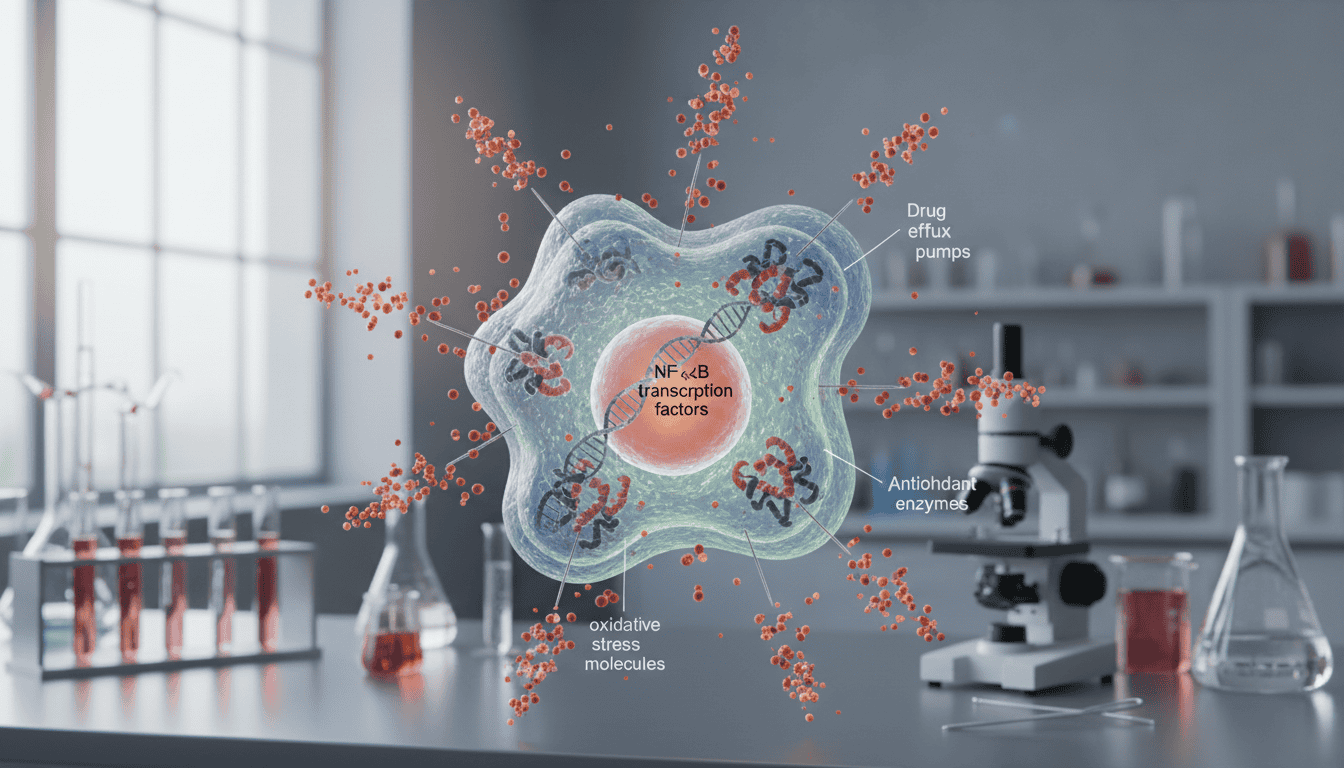
NF-κB acts like a cellular fire alarm. When cells detect threats including oxidative stress, infection, or DNA damage, they activate this signalling pathway. NF-κB then rushes to the cell nucleus and switches on genes that help the cell survive. It activates anti-death programmes, ramps up DNA repair systems, and triggers inflammation to call for backup.
In healthy cells, this system works perfectly. Stress triggers NF-κB, the cell either recovers or dies cleanly, and balance returns. Cancer cells exploit this system. They keep NF-κB constantly active, giving them superhuman resistance to the very treatments designed to kill them.
What the research shows
Scientists have observed cancer cells performing a cellular sleight of hand. When chemotherapy or radiation creates oxidative stress, instead of dying as intended, these cells activate NF-κB more strongly. The pathway then switches on multiple resistance mechanisms simultaneously.
Studies show that cancer cells with active NF-κB produce more antioxidant enzymes to neutralise treatment-induced damage. They also pump out drugs faster through increased expression of efflux proteins. Some cells even activate DNA repair systems that fix chemotherapy damage almost as quickly as it occurs.
Researchers have tracked this process in real time using fluorescent markers. They can watch as treatment-resistant cancer cells light up with NF-κB activity within hours of receiving therapy. The cells that survive treatment consistently show the highest levels of this signalling.
Perhaps most concerning, this stress-induced activation creates a feedback loop. Surviving cancer cells often become even more resistant to subsequent treatments, suggesting they learn and adapt from each therapeutic assault.
Why cells need this system
Evolution designed oxidative stress responses and NF-κB signalling as essential survival tools. Without them, cells would have no defence against environmental toxins, infections, or the oxidative damage that naturally occurs during normal metabolism.
The system makes biological sense. Cells that can detect threats early and mount rapid defensive responses survive better than those that cannot. NF-κB activation allows cells to quickly coordinate multiple protective strategies rather than relying on single defence mechanisms.
This ancient survival system predates complex life forms. Even bacteria have similar stress response pathways. The problem emerges when cells that should die refuse to do so. Cancer represents a corruption of these normally beneficial systems.
What affects oxidative stress and NF-κB in cancer
Several factors influence how strongly cancer cells activate these resistance pathways. The tumour’s local environment plays a major role. Areas with poor oxygen supply or high inflammation tend to select for cells with hyperactive stress responses.
Different cancer treatments trigger varying levels of oxidative stress and NF-κB activation. Some chemotherapy drugs create massive oxidative damage but also strongly activate resistance pathways. Radiation therapy similarly floods cells with reactive molecules while potentially strengthening survival signalling in cells that escape initial damage.
The timing of treatment matters too. Research suggests that rapidly dividing cancer cells may be more vulnerable to oxidative stress when their DNA repair systems are already stretched thin. However, they also activate NF-κB more readily during these vulnerable periods.
Individual genetic variations affect how cancer cells respond to oxidative stress. Tumours with certain mutations show enhanced ability to activate NF-κB under stress, while others may have defective stress responses that make them more treatable.
What remains unknown
Scientists still struggle to predict which cancer cells will activate strong resistance responses and which will succumb to treatment. The decision appears to depend on dozens of molecular factors interacting in ways that remain poorly understood.
Researchers cannot yet determine the optimal therapeutic window for overcoming this resistance. Some evidence suggests that blocking NF-κB during treatment could enhance cancer cell death, but this might also harm healthy cells that depend on the same protective pathways.
The relationship between oxidative stress levels and treatment resistance remains complex. Sometimes more oxidative stress leads to stronger resistance, but in other cases it overwhelms even the most robust cellular defences. Scientists cannot reliably predict which scenario will occur.
Long-term consequences of targeting these pathways remain uncertain. Since healthy cells also depend on oxidative stress responses and NF-κB signalling for normal function, interfering with these systems could create unexpected complications.
Understanding how cancer cells hijack oxidative stress and NF-κB signalling reveals both the ingenuity and the fundamental challenge of cancer biology. These cells succeed by exploiting the very systems that evolution designed to protect life. The research points toward a future where treatments might need to be as clever as the cancer cells themselves, finding ways to distinguish between protective responses in healthy tissue and resistance mechanisms in tumours. Rather than simply increasing treatment intensity, the solution may lie in understanding the precise molecular conversations that determine cellular fate.

Matt Elliott is the editor of Redox News Today, an independent publication covering peer-reviewed research on cellular health, redox signalling, and related biomedical science.