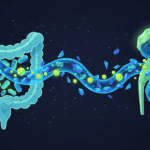

Your intestinal cells sit on the front line of a war you never signed up for. Every day, trillions of bacteria live in your gut, mostly minding their own business. But some produce toxins that don’t just damage cells directly. They hijack the very systems your intestines use to manage oxidative stress, tipping the chemical balance and triggering a cascade of cellular problems. Understanding how this happens reveals something profound about how microbes and hosts negotiate survival in the same space.
What is oxidative stress and redox balance
Oxidative stress sounds dramatic because it basically is. Your cells generate reactive oxygen species (ROS) constantly as a byproduct of normal metabolism. Think of ROS as chemical loose cannons. They damage DNA, proteins, and fats if left unchecked. Your cells have built an elaborate defence system to handle this. They produce antioxidants like glutathione and activate enzymes like superoxide dismutase that neutralise these reactive molecules. When defences match the threat, you have redox balance. It’s equilibrium. But when toxins flood the system, that balance collapses.
The redox state of a cell functions almost like its nervous system for chemical threats. Key proteins sense whether oxidative stress is rising and trigger protective signalling pathways. The master regulators include NRF2, a protein that acts like a dimmer switch for antioxidant gene expression. When cells detect trouble, NRF2 enters the nucleus and activates dozens of protective genes simultaneously. This response kept your ancestors alive through infection, famine, and inflammation. The system is ancient and robust.
What the research shows
Scientists have observed that certain bacterial toxins produce remarkably specific effects on intestinal cell redox balance. Some toxins directly deplete cellular glutathione, the cell’s primary antioxidant buffer. They do this by chemically binding to glutathione molecules or inhibiting the enzymes that synthesise them. Other toxins interfere with mitochondrial function, increasing ROS production at the source. The mitochondria are where most cellular energy and most cellular damage happen simultaneously.
What’s particularly striking is that different toxins employ different attack strategies. Some suppress NRF2 signalling before cells can mount a defence. Others trigger excessive NRF2 activation that exhausts the cell’s protective capacity. It’s not a single mechanism of damage but rather a toolkit of molecular sabotage. Researchers have also documented that these toxins alter the expression of specific redox-sensitive genes, shifting the cell away from antioxidant production and toward pro-inflammatory signalling. The intestinal lining becomes more permeable, more inflamed, and more vulnerable to further damage.
Measurements of oxidative markers in intestinal tissue exposed to these toxins show elevated levels of malondialdehyde and protein carbonyls, both signs of oxidative damage. Meanwhile, antioxidant enzyme activity drops. The cells are losing the fight in real time, and researchers can measure it happening.
Why cells need this defence system
Evolution didn’t preserve these antioxidant systems because they’re pleasant to have. Oxidative damage is genuinely lethal. Unchecked ROS destroys the DNA that encodes the proteins needed for survival. It crosslinks proteins and makes them useless. It peroxidises lipids in cell membranes, creating holes. Cells with no antioxidant defences die within minutes in an aerobic environment.
Your intestinal cells face a particular challenge. They’re exposed to a vast microbial population that produces inflammatory molecules and metabolic byproducts. The intestinal barrier has to be selectively permeable, which means it can’t be armoured in the way skin is. So intestinal cells have evolved exquisite redox sensing machinery. They need it to survive contact with millions of bacterial species, most of which are harmless but some of which produce toxins.
From the bacteria’s perspective, toxins that disarm the host’s antioxidant defences offer a competitive advantage. A pathogenic bacterium that can suppress the host’s cellular defence gives itself room to multiply. This ancient conflict continues today, encoded in toxin molecules that have been refined through millions of generations of bacterial evolution.
What affects intestinal oxidative stress and redox balance
Bacterial toxin exposure is just one variable. Diet shapes the redox environment significantly. Foods rich in polyphenols and other phytonutrients provide substrates for antioxidant systems. High intake of polyunsaturated fats increases the susceptibility to lipid peroxidation. The composition of your microbiota itself matters enormously. Dysbiosis, where pathogenic and toxin-producing bacteria become dominant, changes the toxin load intestinal cells face daily.
Age alters redox balance. Older intestinal cells accumulate oxidative damage and produce less glutathione. Their mitochondria become less efficient, generating more ROS for the same amount of energy. Intestinal inflammation, whether from infection, immune dysfunction, or chronic stress, cranks up baseline oxidative stress. Environmental toxins and medications can also interfere with antioxidant enzyme function. Even sleep disruption impairs the cell’s ability to mount protective responses.
The state of the intestinal barrier itself creates a feedback loop. When the barrier becomes permeable due to oxidative damage, more bacterial products cross into the bloodstream, triggering systemic inflammation that amplifies oxidative stress. What starts as a localised problem in intestinal cells can become a body-wide redox imbalance.
What remains unknown
We still don’t fully understand the threshold at which toxin exposure overwhelms cellular defences. Does damage accumulate gradually, or is there a breaking point where cells suddenly collapse? How do different bacterial toxins interact when multiple species are present simultaneously? Most research examines single toxins in isolation, but real microbiota produce complex mixtures.
The long-term consequences of chronic low-level redox imbalance remain poorly mapped. We know acute oxidative stress damages cells acutely, but what happens when intestinal cells live in a state of chronic mild oxidative dysfunction for years? How does this translate to systemic health outcomes? Researchers are also still working out how individual genetic variation affects susceptibility to toxin-induced redox imbalance. Some people’s cells may simply be better at maintaining balance under stress.
The role of adaptive responses is another frontier. Can intestinal cells that survive chronic toxin exposure actually become more resilient? Do they upregulate antioxidant systems in anticipation? These questions matter because they touch on how microbiota and hosts coevolve.
What this points toward
The more we understand how bacterial toxins disrupt cellular redox balance, the clearer it becomes that the gut isn’t simply a battleground between host and microbe. It’s a negotiated space where chemical signalling constantly adjusts. Bacteria produce molecules that alter the host’s redox state. The host’s redox state determines which bacteria thrive. This isn’t random damage. It’s molecular dialogue encoded in toxins and defence responses refined by millions of years of cohabitation. Understanding these mechanisms reveals the gut not as a passive digestive tube but as an active negotiation between self and other, played out in the currency of electrons and oxidative stress.

Matt Elliott is the editor of Redox News Today, an independent publication covering peer-reviewed research on cellular health, redox signalling, and related biomedical science.