
Your brain is burning. Not literally, but at a cellular level, it’s under constant oxidative stress. Every time a neuron fires, it generates reactive oxygen species, unstable molecules that can damage proteins and DNA. For decades, neuroscientists assumed this was simply the cost of thinking. Then they discovered that cells had their own fire suppression system, and it centres on a protein called NRF2.
What is NRF2 signalling
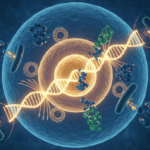
NRF2 is a transcription factor, which means it’s a protein that acts like a master switch in your cells. When oxidative stress accumulates, NRF2 detects it and travels into the cell nucleus, where it binds to specific DNA sequences called antioxidant response elements. This binding flips on dozens of protective genes at once, instructing the cell to manufacture antioxidants, repair damaged molecules, and neutralise harmful free radicals.
Think of it as a smoke alarm that doesn’t just beep but also activates sprinklers, opens vents, and calls the fire brigade simultaneously. Under normal conditions, NRF2 sits dormant in the cytoplasm, kept inactive by a protein called KEAP1. When oxidative stress rises above a threshold, KEAP1 releases NRF2, allowing it to slip into the nucleus and coordinate the cellular defence response.
In the brain, this matters because neurons generate more metabolic waste per unit of tissue than almost any other organ. They’re metabolic furnaces, and that leaves them vulnerable to oxidative damage. Additionally, brain cells don’t regenerate as readily as skin or gut cells, so any damage can accumulate over time and potentially interfere with cognition.
What the research shows
Studies examining NRF2 activation in neural tissue reveal a consistent pattern: when NRF2 signalling is robust, markers of neuroinflammation tend to be lower. Researchers observe reduced levels of pro-inflammatory cytokines like TNF-alpha and IL-6 in brain tissue when NRF2 is activated, compared to tissue where NRF2 function is diminished or blocked.
The mechanism isn’t straightforward suppression. Instead, active NRF2 signalling appears to reduce the activation of microglia, the immune cells of the brain. When microglia are overactive, they release inflammatory molecules that can interfere with synaptic plasticity, the brain’s ability to form and strengthen connections. Activated NRF2 tempers this response, keeping microglial activation proportionate to the actual threat.
In animal models, researchers have observed that enhancing NRF2 signalling correlates with better performance on cognitive tasks, particularly those requiring sustained attention and memory consolidation. When NRF2 signalling is impaired through genetic manipulation, the opposite occurs: microglia become hyperactive, neuroinflammation increases, and cognitive performance declines. The effect sizes are meaningful, not marginal.
Neuroimaging studies suggest this isn’t confined to animal brains. In humans with neurodegenerative conditions where NRF2 activity is reduced, signs of ongoing neuroinflammation appear on scans, suggesting the same principle applies in our skulls.
Why cells need this
Evolution preserved this system because the alternative to controlled oxidative stress is neuronal death. The brain consumes roughly 20 per cent of the body’s oxygen despite representing only 2 per cent of body weight. That metabolic intensity generates free radicals constantly. Without an active antioxidant defence, neurons would accumulate damage faster than repair mechanisms could handle it.
But there’s a second reason NRF2 matters specifically for cognition. Neuroinflammation isn’t always harmful; it’s sometimes protective. A neuron that’s infected or severely damaged needs to be eliminated. Microglia perform that cleanup function. The problem arises when this immune response becomes chronic and indiscriminate, attacking healthy synapses and interfering with normal neural communication.
NRF2 signalling helps calibrate this response. It doesn’t suppress all microglial activity but rather prevents the slide into chronic hyperactivation. Think of it as a thermostat rather than an off switch. When oxidative stress spikes in a localised region of brain tissue, NRF2 activation increases defensive capacity in that region. When stress subsides, NRF2 activity normalises. This prevents both oxidative damage and excessive inflammation simultaneously.
What affects NRF2 activation
Age is the most obvious factor. As we get older, NRF2 responds more slowly to oxidative stress, and baseline KEAP1 activity increases. This means older brains become progressively less effective at launching antioxidant defence responses, and oxidative stress accumulates. This explains why neuroinflammation is often elevated in ageing.
Diet influences NRF2 signalling measurably. Certain plant compounds, particularly sulforaphane from cruciferous vegetables and polyphenols from berries, interact with KEAP1 in ways that facilitate NRF2 release into the nucleus. Exercise also appears to upregulate NRF2 activity in neural tissue, though the mechanisms aren’t fully understood yet.
Environmental toxins suppress NRF2 function. Air pollution, heavy metals, and certain industrial chemicals bind to KEAP1 and prevent it from releasing NRF2, or they overwhelm NRF2’s capacity to handle the oxidative load. Chronic stress does something similar; elevated cortisol impairs NRF2 signalling in brain tissue over time.
Sleep deprivation consistently reduces NRF2 activity in neural tissue. During sleep, cells activate antioxidant pathways more efficiently, which is one reason sleep deprivation accelerates cognitive decline. Conversely, consistent sleep improves NRF2 responsiveness.
What remains unknown
Scientists still can’t predict which individuals will maintain robust NRF2 signalling into older age. Genetic variation certainly plays a role, but the specific variants that determine NRF2 responsiveness aren’t fully mapped. Some people seem to maintain strong antioxidant defences well into their 80s; others show decline much earlier. Individual variation in KEAP1 and NRF2 gene expression likely explains part of this, but other factors remain elusive.
The relationship between NRF2 and cognition in humans remains mostly observational. We know that markers of NRF2 activity correlate with better cognitive performance, but we don’t have long-term human studies manipulating NRF2 signalling and tracking cognitive outcomes. The animal research is compelling, but translation to humans requires careful work.
Researchers are also uncertain about the optimal level of NRF2 activation. Some activation appears beneficial, but we don’t know if chronically maximal NRF2 signalling could have downsides. There’s theoretical concern that excessive antioxidant defence might interfere with normal cellular signalling processes that require some oxidative stress, but this remains speculative.
Finally, the relationship between NRF2 and different types of neuroinflammation isn’t completely clear. The pathway clearly helps in acute neuroinflammation, but in chronic conditions like neurodegeneration, the picture is more complicated. Sometimes neuroinflammation is a symptom of deeper cellular dysfunction; boosting NRF2 alone may not address the root problem.
What emerges from this research is an image of the brain as a system that requires constant molecular housekeeping. NRF2 signalling is one part of that maintenance, a mechanism that keeps oxidative stress in check and prevents neuroinflammation from spiralling into chronic activation. Understanding how this system works, and why it weakens with age, might eventually help us preserve the cognitive performance we have and slow the rate at which it declines. But we’re still in the early stages of that understanding.
Further reading: for a full, sourced explanation of how NRF2 works, what switches it on and where it has reached medicine, see our guide to the NRF2 pathway.

Matt Elliott is the editor of Redox News Today, an independent publication covering peer-reviewed research on cellular health, redox signalling, and related biomedical science.