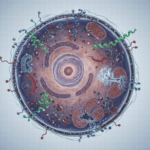

Your cells are under constant bombardment. Every moment, metabolic processes churn out reactive molecules that damage DNA, proteins, and lipids. Most people accept this as inevitable ageing. But researchers studying the Mediterranean diet have found something different: certain foods appear to genuinely suppress this cellular damage in measurable ways.
What is oxidative stress and cellular ageing
Oxidative stress happens when cells produce more reactive oxygen species (ROS) than they can neutralise. Think of it like rust forming on metal. ROS are byproducts of normal energy production, immune responses, and countless other cellular processes. Your body has antioxidant defences to manage them, but when production outpaces defence, damage accumulates.
This damage matters because it triggers ageing pathways. Telomeres shorten. DNA develops mutations. Mitochondria function declines. Proteins misfold. Cells either die or become senescent, meaning they stop dividing but continue pumping out inflammatory signals that age surrounding tissue. Over decades, this adds up to what we call biological ageing.
The relationship between oxidative stress and ageing isn’t theory. Researchers measure it through biomarkers: oxidised lipids in the bloodstream, DNA damage in white blood cells, inflammatory proteins, telomere length. These markers predict actual health outcomes and correlate with how old someone’s body really is, independent of chronological age.
What the research shows
Studies comparing Mediterranean diet adherence to oxidative stress markers reveal consistent patterns. People eating high amounts of olive oil, leafy greens, nuts, legumes, and fish show lower levels of oxidised lipids and inflammatory markers compared to those eating Western diets. The effect isn’t subtle. Some research documents 15 to 25 percent reductions in certain damage markers.
The mechanistic work is more interesting than the correlations. Polyphenols from olive oil (particularly oleocanthal) directly interact with antioxidant signalling proteins, activating protective pathways. Carotenoids from tomatoes and greens accumulate in cell membranes and prevent lipid oxidation at the source. Fish-derived omega-3 fatty acids alter the lipid composition of mitochondrial membranes, reducing ROS production during energy generation.
Researchers have also observed that Mediterranean diet components influence the expression of antioxidant enzymes. When cells encounter these dietary compounds, they upregulate genes for superoxide dismutase, catalase, and glutathione peroxidase. The cells essentially build better defence systems in response. This isn’t adaptation to stress; it’s preemptive strengthening.
Studies tracking people over years show that consistent Mediterranean diet adherence associates with slower telomere shortening compared to control groups. Given that telomere length predicts lifespan, this observation carries weight. The mechanism appears related to reduced oxidative stress and inflammation rather than any direct telomere protection.
Why cells need this defence
Oxidative stress isn’t an error in cellular biology. It’s a by-product of being alive. Energy production in mitochondria requires moving electrons along chains, and electrons occasionally escape, reacting with oxygen to form ROS. Immune cells deliberately generate ROS to kill pathogens. Cellular signalling relies on carefully controlled ROS production. The system evolved because controlled oxidative stress actually serves purposes.
But there’s a threshold. Below it, ROS act as signalling molecules. Above it, they destroy critical cellular machinery. Modern environments push cells toward that threshold: processed food, sedentary behaviour, air pollution, chronic stress all increase oxidative load. Meanwhile, dietary antioxidant intake has fallen as people shifted toward refined carbohydrates and industrial seed oils.
The evolution of antioxidant defences explains why plants produce thousands of polyphenolic compounds. Plants can’t run from oxidative stress. They face constant UV exposure and metabolic demands that produce ROS. They synthesised antioxidants for survival. When humans consume those plants, we inherit their chemical defences. This is why foods matter more than isolated supplements: whole plant compounds trigger synergistic protective responses.
What affects oxidative stress levels
Diet represents one variable among many. Age itself increases oxidative stress because mitochondrial function declines and antioxidant enzyme expression decreases. Physical activity reduces ROS production and strengthens antioxidant defences, which is why sedentary individuals show higher oxidative damage markers regardless of diet. Sleep deprivation increases oxidative stress markedly. Even psychological stress elevates ROS through sympathetic nervous system activation.
Environmental factors matter enormously. Air pollution generates ROS directly when particles deposit in lung tissue. Smoking delivers thousands of exogenous free radicals. Excessive sun exposure overwhelms skin cell antioxidant systems. High alcohol intake, despite some compounds in wine showing antioxidant properties in test tubes, generally increases oxidative burden when consumed regularly.
Individual genetics influence antioxidant enzyme activity. Some people carry polymorphisms in genes encoding superoxide dismutase or glutathione S-transferases, resulting in naturally lower antioxidant capacity. This explains why some individuals show greater oxidative stress markers despite similar lifestyles. It also suggests why dietary interventions show variable effectiveness across populations.
What remains unknown
The optimal ratio of different polyphenols for cellular defence remains unclear. Olive oil contains over 200 distinct compounds. Which ones matter most? How do they interact? Do they work additively, or do some inhibit others? Current research identifies individual compounds but rarely tests realistic dietary combinations.
The long-term persistence of benefits is uncertain. Do cells maintain upregulated antioxidant defences indefinitely if Mediterranean diet adherence continues? Or does the system adapt and return to baseline? Some studies suggest sustained benefits, but the timeframes studied rarely exceed a few years.
We don’t understand why some oxidative stress biomarkers improve rapidly on Mediterranean diets while others take months. Oxidised lipids in blood drop within weeks, but telomere shortening changes require years to detect. Are these measuring different processes? Does early biomarker improvement predict long-term outcomes?
The translational question matters most: do reduced oxidative stress markers actually extend healthy lifespan, or do they merely correlate with other lifestyle factors that provide the benefit? Mediterranean diet studies show health improvements, but isolating oxidative stress reduction from improved diet quality, reduced calorie intake, and other factors remains technically challenging.
Cellular ageing reflects reality at every level, from the physics of electron transfer to the sociology of food systems. The Mediterranean diet’s influence on oxidative stress suggests something fundamental: our bodies are not separate from the environment we evolved in. The foods plants developed to protect themselves from oxidative damage still protect our cells today. Understanding this relationship points to why cellular biology cares about what we actually eat, not in terms of calories or macronutrients, but in terms of the specific molecules our cells use to manage the stress of living.

Matt Elliott is the editor of Redox News Today, an independent publication covering peer-reviewed research on cellular health, redox signalling, and related biomedical science.