
Opening
Your cells are under constant chemical attack. Oxygen metabolism, UV exposure, inflammation, and normal ageing all generate unstable molecules called free radicals that damage proteins, lipids, and DNA. Left unchecked, this oxidative stress contributes to cellular dysfunction and tissue degeneration. Yet a compound you can eat in fruit triggers a remarkably sophisticated defence response. Pomegranate contains bioactive molecules that appear to activate the very pathways cells use to protect themselves from this chemical onslaught.
What is oxidative stress signalling
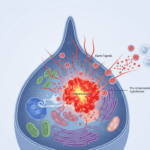
Oxidative stress isn’t just about free radicals existing. It’s about the signalling conversation between molecules and the cell’s protective machinery. When free radicals accumulate, they trigger sensors inside the cell. These sensors activate transcription factors like NRF2, which acts like a master switch. NRF2 migrates into the nucleus and binds to DNA sequences called antioxidant response elements, turning on genes that produce defensive enzymes. SOD, catalase, and glutathione peroxidase manufacture themselves. The cell essentially says: danger detected, now activate the shield.
This signalling system is old. Evolutionary pressure preserved it across species because cells that manage oxidative stress survive and reproduce better than those that don’t. The system has precision too. It doesn’t just activate all genes indiscriminately. It responds proportionally to the level of oxidative stress present. A moderate challenge triggers moderate defence. Severe stress triggers maximal response. This calibration prevents wasteful energy expenditure while protecting against genuine threats.
What the research shows
Studies examining pomegranate compounds, particularly punicalagins and ellagic acid, reveal they interact with these cellular defence pathways. When cells treated with oxidative stressors are pre-exposed to pomegranate extracts, the cells accumulate less oxidative damage. Researchers observe increased activity of antioxidant enzymes. NRF2 levels rise. The compounds appear to work partly by mimicking mild oxidative stress themselves, priming the cell’s defences without causing actual harm. This is hormesis: a small challenge that strengthens the response system.
In cultured cells, pomegranate bioactives reduce markers of DNA damage and lipid peroxidation. Cell viability improves under stressful conditions. Inflammatory signalling pathways quiet down. The effects appear dose dependent: more polyphenol exposure generally produces more robust signalling activation, though extremely high doses show diminishing returns or potential toxicity. The timeframe matters too. Acute exposure produces different responses than chronic exposure, suggesting cells adapt their signalling over time.
Why cells need this
Consider what happens without adequate oxidative stress defence. Free radicals accumulate. They cross-link proteins, making them dysfunctional. They insert themselves into lipid membranes, destabilising cell boundaries. They damage DNA bases, creating mutations. Cells accumulate damage faster than repair mechanisms can handle. Eventually, cells trigger apoptosis (controlled death) rather than try to function with compromised machinery. Tissues weaken. Performance declines.
The oxidative stress signalling system evolved to prevent exactly this scenario. By keeping antioxidant enzyme production matched to the oxidative load, cells maintain a steady state. They survive periods of stress without accumulated damage. Organisms with better oxidative stress management can sustain high metabolic activity, respond to environmental threats, and maintain tissue integrity across decades of life. That’s why evolution preserved these pathways. They solve a fundamental problem: how to maintain cellular order when chemistry threatens chaos.
What affects pomegranate bioactive signalling
The bioavailability of pomegranate compounds varies dramatically. Intestinal bacteria metabolise punicalagins into smaller molecules called urolithins. The conversion efficiency differs between individuals based on microbiome composition. People with different bacterial populations extract different metabolites from the same pomegranate. Age matters. Older cells often show reduced signalling responsiveness across the board, including to bioactive compounds, though the research here remains incomplete. Genetic variation affects how efficiently cells produce NRF2 and antioxidant enzymes, meaning individual responses to pomegranate compounds likely differ.
Timing interacts with oxidative stress level. Pomegranate compounds may prime defences most effectively in cells already experiencing mild stress. In completely unstressed cells, they produce minimal response. In severely damaged cells, the signalling machinery itself may be compromised. Diet composition matters too. Vitamin E, selenium, and other nutrients support antioxidant enzyme production. Without these cofactors, activating the signalling pathway through pomegranate compounds produces suboptimal results. Stress, sleep, and physical activity influence baseline oxidative stress in tissues, which likely modulates how much additional signalling activation pomegranate compounds trigger.
What remains unknown
We still don’t fully understand which pomegranate metabolites actually cross cell membranes and reach the signalling molecules. The bioactive compounds identified in laboratory studies often differ from metabolites found in human blood after consuming pomegranate juice. Researchers continue mapping exactly which urolithin variants activate which aspects of the oxidative stress response. Tissue specificity remains unclear. Does pomegranate activate signalling equally in liver, brain, skin, and muscle? Probably not, but the evidence is sparse.
Long-term studies examining whether repeated pomegranate consumption maintains or improves oxidative stress signalling capacity are limited. Does the system adapt and become less responsive with chronic exposure? Or does regular activation strengthen the defence machinery? We don’t know yet. The connection between improved signalling in cell culture and actual health outcomes in living organisms remains correlational, not causal. And the optimal dose, frequency, and form of pomegranate consumption for modulating these pathways has never been rigorously established. These gaps point to genuine scientific work still needed.
Closing
What pomegranate compounds reveal is that cellular stress defences can be influenced from outside the cell. The boundary between what’s strictly inside and strictly outside a cell proves more permeable than it first appears. Bioactive molecules can cross membranes, reach signalling proteins, and initiate conversations that activate protective genes. This isn’t unique to pomegranate. Many plant compounds appear capable of such signalling modulation. Understanding which compounds interact with which pathways, and how to optimise that interaction, represents an active frontier in cellular biology. The deeper principle: cells are not passive recipients of their environment. They’re sophisticated systems that recognise challenges and mount proportional defences. The more we understand about how that recognition system works, the better we grasp what keeps cells functional across the lifespan.

Matt Elliott is the editor of Redox News Today, an independent publication covering peer-reviewed research on cellular health, redox signalling, and related biomedical science.