
Your hippocampus is getting older faster than the rest of your brain, and oxidative stress might be the culprit. This almond-shaped region tucked deep in your temporal lobe handles memory formation and spatial navigation, yet it shows accelerated signs of ageing in animal models exposed to chronic oxidative stress. The question isn’t whether this matters for human ageing, but why evolution left this critical brain structure so vulnerable to free radical damage.
What is oxidative stress in the brain
Oxidative stress occurs when cells produce too many reactive oxygen species, or ROS, without enough antioxidant defences to neutralise them. Think of ROS as loose electrons looking for a home. They’ll steal electrons from nearby molecules, causing a chain reaction of damage. The brain is particularly susceptible because neurons consume enormous amounts of oxygen for energy, generating lots of ROS in the process. The hippocampus sits at the top of this vulnerability pyramid because memory formation is metabolically expensive.
Unlike other brain regions, the hippocampus relies heavily on synaptic plasticity, the ability of connections between neurons to strengthen or weaken. This process requires constant molecular remodelling, energy expenditure, and careful signalling. When ROS accumulates, they can damage lipids, proteins, and DNA directly. More insidiously, ROS disrupt the delicate signalling molecules that coordinate memory consolidation and neural communication. The result is accelerated functional decline that looks remarkably similar to natural ageing, just compressed into a shorter timeframe.
What the research shows
Preclinical studies using rodent models reveal a consistent pattern. Animals exposed to chronic oxidative stress show memory deficits earlier than controls, along with measurable deterioration in hippocampal structure. Researchers observe reduced dendritic spine density, meaning the fine branches where neurons connect lose structural complexity. Mitochondrial function declines, and the energy-producing factories within cells become less efficient at buffering ROS.
The cellular changes are specific. Oxidative damage accumulates in mitochondrial DNA and in the lipid membranes that envelop cell structures. Synaptic proteins involved in memory formation, particularly those related to long-term potentiation, show altered expression patterns. The hippocampal extracellular environment becomes inflamed as glial cells respond to oxidative insult. Electrophysiological recordings show that neurons fire less synchronously during the activity patterns associated with memory encoding.
What strikes researchers is the acceleration effect. Chronologically young animals exposed to oxidative stress show hippocampal markers resembling naturally aged animals. The damage isn’t subtle background noise, it’s a recognisable pattern that emerges reliably across different experimental models and oxidative stress induction methods.
Why cells need defence against oxidative stress
Evolution has invested heavily in antioxidant machinery because organisms that failed to manage ROS didn’t survive to pass on genes. Your cells express superoxide dismutase, catalase, and glutathione peroxidase, enzymes that convert ROS into harmless molecules. You also produce non-enzymatic antioxidants like vitamins C and E, and urate in the bloodstream.
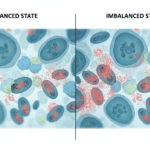
But the hippocampus presents a biological paradox. It needs to be metabolically active to function, generating ROS as an inevitable byproduct. Yet memory formation also depends on precise ROS signalling. In small amounts, ROS actually activate genes involved in synaptic plasticity and neuroprotection. The system works when ROS production and defence stay balanced. Chronic oxidative stress tips that balance. Defences become overwhelmed, and the ROS that should serve as useful signalling molecules instead cause widespread damage.
This is why the hippocampus ages faster under oxidative stress than other brain regions. It’s not that neurons there are inherently weaker, it’s that they operate closer to the edge of what their defences can handle.
What affects hippocampal oxidative stress
Research identifies several factors that influence how much oxidative stress accumulates. Physical inactivity consistently increases ROS burden in the hippocampus. Exercise drives mitochondrial biogenesis and upregulates antioxidant expression, creating a buffer against oxidative insult. Sleep disruption worsens the picture. During sleep, the brain clears metabolic waste products including damaged proteins and lipids. Without adequate sleep, this housekeeping fails, and ROS accumulate.
Diet matters substantially. High intake of polyphenols and other plant compounds with antioxidant properties correlates with better hippocampal defence capacity in animal models. Conversely, diets high in refined carbohydrates and processed oils promote systemic inflammation that increases ROS production. Chronic stress elevates glucocorticoid hormones that impair hippocampal mitochondrial function and antioxidant gene expression.
Age itself is perhaps the most relevant factor. Older animals show reduced expression of genes encoding antioxidant enzymes. Their mitochondria accumulate mutations and function less efficiently. So an ageing hippocampus exposed to oxidative stress faces a compounding problem: declining defences against rising ROS production.
What remains unknown
The preclinical models tell us that oxidative stress accelerates hippocampal ageing markers, but the human translation is incomplete. We don’t yet know whether the specific mechanisms observed in rodents map directly onto human brain ageing. Human hippocampi are larger, develop over longer timescales, and exist in metabolically complex bodies that rodent models only approximate.
Researchers are also unclear about individual variation. Why do some organisms tolerate chronic oxidative stress better than others? Genetic differences in antioxidant enzyme expression clearly matter, but the full picture of genetic and epigenetic factors remains fuzzy. The timing question also lingers: at what point does oxidative stress exposure become truly irreversible? Early interventions might prevent damage, but once hippocampal neurons die, no amount of antioxidant support rebuilds them.
There’s also uncertainty about which ROS matter most. Different reactive oxygen species cause different types of damage through different mechanisms. Targeting all ROS equally might prove less effective than understanding which specific ROS species drive hippocampal ageing and designing interventions accordingly.
The research on oxidative stress and hippocampal ageing points toward a broader principle in cellular biology: vulnerability concentrates in metabolically demanding tissues. The hippocampus ages faster under oxidative stress not because it’s fragile, but because it works harder than most brain regions to support learning and memory. Understanding this vulnerable tissue might teach us about ageing in other energy-hungry cells throughout the body, from heart muscle to pancreatic islets to retinal photoreceptors. That’s where the real scientific interest lies.

Matt Elliott is the editor of Redox News Today, an independent publication covering peer-reviewed research on cellular health, redox signalling, and related biomedical science.