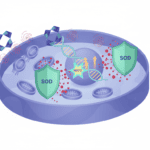

Your cells are making different proteins right now depending on what you ate last week. That’s not metaphorical. When you consume foods rich in olive oil, fish, and plant compounds, you’re sending chemical signals that travel into your mitochondria and literally change which genes those organelles activate. The Mediterranean diet doesn’t just fill your stomach. It rewires the protein factories inside nearly every cell in your body.
What is mitochondrial protein expression
Mitochondria contain their own DNA, a remnant from their evolutionary origin as independent bacteria. This mitochondrial genome codes for about 13 proteins, though mitochondria actually depend on around 1,500 different proteins to function properly. The rest come from your cell nucleus. When we talk about protein expression, we mean the process of reading genetic instructions and building actual protein molecules that perform work.
Think of it like a recipe book. Your mitochondria have instructions on file, but whether those instructions get read depends on what conditions exist right now. A nutrient arrives. A metabolic signal gets sent. Suddenly the cell recognises it’s time to build more of protein X or less of protein Y. This happens constantly, dozens of times per second across billions of cells.
The Mediterranean dietary pattern includes abundant olive oil (rich in polyphenols), fatty fish (omega-3 fatty acids), whole grains, legumes, nuts, and fresh vegetables. These aren’t random foods. They deliver specific compounds that cells recognise as signalling molecules.
What the research shows
Studies comparing people following Mediterranean patterns to those eating typical Western diets show measurable differences in mitochondrial protein levels within weeks. Researchers have observed increased expression of proteins involved in energy production, specifically those in the electron transport chain. When mitochondria have more of these proteins available, they generate ATP (cellular energy) more efficiently.
Polyphenols from olive oil activate signalling pathways that upregulate protective proteins. NAD+-dependent enzymes increase. Proteins involved in mitochondrial quality control, like those responsible for removing damaged components, show higher expression levels. The effect appears dose-dependent: people consuming more polyphenol-rich foods show stronger responses.
Omega-3 fatty acids from fish influence the composition of mitochondrial membranes, which in turn affects protein function. The membrane becomes more fluid, allowing proteins to interact more effectively. Fish-eating populations show different patterns of lipid metabolism proteins compared to fish-avoiding populations, reflected in their mitochondrial composition.
Notably, these changes aren’t permanent fixtures. They’re dynamic. Stop following the pattern and protein expression gradually reverts. Resume it and the mitochondrial response rebuilds within days to weeks. Your mitochondria are constantly responding to what arrives in your bloodstream.
Why cells need this
Mitochondria sit at the intersection of survival and energy production. When food is abundant and nutrient-rich, cells can afford to build more mitochondrial proteins and invest in cellular defence mechanisms. When food is scarce or nutrient-poor, cells shift toward survival mode, reducing expensive construction projects.
The polyphenols and other compounds in Mediterranean foods aren’t random nutrients your body merely tolerates. Many of them activate the same stress-response pathways that evolved to help organisms survive food scarcity and environmental challenges. It’s counterintuitive but true: some of the healthiest compounds work by triggering mild protective stress responses.
The evolutionary logic makes sense. For most of human history, the foods that survived storage and travel were those rich in protective compounds. Fresh berries rot within days. Nuts and seeds stay viable for months, loaded with polyphenols that protect their own tissues. Olive oil stores indefinitely. Fish could be preserved by salting. The human mitochondrial machinery evolved in response to these available foods, so it responds most efficiently to them.
What affects mitochondrial protein expression
Diet patterns influence expression, but they’re not the only factor. Age matters significantly. Older mitochondria show different protein expression profiles than younger ones, and this gap widens even more in people eating Western pattern diets. However, people following Mediterranean patterns show less age-related decline in mitochondrial protein diversity.
Physical activity powerfully influences expression levels. Exercise activates similar signalling pathways as many dietary polyphenols do. The effect isn’t additive, it’s synergistic. Someone combining Mediterranean eating with regular activity shows stronger mitochondrial responses than either factor alone produces.
Sleep timing and quality affect mitochondrial gene expression through circadian rhythm signalling. Someone following Mediterranean patterns but sleeping poorly will show blunted responses. Stress hormones like cortisol alter protein expression patterns in hours. Even individual food timing matters: consuming polyphenol-rich foods at different times of day produces different magnitude responses.
Genetics create individual variation. Not everyone’s mitochondria respond identically to the same diet. Some genetic variants make certain polyphenol signalling pathways less responsive. Conversely, some people appear genetically optimised for extracting maximal benefit from Mediterranean pattern eating.
What remains unknown
Scientists still don’t fully understand which specific polyphenols produce which effects on protein expression. Olive oil contains hundreds of distinct compounds. Fish contains many omega-3 variants. Researchers continue mapping which molecules activate which signalling pathways and which proteins respond.
The duration question remains open. How long does someone need to follow Mediterranean patterns before mitochondrial protein expression stabilises at an optimal level? Early evidence suggests significant changes occur within weeks, but whether maximum benefit requires months or years isn’t settled.
Individual responsiveness varies dramatically, but researchers haven’t identified reliable markers predicting who will respond strongly and who weakly. Can genetic testing eventually predict personal mitochondrial responses to diet patterns? Possibly, but that work is still preliminary.
The interaction between different diet components deserves more attention. Does olive oil enhance fish’s effects? Do nuts and legumes create synergies? The Mediterranean diet doesn’t exist as isolated components but as patterns, and the combined effects of pattern eating remain incompletely understood.
What emerges from current research is a picture of remarkable cellular responsiveness. Your mitochondria aren’t static structures processing whatever fuel arrives. They’re dynamic systems actively interpreting chemical signals from your diet, environment, and behaviour, then rebuilding themselves accordingly. The Mediterranean diet works with this cellular reality rather than against it, providing the specific compounds mitochondria evolved to recognise as signals for building a more capable, efficient energy system. Understanding exactly how this happens at the molecular level remains one of cellular biology’s most interesting ongoing investigations.

Matt Elliott is the editor of Redox News Today, an independent publication covering peer-reviewed research on cellular health, redox signalling, and related biomedical science.