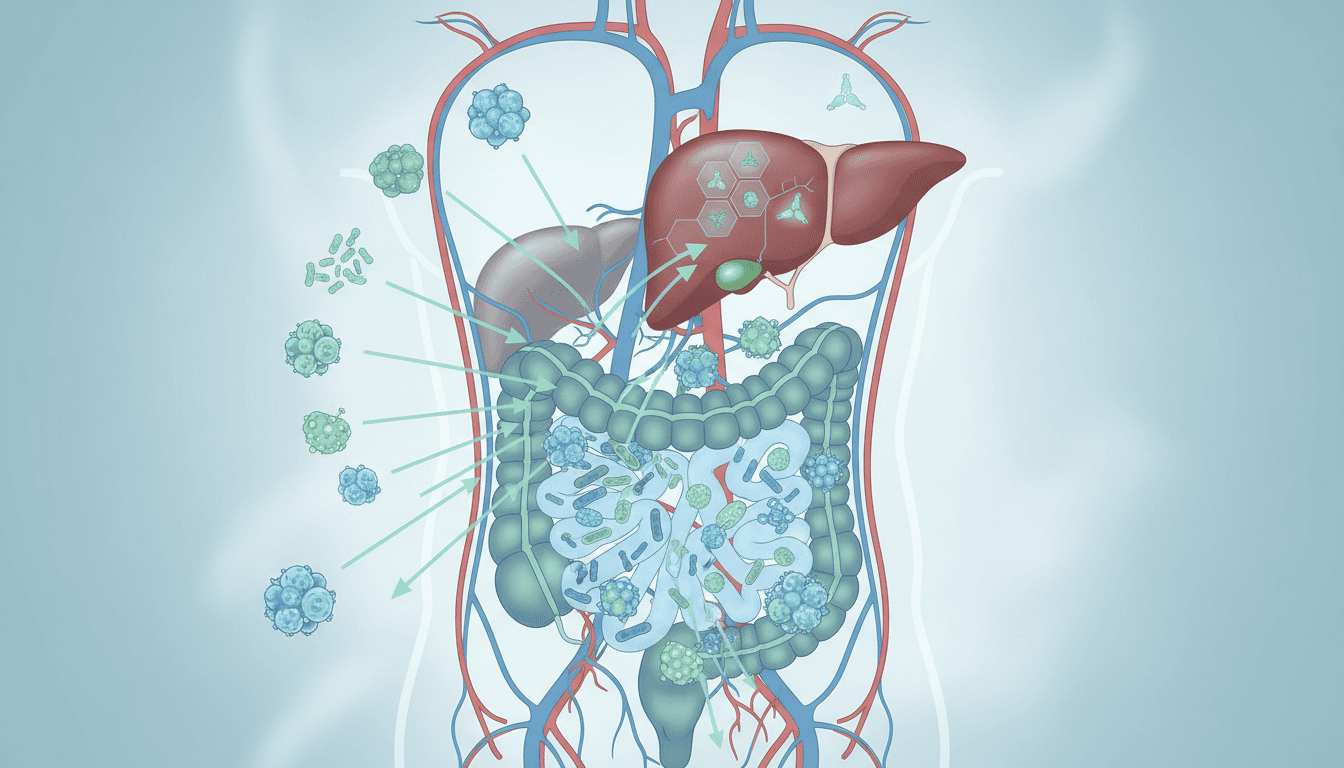
Your gut bacteria are manufacturing chemicals that directly influence how well your liver detoxifies heavy metals. This isn’t some vague connection between gut health and wellbeing. Specific bacterial species in your intestines produce compounds that either boost or suppress glutathione, the molecule responsible for neutralising toxins in every cell of your body.
What is the gut-glutathione connection
Glutathione works like a cellular janitor, grabbing onto toxic molecules and escorting them out of your cells before they cause damage. Your body makes this tripeptide from three amino acids: cysteine, glutamate, and glycine. But here’s where it gets interesting. The bacteria living in your gut don’t just sit there digesting your lunch.
They produce metabolites that travel through your bloodstream and directly influence glutathione production in your liver, kidneys, and other tissues. Some bacterial species generate compounds like butyrate and hydrogen sulfide that signal your cells to ramp up glutathione synthesis. Others produce metabolites that interfere with the process.
Think of your microbiome as a chemical factory with hundreds of different production lines running simultaneously. The end products of these bacterial assembly lines become the raw materials and signalling molecules that determine whether your detoxification system runs smoothly or struggles to keep up.
What the research shows
Scientists have tracked exactly how this bacterial influence works by comparing glutathione levels in conventional mice versus germ-free mice raised in sterile conditions. The germ-free animals showed dramatically reduced glutathione production and impaired ability to clear toxins from their systems.
When researchers reintroduced specific bacterial strains, glutathione levels rebounded. Lactobacillus and Bifidobacterium species proved particularly effective at restoring normal detoxification capacity. These bacteria produce folate and other B vitamins that serve as cofactors in glutathione synthesis.
The mechanism gets more sophisticated. Certain gut bacteria convert dietary sulfur compounds into hydrogen sulfide, which then modulates the activity of transcription factors that control glutathione production genes. Other bacterial metabolites influence the availability of cysteine, the rate-limiting amino acid in glutathione synthesis.
Studies tracking people before and after antibiotic treatment reveal the practical impact. Broad-spectrum antibiotics that wipe out beneficial gut bacteria consistently lead to temporary drops in glutathione levels and reduced capacity to process environmental toxins.
Why cells need this bacterial partnership
This arrangement makes evolutionary sense when you consider that humans evolved alongside trillions of microorganisms. Our ancestors didn’t have access to isolated nutrients or controlled diets. They needed a system that could adapt detoxification capacity based on environmental challenges and available resources.
Gut bacteria serve as environmental sensors, responding to dietary changes and toxic exposures faster than human gene expression can adapt. When you eat sulfur-rich vegetables, specific bacterial populations expand and increase production of compounds that boost glutathione synthesis. When you’re exposed to heavy metals or other toxins, different bacterial metabolites signal your cells to upregulate protective systems.
This microbial partnership also helps explain why glutathione deficiency often coincides with digestive problems. The same factors that disrupt gut bacterial balance typically interfere with the metabolic pathways these organisms use to support cellular detoxification.
What affects this microbial influence
Diet shapes which bacterial species dominate your gut ecosystem and therefore which metabolites they produce. Fiber-rich foods feed bacteria that generate butyrate and other short-chain fatty acids that support glutathione production. Processed foods high in additives and low in nutrients tend to favour bacterial populations that produce fewer beneficial metabolites.
Antibiotic exposure creates the most dramatic disruptions to this system. Even a single course can alter gut bacterial composition for months, reducing production of glutathione-supporting compounds during the recovery period. Chronic stress also shifts bacterial populations in ways that typically reduce beneficial metabolite production.
Age plays a significant role as gut bacterial diversity generally declines over decades, often correlating with reduced glutathione levels in older adults. Environmental toxin exposure creates a challenging cycle where chemical pollutants disrupt beneficial bacteria while simultaneously increasing the demand for glutathione-mediated detoxification.
Exercise appears to promote bacterial species that support glutathione synthesis, while sedentary lifestyles correlate with less favourable microbial profiles. Sleep disruption and circadian rhythm disturbances also influence gut bacterial metabolism in ways that can reduce their contribution to cellular detoxification systems.
What remains unknown
Researchers are still mapping the full network of bacterial metabolites that influence glutathione production. Hundreds of compounds produced by gut microorganisms remain uncharacterised, and many likely play roles in detoxification that scientists haven’t yet discovered.
The timing and dosage relationships puzzle researchers too. How quickly do changes in gut bacteria translate to shifts in glutathione levels? Which bacterial species provide the most significant benefits, and in what combinations? Individual variation in response to the same bacterial populations suggests genetic factors that aren’t fully understood.
Scientists are also investigating whether artificially boosting beneficial bacterial populations through targeted interventions can meaningfully improve detoxification capacity in people with compromised glutathione systems. The optimal strategies for maintaining this gut-liver communication network throughout ageing remain unclear.
The field is wrestling with questions about causation versus correlation. Does poor glutathione production create conditions that favour harmful bacterial populations, or do disrupted bacterial populations primarily drive glutathione deficiency? The relationship likely runs both directions, but the relative importance of each pathway needs clarification.
This bacterial control over your cellular detox system reveals how deeply interconnected human biology really is. Your ability to neutralise environmental toxins doesn’t just depend on your genes or liver function. It relies on a complex conversation between your cells and the microbial ecosystem in your gut, shaped by everything from the fiber in your breakfast to the quality of your sleep. Understanding this connection opens up entirely new ways of thinking about how cellular protection systems actually work in the real world.

Matt Elliott is the editor of Redox News Today, an independent publication covering peer-reviewed research on cellular health, redox signalling, and related biomedical science.