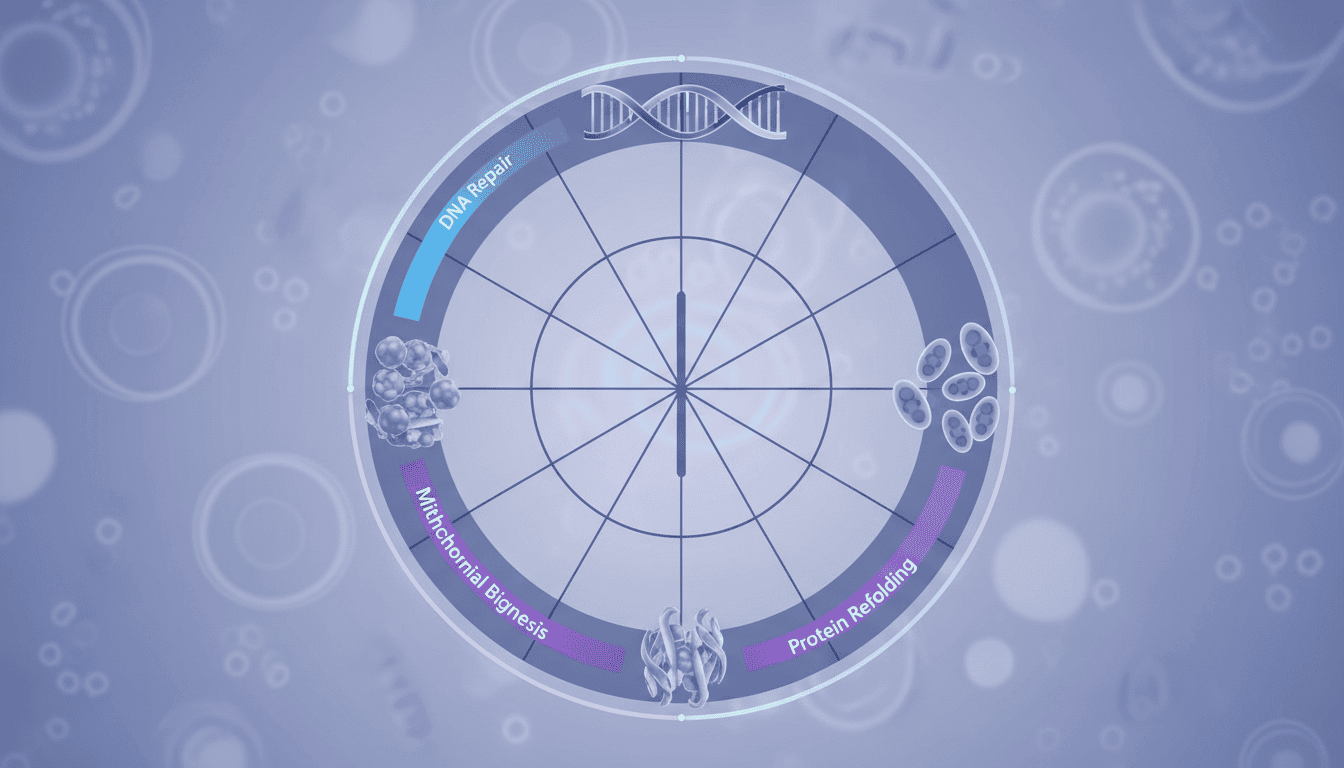
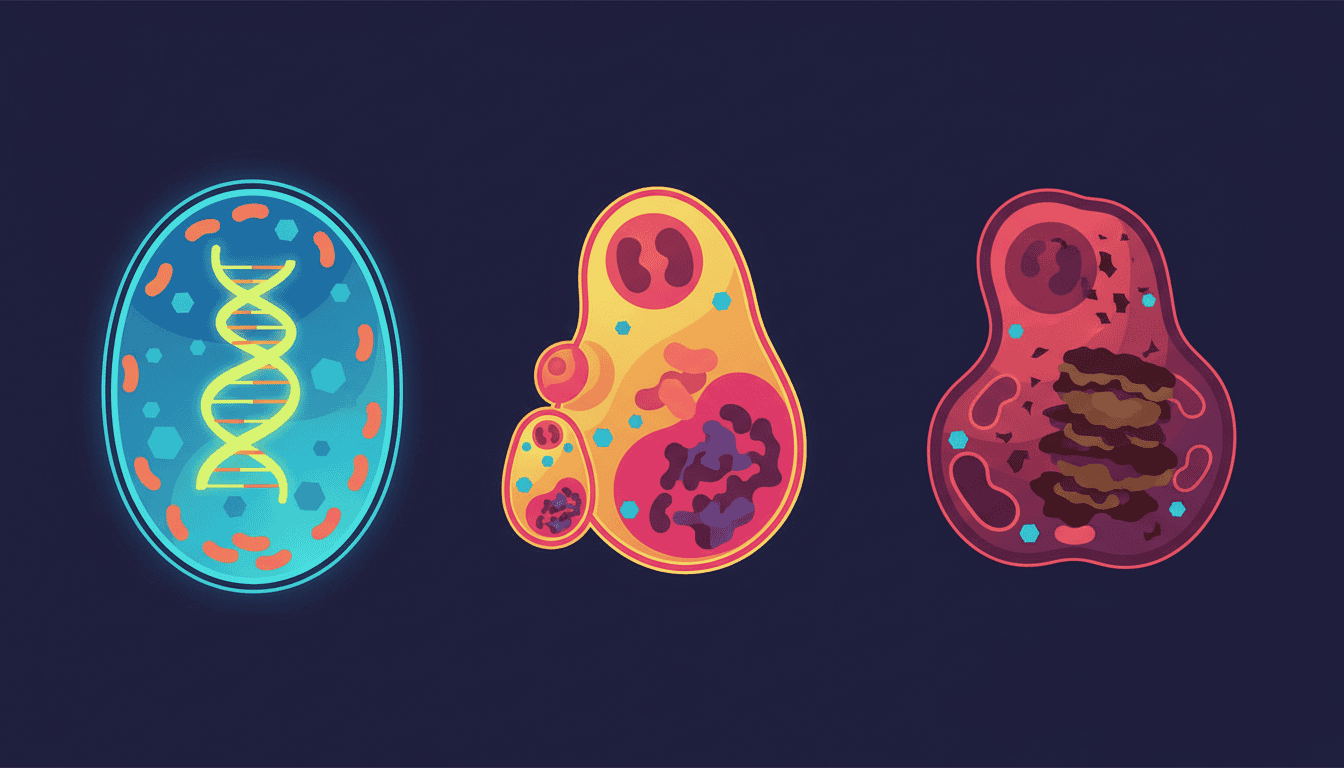
A single yeast cell lives about two weeks, dividing roughly 25 times before it dies. During those divisions, something remarkable happens that mirrors what occurs in your own cells over decades. The yeast accumulates damaged proteins, its DNA repair systems slow down, and its mitochondria begin to fail.
What is yeast ageing research
Yeast cells age in ways that parallel human cellular ageing, making them powerful tools for understanding how cells deteriorate over time. Saccharomyces cerevisiae, the same organism that makes bread rise and wine ferment, shares fundamental cellular machinery with humans. Both yeast and human cells rely on mitochondria for energy, use similar DNA repair mechanisms, and face the same basic challenge of maintaining cellular order against entropy.
Researchers track two types of ageing in yeast. Chronological ageing measures how long cells survive when they stop dividing, similar to how post-mitotic cells like neurons age in humans. Replicative ageing counts how many times a cell can divide before it dies, which relates to how stem cells and other dividing cells age in our bodies.
The beauty of yeast research lies in its speed and simplicity. Scientists can observe an entire lifespan in weeks rather than decades. They can manipulate individual genes, track specific proteins, and measure cellular changes with precision that would be impossible in complex organisms.
What the research shows
Yeast studies have revealed that ageing follows predictable patterns at the cellular level. As yeast cells age, they accumulate oxidatively damaged proteins that clump together in specific locations. Their cell walls become thicker and less flexible. Most telling, their mitochondria fragment and lose efficiency, producing less energy and more reactive oxygen species.
Researchers have identified specific genes that control yeast lifespan. When they delete certain genes involved in stress resistance, cells die younger. When they enhance the activity of genes that protect against oxidative damage, cells live longer. The SIR2 gene, which produces an enzyme called sirtuin, emerged from yeast studies as a key longevity regulator. This same enzyme family affects lifespan across species from yeast to mammals.
Perhaps most intriguingly, yeast cells that experience mild stress early in life often live longer. Caloric restriction, heat shock, and oxidative stress can all extend yeast lifespan when applied at the right intensity and timing. This hormetic response suggests that moderate cellular stress activates protective pathways that enhance long-term survival.
Why cells need this
Ageing might seem like a design flaw, but it serves important evolutionary purposes. In yeast populations, older cells gradually lose their ability to compete with younger ones for resources. This creates space for new genetic variants that might be better adapted to changing environments.
The cellular mechanisms underlying ageing also reflect trade-offs built into life itself. DNA repair systems that work perfectly would require enormous energy investments. Antioxidant defences that eliminated all cellular damage might interfere with essential signalling processes that rely on controlled oxidation.
Yeast cells allocate resources between growth, reproduction, and maintenance based on environmental conditions. When nutrients are abundant, they prioritise rapid division over long-term survival. When stressed, they shift resources toward protective mechanisms that enhance longevity at the cost of reproductive output.
What affects yeast ageing
Environmental factors dramatically influence how quickly yeast cells age. Temperature plays a major role, with moderate heat extending lifespan while extreme temperatures accelerate death. Nutrient availability creates complex effects, where mild restriction often extends life but severe deprivation shortens it.
The composition of growth medium matters more than total calories. Reducing glucose while maintaining other nutrients extends yeast lifespan, but cutting amino acids has different effects depending on which ones are limited. Methionine restriction, in particular, extends lifespan across many species including yeast.
Chemical compounds can accelerate or slow yeast ageing. Antioxidants sometimes extend lifespan, but not always, suggesting that some oxidative stress might be beneficial. Compounds that activate stress response pathways often promote longevity even when they cause short-term cellular stress.
Genetic background creates substantial variation in yeast lifespan. Different yeast strains show different responses to interventions, much like genetic variation affects human ageing. Some strains live longer under stress while others thrive in stable conditions.
What remains unknown
Despite decades of research, fundamental questions about yeast ageing remain unanswered. Scientists still debate whether ageing results primarily from accumulated damage or from programmed changes in gene expression. Both processes clearly occur, but their relative importance varies between cell types and conditions.
The relationship between stress and longevity remains puzzling. Why do some stresses extend lifespan while others accelerate death? The timing, intensity, and type of stress all matter, but researchers are still mapping the rules that govern these responses.
Translation between yeast and human ageing presents ongoing challenges. Many interventions that extend yeast lifespan fail to work in mammals, while some human longevity genes have no clear function in yeast. The evolutionary distance between these organisms, while smaller than it might seem, still creates significant gaps in direct applicability.
Yeast ageing research continues to illuminate the fundamental processes that determine cellular lifespan across biology. These simple organisms reveal that ageing operates through conserved mechanisms that evolution has shaped over billions of years. Understanding these mechanisms in their simplest form provides a foundation for comprehending how complex organisms, including humans, navigate the balance between growth, reproduction, and survival that defines life itself.

Matt Elliott is the editor of Redox News Today, an independent publication covering peer-reviewed research on cellular health, redox signalling, and related biomedical science.