A mouse with grey fur grows sleek black hair again. Its cloudy eyes clear. Injured tissues heal faster than they have in years. This isn’t science fiction or some miraculous intervention. It’s what happens when researchers use cellular reprogramming to wind back the biological clock in living animals.
What is cellular reprogramming
Every cell in your body carries the same DNA, yet a skin cell looks nothing like a brain cell. The difference lies in which genes are switched on or off. Think of it like a massive library where each cell type only reads certain books while keeping others permanently closed.
Cellular reprogramming forces cells to change which books they’re reading. Scientists use specific proteins called transcription factors to flip genetic switches. The most famous combination, known as Yamanaka factors, can transform adult cells back into embryonic-like stem cells that can become any cell type in the body.
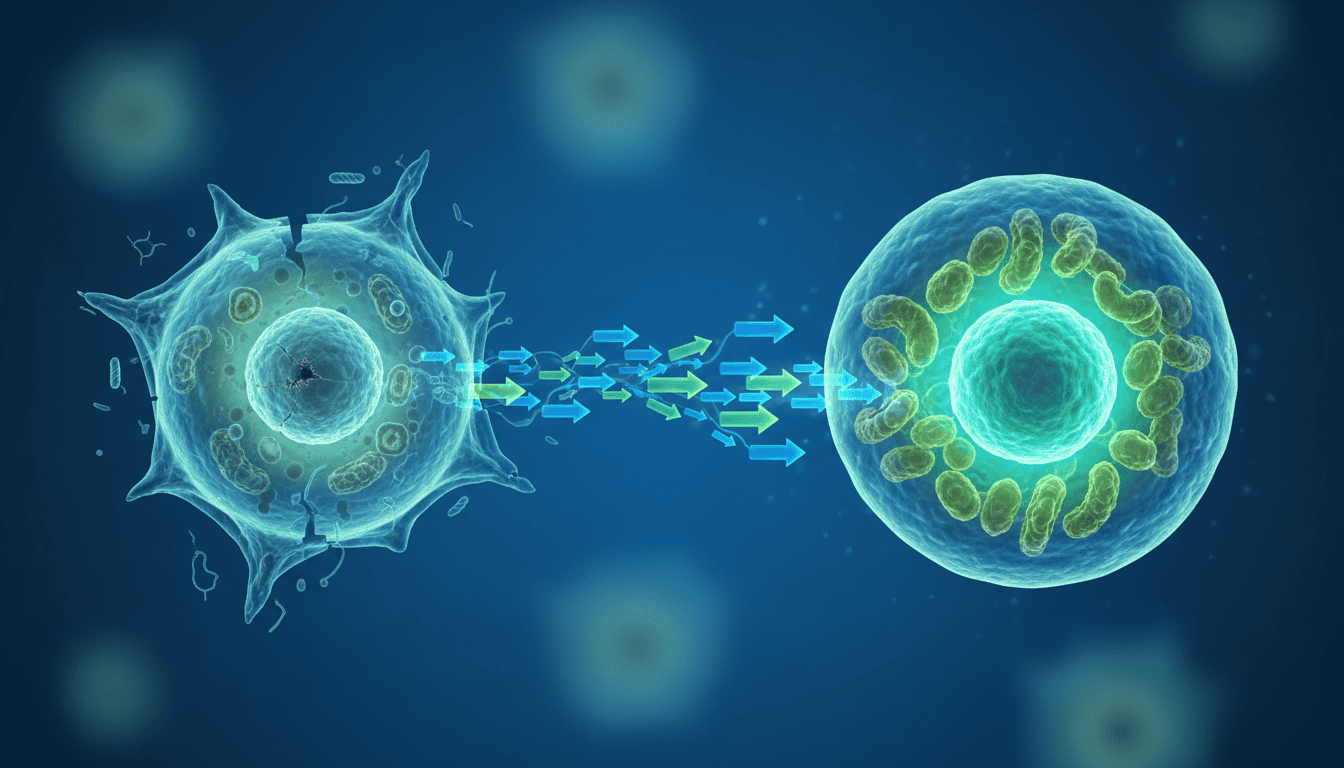
But here’s where it gets interesting for ageing research. These same factors don’t just change cell identity. They also seem to reset the cellular damage that accumulates over time. Wrinkled, sluggish old cells start behaving like young ones again.
What the research shows
Researchers have tested partial reprogramming in everything from mouse skin to human retinal cells. In mice, brief exposure to reprogramming factors improved vision in animals with damaged optic nerves. Their neurons regrew connections that had been lost.
Human cells grown in dishes tell a similar story. Skin cells from elderly donors, when partially reprogrammed, started producing collagen like young cells. Their mitochondria worked more efficiently. DNA methylation patterns, which serve as molecular age markers, shifted to resemble those of younger cells.
The effects extend beyond individual cells. Mice treated with reprogramming factors showed improved muscle regeneration after injury. Their kidneys filtered blood more effectively. Even their immune systems started responding to threats with the vigour of younger animals.
The key insight is timing. Full reprogramming would erase cellular identity entirely, turning a heart cell back into a blank stem cell. But short bursts of reprogramming factors seem to refresh cells without destroying what makes them unique.
Why cells need this
Ageing isn’t just wear and tear. Cells actively participate in their own decline through changes in gene expression patterns. Over time, beneficial genes get silenced while harmful ones become more active.
This happens partly through epigenetic changes. Think of epigenetics as Post-it notes stuck on DNA, marking which genes should be read loudly, quietly, or not at all. These notes accumulate errors over time, like a filing system gradually becoming disorganised.
Cellular reprogramming appears to remove many of these errant Post-it notes. It’s like having a meticulous librarian come through and reorganise the entire system according to the original blueprint.
From an evolutionary perspective, this makes sense. Embryonic development requires precise gene regulation to build complex organisms from single cells. The same machinery that guides development can apparently be reactivated to restore order to aged cells.
What affects cellular reprogramming
Age itself influences how well cells respond to reprogramming. Younger cells typically reprogram more easily than older ones, though both can be successfully converted. The cellular environment matters too. Cells grown in nutrient-rich conditions with optimal oxygen levels reprogram more efficiently.
Different cell types show varying sensitivity to reprogramming factors. Skin cells, commonly used in research, reprogram relatively easily. Brain cells prove more stubborn, requiring longer exposure or additional factors to change their identity.
The method of delivery also affects outcomes. Researchers have tried everything from viral vectors to direct protein injection. Each approach has trade-offs between efficiency and safety.
Inflammation appears to interfere with reprogramming success. Cells dealing with chronic inflammatory signals resist efforts to reset their gene expression patterns. This might explain why age-related inflammation makes tissues less responsive to regenerative therapies.
What remains unknown
The biggest mystery is safety. While short-term studies show promising results, researchers don’t yet know the long-term consequences of cellular reprogramming in living organisms. Could it increase cancer risk? Might it cause unexpected developmental abnormalities?
Scientists also don’t fully understand why partial reprogramming works. The Yamanaka factors were discovered through trial and error, not rational design. Better understanding of the underlying mechanisms could lead to safer, more effective approaches.
Timing remains another puzzle. How often should cells be reprogrammed? For how long? Different tissues might require different protocols, but researchers are still working out these details.
The question of which age-related changes can actually be reversed is far from settled. While cellular reprogramming addresses some aspects of ageing, it might not fix everything. Accumulated DNA mutations, for instance, appear largely untouched by current reprogramming methods.
This research reveals something profound about ageing itself. Rather than inevitable decay, cellular ageing involves potentially reversible changes in gene expression. The same molecular switches that guide development from embryo to adult remain accessible throughout life. Whether science can safely harness this plasticity to address age-related decline remains the defining question for regenerative medicine. What’s clear is that our cells retain far more capacity for renewal than anyone imagined just a few decades ago.

Matt Elliott is the editor of Redox News Today, an independent publication covering peer-reviewed research on cellular health, redox signalling, and related biomedical science.