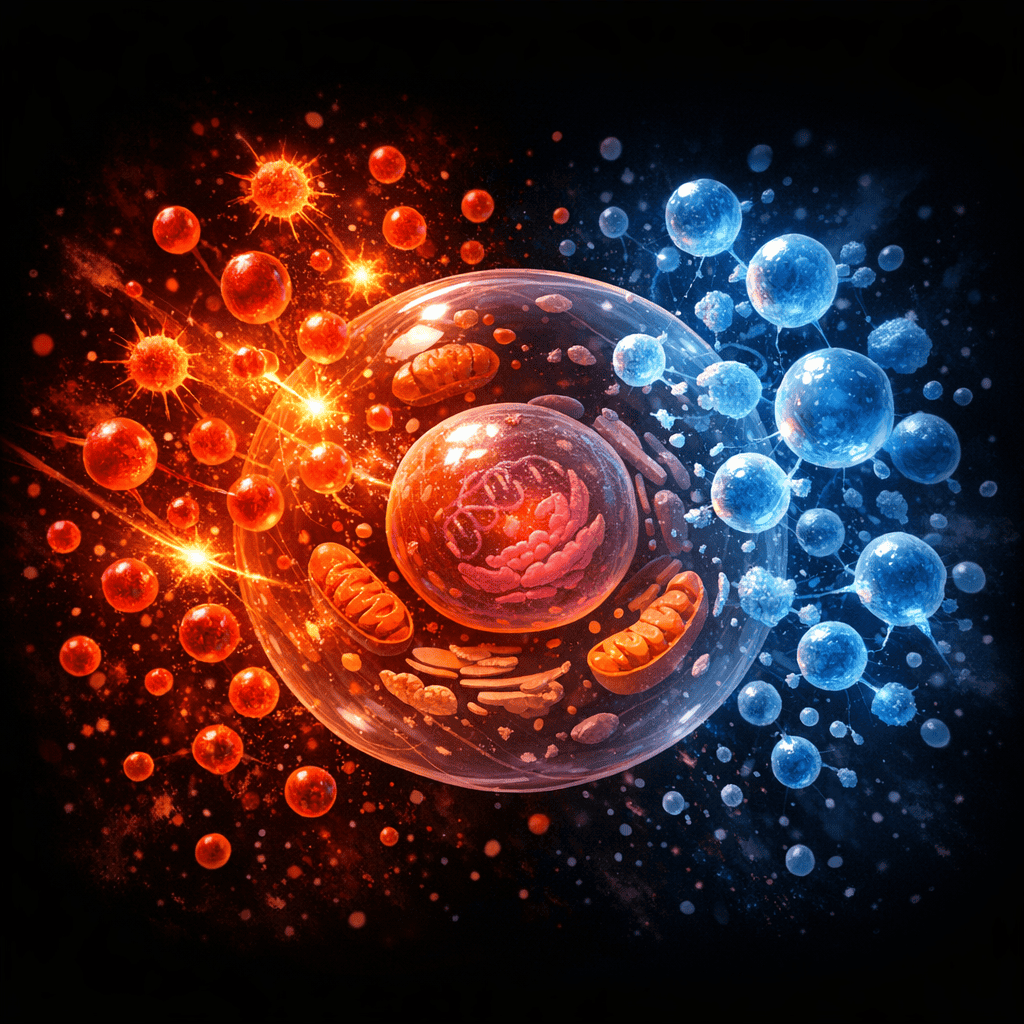
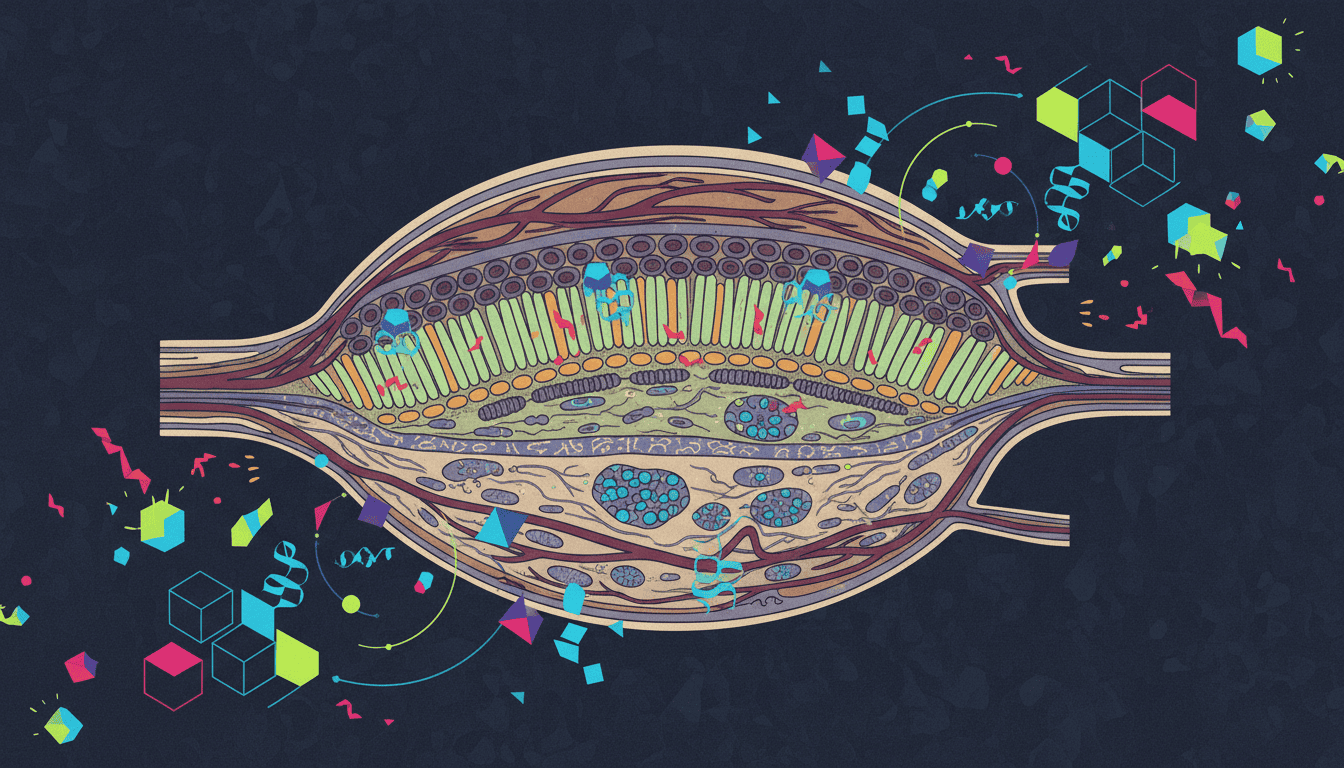
Your retina burns through more oxygen per gram of tissue than almost any other part of your body. This metabolic intensity makes it exquisitely sensitive to disruptions in redox balance – the delicate equilibrium between oxidising molecules and antioxidant defences. When this balance tips, retinal neurons start dying in patterns that show up in age-related macular degeneration, diabetic retinopathy, and glaucoma.
What is retinal redox signalling
Redox signalling in the retina operates like a sophisticated early warning system. Photoreceptors constantly convert light into electrical signals, a process that demands enormous amounts of energy and generates reactive oxygen species as metabolic byproducts. Under normal conditions, these reactive molecules serve as cellular messengers, fine-tuning gene expression and protein function.
The retinal pigment epithelium acts as the metabolic support crew for photoreceptors, recycling visual pigments and clearing cellular debris. This partnership requires precise redox communication. Antioxidant enzymes like superoxide dismutase and catalase work alongside glutathione systems to neutralise excess reactive oxygen species. When this system functions properly, oxidative stress remains within manageable limits.
But the retina walks a tightrope. Its high oxygen consumption, intense light exposure, and rich blood supply create a perfect storm for oxidative damage when protective mechanisms fail.
What the research shows
Studies tracking retinal degeneration reveal consistent patterns of redox imbalance preceding neuronal death. Researchers observe elevated levels of oxidative stress markers like 4-hydroxynonenal and malondialdehyde in degenerating retinas months before visible damage appears. These molecular fingerprints tell the story of lipids, proteins, and DNA under attack.
Scientists have mapped how different retinal cell types respond to oxidative stress. Photoreceptors show mitochondrial dysfunction first. Their energy-producing organelles start leaking reactive oxygen species, creating a vicious cycle where damage begets more damage. Müller glia, the retina’s support cells, initially try to compensate by ramping up antioxidant production, but eventually become overwhelmed.
Laboratory experiments demonstrate that blocking specific redox signalling pathways can either protect neurons or accelerate their death, depending on the timing and context. This suggests that oxidative stress isn’t simply bad – it’s about losing the ability to respond appropriately to oxidative challenges.
Animal models show that retinal neurons die through multiple pathways when redox balance fails. Some cells activate programmed death cascades, others simply run out of energy as their mitochondria fail. The pattern varies depending on which part of the redox network breaks down first.
Why cells need this
Evolution preserved oxidative stress responses because they solve fundamental problems of cellular survival. Reactive oxygen species aren’t just dangerous waste products – they’re essential signalling molecules that help cells adapt to changing conditions. When light levels shift or energy demands spike, controlled oxidative stress triggers protective responses.
The NRF2 pathway exemplifies this adaptive logic. When cells detect rising oxidative stress, NRF2 moves into the nucleus and switches on genes for antioxidant enzymes, stress proteins, and DNA repair machinery. This response evolved to handle temporary challenges, not chronic oxidative burden.
Retinal cells particularly depend on redox signalling for metabolic flexibility. Photoreceptors must rapidly adjust their energy production as light conditions change. The chemical messaging provided by reactive oxygen species helps coordinate these adjustments across different cellular compartments.
The system also provides quality control. Mild oxidative stress helps cells identify and remove damaged proteins before they accumulate into toxic aggregates. This housekeeping function becomes increasingly important as cells age and accumulate molecular wear and tear.
What affects retinal redox balance
Age systematically degrades the retina’s redox defences. Antioxidant enzyme activity declines while oxidative damage accumulates in long-lived proteins and lipids. The retinal pigment epithelium struggles to clear metabolic waste, creating a toxic backlog that further stresses the system.
Light exposure patterns influence oxidative stress levels. Blue light generates more reactive oxygen species than longer wavelengths, explaining why researchers focus on blue light’s potential for retinal damage. However, the relationship isn’t straightforward – some light exposure appears necessary for maintaining healthy redox signalling.
Metabolic conditions like diabetes flood retinal blood vessels with excess glucose, overwhelming cellular antioxidant systems. High glucose levels also generate advanced glycation end products that directly damage retinal proteins and trigger inflammatory responses.
Dietary antioxidants provide raw materials for the retina’s defence systems. Nutrients like lutein and zeaxanthin concentrate in retinal tissue, where they absorb harmful light wavelengths and scavenge reactive oxygen species. However, supplementation studies show mixed results, suggesting that timing and context matter more than simple antioxidant levels.
Smoking dramatically increases oxidative stress throughout the body, including the retina. The thousands of reactive compounds in cigarette smoke overwhelm antioxidant defences and accelerate retinal degeneration in population studies.
What remains unknown
Scientists still puzzle over why some people’s retinas resist oxidative damage while others succumb quickly under similar conditions. Genetic variations in antioxidant enzymes explain some of this difference, but environmental and lifestyle factors interact with genetics in ways researchers don’t fully understand.
The timing of interventions remains mysterious. Laboratory studies show that antioxidants can either protect or harm retinal cells depending on when they’re administered and at what concentrations. This suggests that successful treatments will need to consider the dynamic nature of redox signalling rather than simply blocking oxidation.
Researchers debate whether oxidative stress causes retinal degeneration or results from it. Evidence exists for both directions of causation, indicating that oxidative stress probably operates as both trigger and consequence in a complex feedback loop.
The role of different reactive oxygen species remains unclear. Not all oxidative stress is created equal – some reactive molecules appear protective while others cause immediate damage. Scientists are working to map these distinctions and understand how cells distinguish between helpful and harmful oxidative signals.
Understanding how the retina’s redox tightrope act goes wrong opens windows into broader questions about cellular ageing and neurodegeneration. The eye’s transparency makes it a unique laboratory for studying these processes in real time. As researchers decode the retina’s redox language, they’re revealing fundamental principles about how cells balance survival and function under oxidative pressure.

Matt Elliott is the editor of Redox News Today, an independent publication covering peer-reviewed research on cellular health, redox signalling, and related biomedical science.