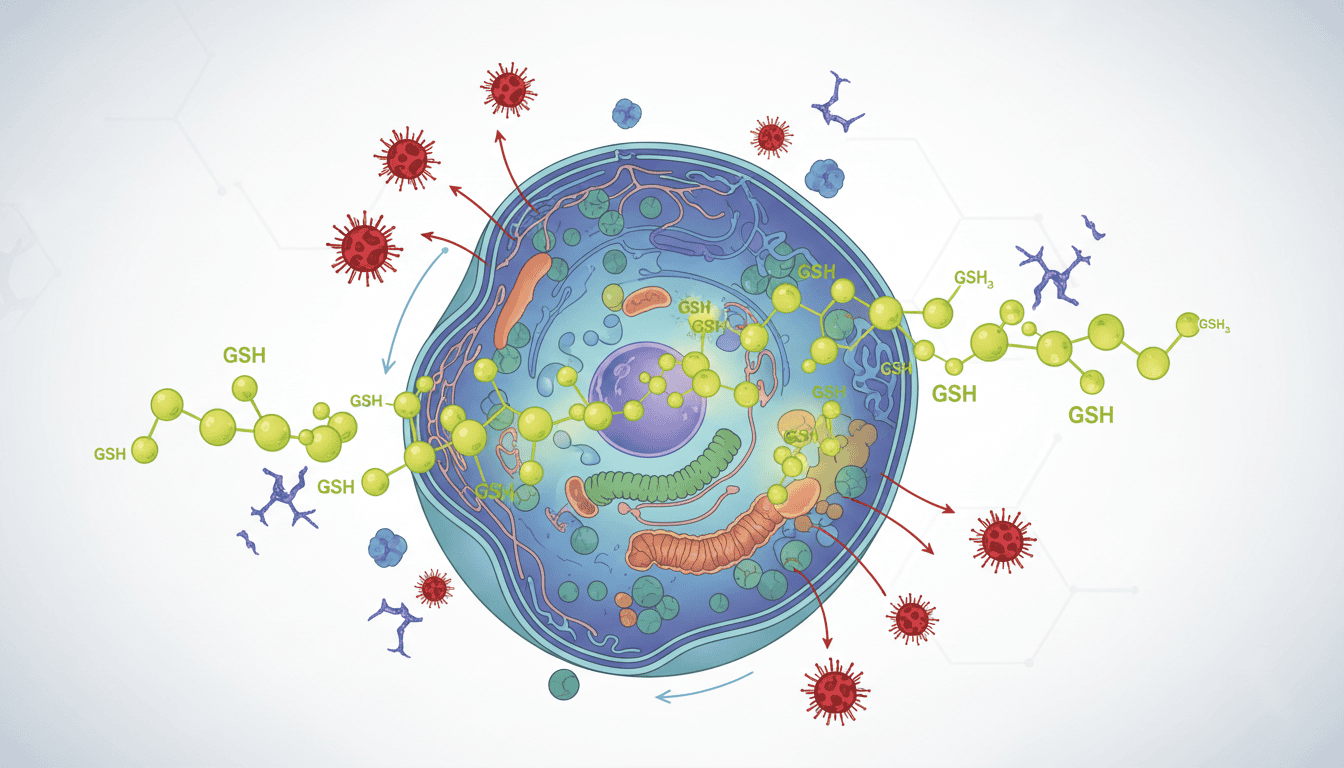
When your body fights an infection, immune cells produce reactive oxygen species like hydrogen peroxide to kill pathogens. It’s chemical warfare at the cellular level. But this same oxidative firepower that destroys invaders can damage healthy tissues if left unchecked. Enter glutathione, a small molecule that acts as your cells’ primary defence against oxidative damage during illness.
What is glutathione
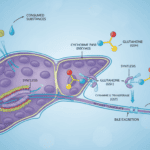
Glutathione is a tripeptide made from three amino acids: cysteine, glutamic acid, and glycine. Your cells manufacture it constantly, and for good reason. It exists in two main forms: reduced glutathione (GSH), which does the actual antioxidant work, and oxidised glutathione (GSSG), which forms when GSH neutralises harmful molecules.
Think of GSH as a cellular firefighter. When it encounters a reactive oxygen species, it donates electrons to neutralise the threat, transforming itself into GSSG in the process. Your cells then recycle GSSG back to GSH using an enzyme called glutathione reductase, powered by NADPH. This recycling system means a single glutathione molecule can be reused hundreds of times.
Glutathione doesn’t work alone. It teams up with enzymes like glutathione peroxidase to break down hydrogen peroxide and lipid peroxides. It also regenerates other antioxidants like vitamin C and vitamin E after they’ve been oxidised, essentially bringing them back into the fight.
What the research shows
Studies reveal that glutathione levels drop significantly during acute illness. Researchers have documented this depletion in conditions ranging from viral infections to sepsis. The more severe the illness, the greater the depletion tends to be.
Scientists have observed that immune cells consume enormous amounts of glutathione when activated. Neutrophils, the first responders of immune defence, burn through their glutathione stores rapidly when they release oxidative bursts to kill bacteria. T-cells require adequate glutathione to proliferate and function effectively during viral infections.
Research shows the liver increases glutathione production during illness, but this ramped-up synthesis often can’t keep pace with consumption. Blood glutathione levels can drop by 40-80% in severe illness. Tissue levels follow a similar pattern, with organs like the lungs and kidneys showing marked depletion during inflammatory conditions.
Laboratory studies demonstrate that cells with higher glutathione levels survive oxidative stress better than those with depleted stores. When researchers artificially deplete glutathione in cell cultures, the cells become much more vulnerable to damage from hydrogen peroxide and other oxidants.
Why cells need this defence
Evolution preserved glutathione synthesis across virtually all life forms because oxidative damage poses an existential threat to cells. DNA, proteins, and lipid membranes all suffer damage when exposed to reactive oxygen species. Without adequate antioxidant defence, cellular machinery breaks down rapidly.
During illness, this need intensifies dramatically. Immune activation creates a controlled oxidative storm designed to eliminate threats. But biological systems must balance offensive and defensive capabilities. Glutathione provides that balance, allowing immune cells to deploy oxidative weapons while protecting surrounding healthy tissue.
The molecule also supports protein folding and enzyme function under stress. Many cellular processes depend on precise protein shapes, which oxidative damage can distort. Glutathione helps maintain these structures when cells face oxidative pressure.
Glutathione enables cellular repair mechanisms too. DNA repair enzymes require a reducing environment to function properly. When glutathione levels drop too low, cells lose their ability to fix oxidative damage to their genetic material.
What affects glutathione during illness
Age significantly impacts glutathione metabolism during illness. Older adults typically have lower baseline glutathione levels and reduced synthetic capacity. Their cells produce less glutathione reductase, hampering the recycling of oxidised glutathione back to its active form.
Nutritional status plays a major role. Cysteine availability often becomes the limiting factor in glutathione synthesis during illness. Glycine and glutamic acid are usually abundant, but cysteine can become scarce when demand spikes. Selenium deficiency impairs glutathione peroxidase activity, reducing the efficiency of the entire system.
The type and severity of illness matters enormously. Respiratory infections that trigger significant lung inflammation deplete local glutathione stores rapidly. Systemic infections that activate immune responses throughout the body create widespread glutathione consumption. Conditions that impair liver function reduce glutathione synthetic capacity precisely when demand peaks.
Certain medications can affect glutathione levels. Acetaminophen depletes glutathione stores, particularly in the liver. Some chemotherapy drugs interfere with glutathione synthesis or function. Even common antibiotics can influence glutathione metabolism in various ways.
What remains unknown
Scientists still debate optimal glutathione levels during different types of illness. While depletion clearly occurs, researchers haven’t established precise thresholds below which cellular function becomes compromised. The relationship between tissue levels and blood levels remains poorly understood too.
The timing of glutathione depletion and recovery during illness needs more investigation. Some studies suggest levels begin dropping before clinical symptoms appear, but this pattern hasn’t been confirmed across different conditions. Recovery timelines vary widely between individuals for reasons that aren’t clear.
Researchers are still working out how different organs prioritise glutathione during systemic illness. The brain appears to maintain levels better than other tissues, but the mechanisms behind this protection aren’t fully characterised. Whether cells can signal their glutathione needs to other parts of the body remains an open question.
The interaction between glutathione and other antioxidant systems during illness needs more study. How the molecule coordinates with catalase, superoxide dismutase, and other defence mechanisms isn’t completely mapped out.
Understanding glutathione’s role during illness reveals how cellular defence systems adapt to extreme stress. Your cells deploy sophisticated biochemical strategies to survive oxidative challenges, with glutathione serving as a crucial component of this protective network. The research shows how illness pushes cellular systems to their limits and highlights the elegant ways evolution has equipped cells to fight back against oxidative damage.

Matt Elliott is the editor of Redox News Today, an independent publication covering peer-reviewed research on cellular health, redox signalling, and related biomedical science.