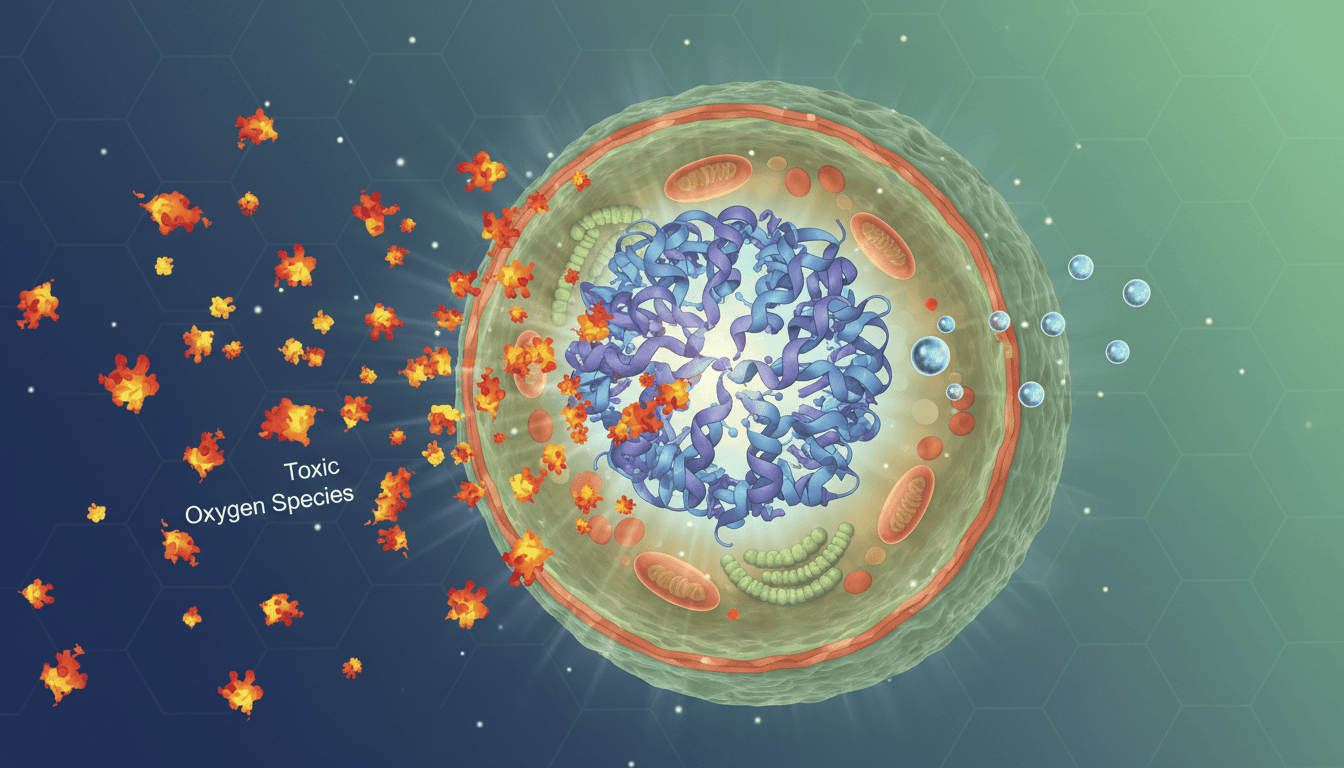
Every second, your cells produce around 200 billion molecules of hydrogen peroxide as an unavoidable byproduct of making energy. Left unchecked, this reactive chemical would tear through cell membranes like acid through paper. Yet somehow, your cells thrive in this toxic environment thanks to a single enzyme working around the clock: glutathione peroxidase.
What is glutathione peroxidase
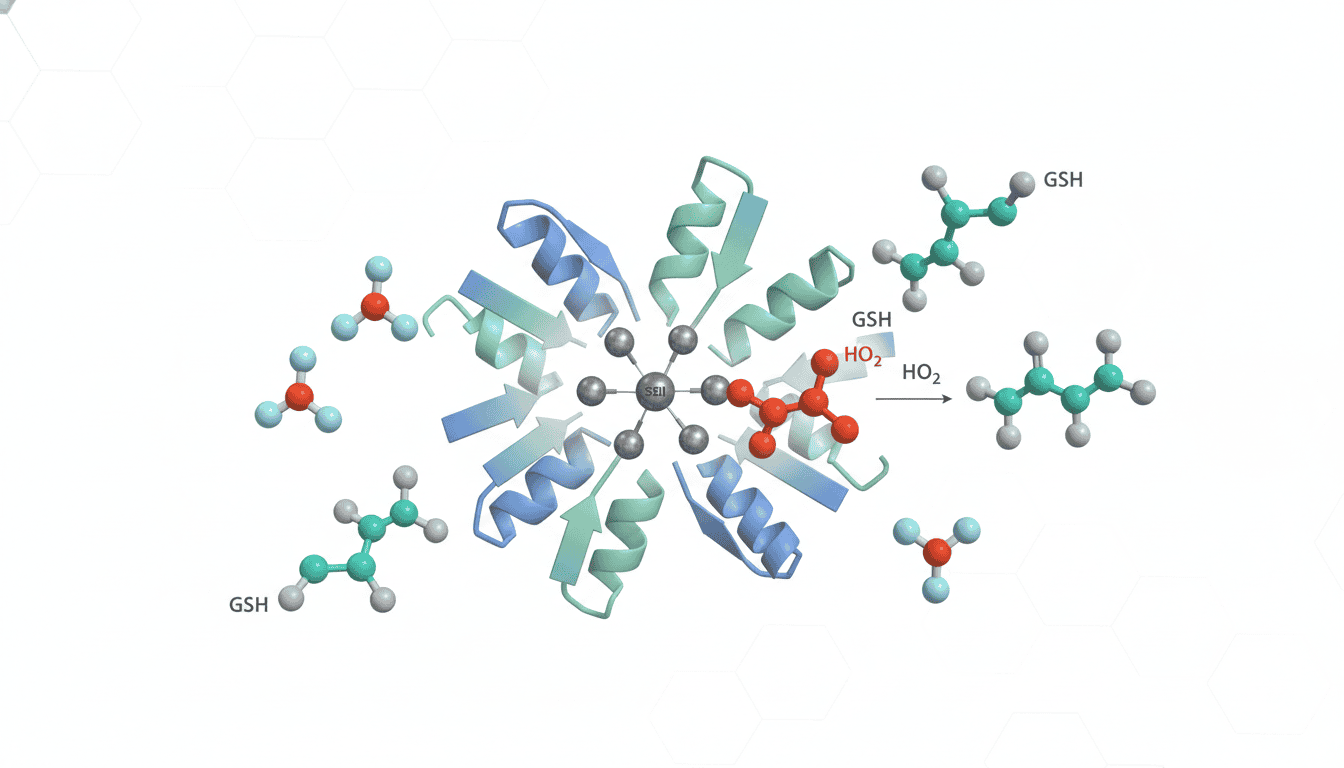
Glutathione peroxidase belongs to a family of antioxidant enzymes that neutralise harmful peroxides before they can damage cellular structures. Think of it as a highly specialised bomb disposal unit. When the enzyme encounters hydrogen peroxide or other organic peroxides, it uses glutathione as ammunition to convert these dangerous molecules into harmless water and oxygen.
The reaction happens with remarkable efficiency. A single glutathione peroxidase molecule can neutralise thousands of peroxide molecules per second. The enzyme contains selenium at its active site, which makes it one of the few proteins in your body that absolutely requires this trace mineral to function. Without selenium, glutathione peroxidase becomes a useless chunk of protein.
Your body produces several different versions of this enzyme, each tailored for specific cellular locations. Glutathione peroxidase 1 works inside cells, protecting DNA and organelles. Glutathione peroxidase 4 specialises in protecting cell membranes from lipid peroxidation. Others patrol the bloodstream or guard specific tissues like the liver and kidneys.
What the research shows
Studies reveal just how critical this enzyme system is for cellular survival. When researchers knock out glutathione peroxidase genes in laboratory animals, the results are dramatic. Mice lacking glutathione peroxidase 4 die during embryonic development, their cells unable to cope with normal oxidative stress.
More subtle deficiencies tell an equally compelling story. Animals with reduced glutathione peroxidase activity show accelerated cellular ageing, increased DNA damage, and heightened vulnerability to toxins. Their mitochondria produce less energy efficiently, and their immune cells struggle to function properly.
Human studies paint a similar picture. People with genetic variants that reduce glutathione peroxidase activity have higher rates of oxidative damage markers in their blood. Population studies consistently link lower glutathione peroxidase activity with increased cellular stress across various tissues.
Perhaps most telling are selenium deficiency studies. In regions where soil selenium levels are extremely low, people develop characteristic signs of glutathione peroxidase dysfunction, including muscle weakness and increased susceptibility to viral infections. Their cells simply cannot mount an adequate antioxidant defence.
Why cells need this protection
The need for glutathione peroxidase stems from a fundamental problem with oxygen-based metabolism. When mitochondria burn glucose and fats for energy, they inevitably leak electrons that react with oxygen to form reactive species. This is not a design flaw but an unavoidable consequence of chemistry.
Evolution solved this problem by developing sophisticated antioxidant systems, with glutathione peroxidase as a key component. The enzyme provides a crucial second line of defence after superoxide dismutase neutralises the initial reactive oxygen species. Without this coordinated system, complex life as we know it could not exist.
The enzyme also serves a regulatory function beyond simple detoxification. Low levels of hydrogen peroxide actually serve as important cellular signals, triggering adaptive responses and communication between cells. Glutathione peroxidase helps maintain peroxide levels in the sweet spot where they can signal without causing damage.
This dual role explains why cells need precise control over glutathione peroxidase activity. Too little enzyme leads to oxidative damage. Too much can disrupt normal cellular signalling pathways that depend on controlled oxidative stress.
What affects glutathione peroxidase activity
Selenium intake stands as the most critical factor determining glutathione peroxidase function. The enzyme cannot work without adequate selenium, and deficiency quickly leads to reduced activity. Most developed countries have sufficient dietary selenium, but levels can vary significantly based on local soil conditions and food sources.
Age naturally reduces glutathione peroxidase activity in many tissues. Older adults typically show 20-40% lower enzyme activity compared to younger people, contributing to increased oxidative stress with ageing. This decline appears linked to both reduced enzyme synthesis and accumulated cellular damage over time.
Environmental toxins can overwhelm the glutathione peroxidase system. Heavy metals like mercury and cadmium directly inhibit the enzyme, while air pollution and chemical exposures increase the oxidative burden beyond what normal enzyme levels can handle. Chronic exposure gradually depletes the cellular glutathione stores that fuel the enzyme.
Exercise presents an interesting paradox. Intense physical activity temporarily increases oxidative stress and can deplete glutathione peroxidase activity in the short term. However, regular moderate exercise actually boosts the production of antioxidant enzymes, including glutathione peroxidase, creating a stronger overall defence system.
What remains unknown
Scientists still debate the optimal levels of glutathione peroxidase activity for different life stages and conditions. While severe deficiency clearly causes problems, researchers cannot pinpoint the ideal activity levels for long-term cellular health. Some evidence suggests that moderate increases might be beneficial, but the relationship is not straightforward.
The interaction between different antioxidant systems remains poorly understood. Glutathione peroxidase works alongside catalase, superoxide dismutase, and numerous other protective molecules, but scientists are still mapping how these systems coordinate their activities and compensate for each other’s limitations.
Individual genetic variation adds another layer of complexity. People carry different versions of glutathione peroxidase genes that affect enzyme efficiency, but researchers have only begun to understand how these differences translate into real-world health outcomes. The field of personalised antioxidant requirements is still in its infancy.
The enzyme’s role in cellular signalling also needs more research. Scientists know that glutathione peroxidase affects hydrogen peroxide signalling, but the downstream consequences for gene expression, metabolism, and cellular behaviour remain largely uncharted territory.
This humble enzyme represents one of evolution’s most elegant solutions to the toxicity of oxygen-based life. As researchers continue mapping the intricate networks of cellular defence, glutathione peroxidase stands as a reminder that the most important biological processes often happen invisibly, millions of times per second, in every cell of your body. Understanding these molecular guardians brings us closer to grasping how life maintains itself in a chemically hostile world.

Matt Elliott is the editor of Redox News Today, an independent publication covering peer-reviewed research on cellular health, redox signalling, and related biomedical science.