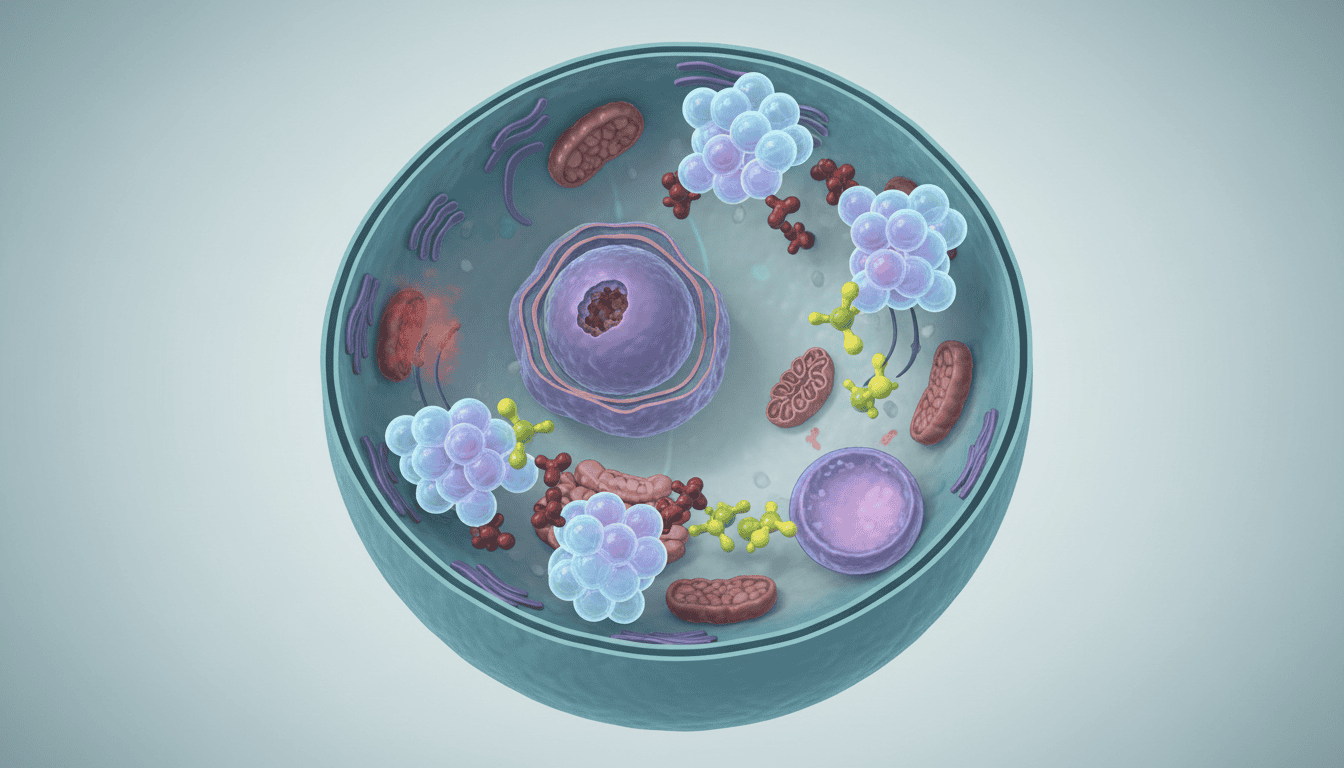
Every second, your cells face a chemical assault from hundreds of potentially harmful compounds. Some arrive from the environment through food, air, or water. Others form naturally inside cells as byproducts of normal metabolism. Yet most cells survive this constant barrage thanks to a family of molecular bodyguards called glutathione S-transferase enzymes. These proteins work like specialised bouncers, identifying troublesome chemicals and escorting them safely out of the cell before they can cause damage.
What are glutathione S-transferase enzymes
Glutathione S-transferases, or GSTs, are enzymes that attach glutathione molecules to foreign chemicals and cellular toxins. Think of glutathione as a molecular taxi service. When a potentially harmful compound enters a cell, GST enzymes grab it and stick it to glutathione, creating a new compound that cells can easily recognise and remove.
Humans carry at least 16 different GST enzymes, each specialising in different types of chemical threats. Some focus on environmental toxins like pesticides or industrial chemicals. Others target compounds produced during inflammation or oxidative stress. The enzymes cluster into distinct families with names like GSTA, GSTM, and GSTP, each optimised for specific molecular structures.
The process works through a simple but crucial chemical reaction. GST enzymes position a toxic molecule next to glutathione, then facilitate a bond between them. This conjugation reaction transforms a potentially dangerous compound into a water-soluble product that cells can pump out through their waste disposal systems.
What the research shows
Laboratory studies reveal that GST enzymes handle an enormous variety of chemical threats. Researchers have documented their activity against everything from acetaminophen metabolites to cancer-causing compounds found in grilled meat. The enzymes also process aldehydes formed during lipid peroxidation, reactive metabolites from alcohol breakdown, and synthetic chemicals from industrial processes.
Different GST variants show dramatically different activity levels. Scientists have identified genetic variants that produce highly active enzymes alongside others that barely function. These differences help explain why some people tolerate certain medications or environmental exposures better than others. Population studies show that GST enzyme variants cluster geographically, suggesting different selective pressures shaped their evolution.
Cancer research has revealed particularly clear patterns. Tumour cells often overproduce specific GST enzymes, especially GSTP1. This adaptation helps cancer cells survive chemotherapy drugs designed to kill them. The same protective mechanism that shields healthy cells from toxins can unfortunately help malignant cells resist treatment.
Studies in liver cells demonstrate the enzymes’ central role in drug metabolism. Many pharmaceuticals require GST processing before elimination from the body. When researchers knock out specific GST genes in laboratory animals, the animals become hypersensitive to compounds that healthy animals handle easily.
Why cells need this defence system
Chemical detoxification represents one of life’s fundamental challenges. Even simple metabolic processes generate potentially harmful byproducts. Glucose metabolism produces reactive aldehydes. Fat breakdown creates toxic lipid peroxides. Protein turnover generates ammonia and other nitrogen-containing waste products.
Plants compound this problem by producing thousands of defensive chemicals to deter herbivores. Early animals that could neutralise these plant toxins accessed new food sources and gained significant survival advantages. GST enzymes likely evolved as part of this ancient biochemical arms race between plants and animals.
The enzyme system provides remarkable flexibility. Rather than evolving specific defences against individual toxins, organisms developed general-purpose detoxification machinery. GST enzymes can handle novel synthetic chemicals that never existed during evolution because they recognise broad chemical patterns rather than specific molecular structures.
Glutathione conjugation also serves as a backup system. When other detoxification pathways become overwhelmed, GST enzymes provide additional processing capacity. This redundancy proves especially important during acute exposures or when primary detoxification systems malfunction.
What affects GST enzyme activity
Genetic variation creates the strongest influence on GST enzyme levels. Some people inherit highly active enzyme variants while others carry nearly non-functional copies. The GSTM1 and GSTT1 genes show particularly dramatic differences, with complete gene deletions occurring in substantial portions of many populations.
Age significantly affects enzyme activity. GST levels generally decline with advancing years, potentially contributing to increased chemical sensitivity in older adults. This age-related decline occurs alongside reductions in glutathione synthesis, creating a double burden on cellular detoxification capacity.
Chronic exposure to toxins can both induce and deplete GST enzymes. Low-level exposures often trigger increased enzyme production as cells adapt to chemical stress. However, overwhelming exposures can exhaust the system, depleting glutathione stores and reducing enzyme effectiveness.
Nutritional factors influence enzyme function through multiple pathways. Selenium availability affects GST enzyme structure. Adequate protein intake supports glutathione synthesis. Various plant compounds can either inhibit or enhance specific GST variants, creating complex interactions between diet and detoxification capacity.
What remains unknown
Scientists still struggle to predict which chemicals specific GST variants will process effectively. While general patterns exist, the enzymes’ broad substrate specificity makes precise predictions difficult. This knowledge gap complicates efforts to assess individual risk from environmental exposures.
The relationship between GST activity and disease outcomes remains surprisingly unclear. Though logical arguments suggest that higher enzyme activity should improve health outcomes, epidemiological studies show mixed results. Some populations with lower GST activity actually demonstrate better health metrics in certain contexts.
Researchers cannot yet explain why different tissues express distinct GST enzyme profiles. Liver cells favour certain variants while brain cells emphasise others. Whether these patterns reflect tissue-specific threats or historical evolutionary accidents remains debatable.
The enzymes’ role in normal cellular signalling continues to surprise investigators. Beyond detoxification, GSTs appear to influence inflammation, cell death pathways, and stress responses. These regulatory functions may prove as important as their traditional detoxification roles.
Understanding GST enzymes reveals the remarkable sophistication of cellular defence systems. These proteins represent millions of years of evolutionary refinement, creating molecular machinery capable of recognising and neutralising threats that cells have never encountered. Their existence reminds us that every cell operates as a complex chemical factory, complete with quality control systems and waste management protocols that put human industrial processes to shame.

Matt Elliott is the editor of Redox News Today, an independent publication covering peer-reviewed research on cellular health, redox signalling, and related biomedical science.