Your immune cells produce a peptide so small you could fit trillions inside a cell nucleus, yet it coordinates a response to oxidative stress with the precision of an air traffic controller managing a busy airport. That peptide is LL-37, and researchers are discovering it does far more than kill bacteria. It acts as a messenger between your cells’ danger sensors and their defence systems, translating chemical chaos into organised protective action.
What is LL-37
LL-37 is an antimicrobial peptide, part of a family of short protein chains that defend against infection. Your immune cells manufacture it and release it when they encounter pathogens or stress. But peptides like LL-37 are promiscuous workers. They don’t stick to one job description.
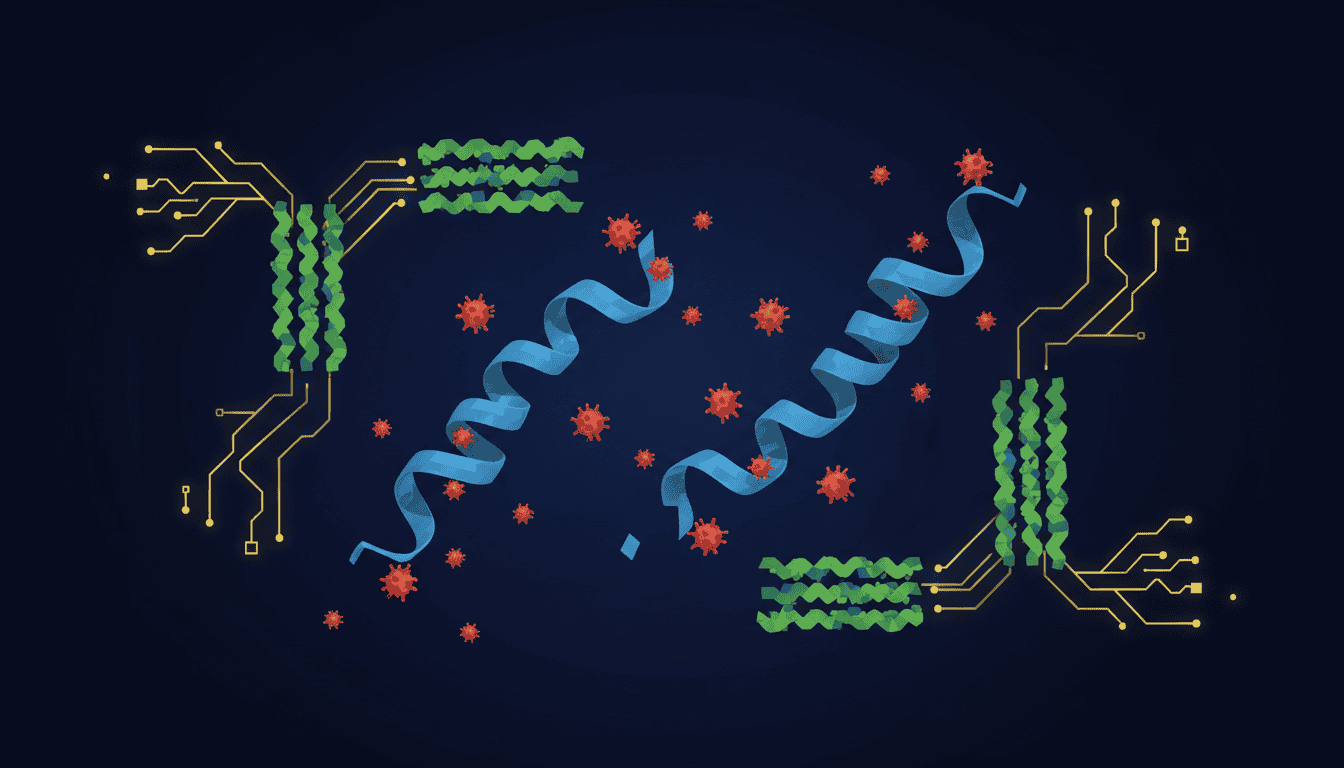
Think of it as a molecule with multiple telephone lines. One line connects to bacterial membranes, puncturing them. Another line reaches into your cells’ signalling networks, flipping switches that activate protective genes. A third line modulates inflammation. What makes LL-37 particularly interesting to redox biologists is how it behaves when oxidative stress changes the chemical environment inside and around cells.
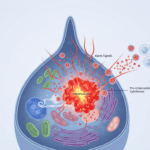
The peptide exists in different states depending on the local redox conditions. When reactive oxygen species accumulate, the chemical landscape shifts. LL-37 responds by altering its shape and activity, making it a natural sensor of cellular distress that also triggers appropriate responses.
What the research shows
Studies examining LL-37 in oxidative environments reveal something counterintuitive: under certain conditions of oxidative stress, the peptide becomes more effective at activating immune defence genes. Researchers observed that when cells face elevated reactive oxygen species, LL-37 engages more strongly with specific receptors on cell surfaces and within cells, particularly those involved in pattern recognition and immune signalling.
One consistent finding across multiple cell types is that LL-37 amplifies the activation of NRF2, a master regulator of antioxidant genes. When oxidative stress accumulates, LL-37 appears to push NRF2 over the threshold needed for sustained gene activation. This isn’t passive. The peptide actively enhances the signalling cascade.
Research also shows LL-37 influences NF-kB pathways, which control inflammatory genes. Under conditions of moderate oxidative stress, the peptide can fine-tune this response rather than trigger all-out inflammation. Under severe stress, it amplifies protective signalling. The relationship isn’t linear. Context matters enormously.
What’s emerged from examining LL-37 at the molecular level is that the peptide’s redox state itself changes its potency. When electrons are stripped from the peptide by reactive oxygen species, its structure shifts slightly, exposing different binding surfaces. It’s as though the peptide carries a sensor built into its backbone.
Why cells need this
Oxidative stress doesn’t announce itself politely. Reactive oxygen species accumulate gradually, then suddenly cells face a crisis. The organism that waits until massive damage occurs before mounting a response is an organism that doesn’t survive predators, infection, or metabolic challenges.
LL-37 solves a timing problem. Because it’s produced by immune cells already positioned at infection sites and in tissues under stress, the peptide acts locally and quickly. It doesn’t need to wait for stress signals to travel through the bloodstream. It’s already there, already in the right chemical environment.
Evolution preserved LL-37 partly because it bridges two essential systems: immediate immune defence and longer-term metabolic adaptation. When an invading bacterium triggers LL-37 release, the peptide kills the pathogen and simultaneously primes the infected cell to upregulate its own antioxidant defences. This double action accelerates recovery.
The redox-sensing aspect adds another layer of logic. By responding differently to different oxidative states, LL-37 prevents cells from over-reacting to minor stress or under-reacting to serious threats. It’s a volume control that adjusts based on the severity of the problem.
What affects LL-37
Several factors influence how effectively LL-37 functions in redox-sensitive networks. Age is one. Older adults produce LL-37, but the peptide’s ability to mobilise protective responses declines. This correlates with reduced NRF2 activation in response to oxidative stress, a pattern observed across tissues.
Infection itself drives LL-37 production, but chronic low-grade infection or persistent immune activation can exhaust this response. Cells that continuously pump out LL-37 eventually desensitise to its signals, much like cells exposed to constant noise tune out the background.
Environmental factors alter LL-37’s effectiveness too. Oxidative stress from pollution, ultraviolet radiation, or dietary factors shifts the redox environment in ways that either enhance or blunt the peptide’s signalling capacity. Tissue type matters as well. LL-37 behaves differently in skin compared to lung tissue, partly because local metabolic conditions and cellular composition vary.
Research indicates that certain dietary components, particularly those affecting cellular redox balance, influence how responsive cells are to LL-37 signalling. Zinc status affects the production of LL-37 itself. Iron metabolism influences the background oxidative state that determines whether LL-37 encounters high or low concentrations of reactive oxygen species.
What remains unknown
Despite growing interest, substantial gaps remain in understanding LL-37’s redox signalling role. Researchers still can’t fully explain why LL-37 activates some redox-sensitive pathways more than others in different cell types. The molecular details of how oxidative modification of LL-37 itself changes its receptor binding remain partially unclear.
Whether LL-37 directly senses reactive oxygen species or primarily responds to downstream products of oxidative stress is an active question. The peptide’s structure changes when exposed to oxidising conditions, but which specific molecular changes drive which signalling outcomes needs further investigation.
The relationship between LL-37 and ageing is another frontier. We know the peptide’s effectiveness declines with age, but whether this reflects reduced production, reduced responsiveness in target cells, or accumulation of obstacles to signalling remains incompletely understood. Long-term exposure studies examining how chronic LL-37 signalling affects cellular redox homeostasis are also limited.
Clinically, researchers wonder whether strategies to enhance LL-37 function might support cellular resilience during stress, but moving from observational science to actionable interventions requires much deeper understanding of causation versus correlation.
LL-37 illustrates why cellular redox biology matters at the most basic level. Your cells don’t exist in isolation, floating in a uniform chemical soup. They constantly sense their surroundings, detect chemical hazards, and coordinate responses using molecules that carry information encoded in their shape and reactivity. A tiny peptide produced by one cell type can integrate signals across multiple defence systems, creating coherent protective action. Understanding these networks teaches us how cellular chaos becomes cellular order, and why that capacity declines with age or disease.

Matt Elliott is the editor of Redox News Today, an independent publication covering peer-reviewed research on cellular health, redox signalling, and related biomedical science.