
Your cells contain hundreds of tiny power plants, each one slowly wearing out. Unlike a car engine, though, you can’t just replace them. Instead, your body has evolved ways to repair, replace, and manage these failing mitochondria. Right now, researchers working across multiple institutions are developing new tools to watch this process happen in real time, and what they’re finding is changing how we think about why we age.
What is mitochondrial targeting
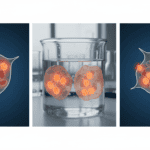
Mitochondrial targeting sounds technical, but the concept is straightforward. Your cells need to identify which mitochondria are still working well and which ones are becoming liabilities. They do this using molecular signals, like fluorescent proteins that light up when attached to specific structures. Scientists can engineer these signals to accumulate in mitochondria with particular characteristics. When a mitochondrial membrane starts breaking down, or when the energy-producing capacity drops, these targeted markers highlight the damage. Think of it as attaching tiny neon signs to cellular power plants so researchers can see which ones are failing without actually destroying the cell to look inside.
The targeting approach combines several techniques. Researchers design proteins that will travel specifically to mitochondria, rather than getting lost in the cytoplasm or nucleus. They often use sequences of amino acids that act like postal codes, directing the protein to the right compartment. Once there, the marker can bind to damaged structures like oxidised lipids or broken cristae, the folded inner membranes that generate energy. This specificity matters enormously. Without it, you’re measuring background noise.
What the research shows
Recent collaborative work has produced several concrete findings. When researchers use targeted fluorescent markers on ageing cells, they observe a clear pattern. Mitochondrial membrane potential declines gradually over time, but it doesn’t happen uniformly. Some cells lose function quickly while neighbouring cells maintain reasonable energy production for much longer. This heterogeneity is important. It suggests that ageing isn’t a coordinated programme running at the same speed in every mitochondrion.
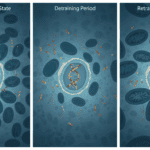
The research also reveals that cells have active mechanisms for managing damaged mitochondria. Rather than simply letting them accumulate, cells activate a process called mitophagy, essentially eating the broken ones. When researchers track mitochondria over hours and days, they can see this happening. The damaged organelles get tagged with ubiquitin, a protein that marks them for destruction. Then autophagy machinery engulfs them and breaks them down. This isn’t passive degradation. It’s active cellular housekeeping.
In older cells, this system falters. The targeting of damaged mitochondria still occurs, but the clearance becomes slower and less efficient. Broken mitochondria linger longer in the cytoplasm. Some cells appear to accumulate partially degraded organelles, suggesting the machinery that normally recycles them isn’t working optimally. This accumulation correlates with reduced cellular energy production and increased oxidative stress.
Why cells need this
Mitochondria are fundamentally unstable machines. They generate energy by splitting electrons from nutrients, but this process inevitably creates free radicals as a byproduct. These reactive molecules damage the very lipids and proteins that make the mitochondrion function. Over time, this damage accumulates. A mitochondrion with a hole in its membrane can’t maintain the electrical gradient needed to produce ATP. A damaged respiratory complex stops shuttling electrons efficiently.
Evolution faced a choice. Either accept that mitochondria will fail and replace the whole cell regularly, or develop systems to identify and remove the problematic ones before they cause too much damage. Cells evolved the latter strategy. The targeting and removal of defective mitochondria keeps the cell’s overall energy budget stable. It prevents the accumulation of dangerous free radicals that could spread to other organelles or the nucleus. Without this mechanism, a few damaged mitochondria would poison the whole cell’s metabolism.
There’s also a signalling aspect. Cells appear to use information from their mitochondrial health status to make decisions about whether to divide, repair themselves, or undergo controlled death. A cell surrounded by failing mitochondria knows it’s in trouble. It can respond by triggering apoptosis, a clean suicide that prevents the damaged cell from becoming cancerous or infected. This surveillance system depends on accurately detecting mitochondrial problems, which is where targeting becomes critical.
What affects mitochondrial targeting
Age is the obvious factor. The efficiency of mitochondrial targeting declines measurably in older cells and tissues. But age isn’t destiny. Physical activity appears to preserve the system. Cells from regularly exercising people maintain more effective mitochondrial quality control than sedentary counterparts. The mechanism probably involves improved energetic status and better expression of the proteins that handle autophagy.
Nutritional state matters significantly. Caloric restriction enhances the targeting and clearance of damaged mitochondria in experimental systems, possibly through activation of AMP-activated protein kinase, a sensor of low energy. Conversely, chronic excess nutrition appears to overwhelm the system. Cells in obese tissues show impaired mitophagy and accumulated mitochondrial damage.
Redox balance influences the process. High oxidative stress can actually damage the signalling proteins that initiate mitochondrial targeting. This creates a vicious cycle. Damaged mitochondria produce more free radicals, which impairs the ability to target them for removal. This is why antioxidant defences matter, not for stopping all oxidative chemistry, but for maintaining the fidelity of quality control mechanisms.
Temperature, sleep patterns, and circadian rhythms all affect mitochondrial targeting efficiency. Cold exposure activates brown adipose tissue and requires intense mitochondrial function, which seems to maintain targeting capacity. Disrupted sleep weakens the system, possibly because many autophagy proteins are expressed rhythmically.
What remains unknown
Scientists still don’t fully understand the molecular recognition step. How do cells distinguish a mitochondrion worth repairing from one that’s beyond salvage? The ubiquitin tagging system is active, but the initial decision point remains unclear. What threshold of membrane potential loss or cristae damage triggers the targeting signal?
The relative roles of different quality control pathways need clarification. Mitophagy is important, but cells also perform mitochondrial fusion and fission, allowing healthy segments to combine and damaged parts to be isolated. How do cells choose between these options? Does it depend on the location of damage, the age of the mitochondrion, or the energy status of the cell?
Researchers are also investigating whether there are tissue specific differences. Cardiac muscle cells, which are extremely energy demanding, might prioritise mitochondrial quality control differently than hepatocytes or neurons. If so, understanding those distinctions could reveal why different tissues age at different rates.
Finally, the relationship between mitochondrial targeting efficiency and lifespan remains correlational. Do cells that maintain excellent mitochondrial quality control actually live longer? Early evidence suggests yes, but the causality needs firmer establishment.
What emerges from this research is a picture of ageing that’s fundamentally about maintenance systems degrading. Your cells aren’t burning out like light bulbs on a fixed schedule. Instead, the mechanisms that keep their mitochondria functioning decline over time, and this decline appears reversible to some degree through behaviour. Understanding exactly how to preserve or restore mitochondrial targeting might reveal why some people age more slowly than others, and where interventions could potentially help cells maintain their energy for longer.

Matt Elliott is the editor of Redox News Today, an independent publication covering peer-reviewed research on cellular health, redox signalling, and related biomedical science.