
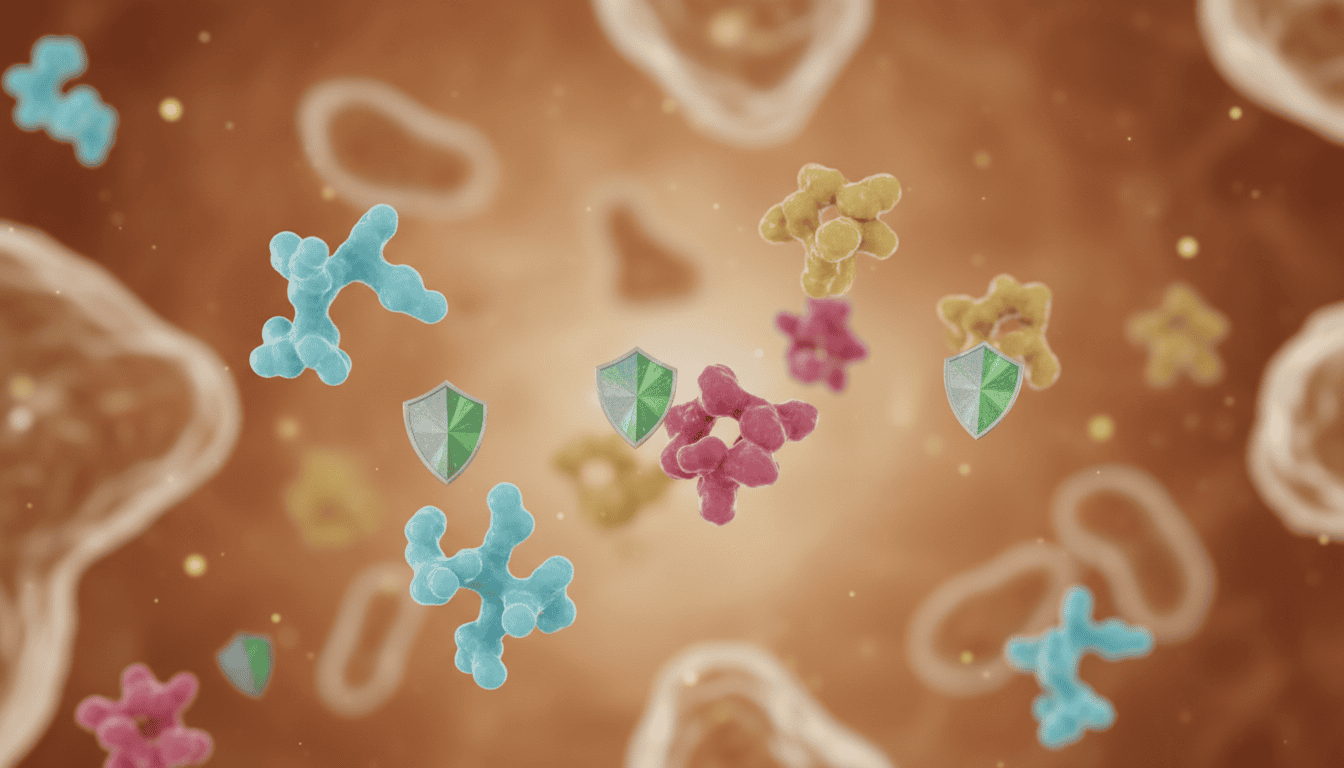
People who live past 100 carry different patterns of oxidative stress markers in their blood than the rest of us. Their cells seem to have worked out a different relationship with the constant molecular damage that comes with being alive. Scientists studying these exceptional agers have found that longevity isn’t just about having less oxidative stress – it’s about managing it differently.
What is oxidative stress signalling in ageing
Every cell in your body burns oxygen to make energy, and this process creates reactive molecules as byproducts. Think of it like a car engine producing exhaust. These reactive oxygen species can damage DNA, proteins, and cell membranes if left unchecked.
Your cells respond with an elaborate defence system. Antioxidant enzymes like catalase and superoxide dismutase neutralise the reactive molecules. Repair proteins fix damaged components. Other proteins clear away cellular debris. The balance between damage and defence determines how well your cells age.
But oxidative stress isn’t just about damage. Low levels of reactive oxygen species actually serve as signals, telling cells when to ramp up their defences or trigger repair processes. It’s the difference between a small fire that clears undergrowth and a wildfire that destroys everything.
What the research shows
Scientists studying centenarians have identified distinct protein signatures in their blood that differ from younger people and even healthy 80-year-olds. These exceptionally long-lived individuals show elevated levels of certain antioxidant enzymes, particularly glutathione peroxidase and paraoxonase.
Their inflammatory markers tell an interesting story too. While centenarians do show signs of chronic low-grade inflammation, the pattern differs from typical age-related inflammation. They have higher levels of anti-inflammatory proteins and better resolution of inflammatory responses.
Protein damage markers reveal another pattern. Centenarians have measurable oxidative damage to their proteins, but they also show enhanced protein quality control. Their cells appear more efficient at identifying and removing damaged proteins before they accumulate into harmful clumps.
Perhaps most intriguingly, centenarians maintain better redox balance – the cellular equilibrium between oxidising and reducing conditions. Their cells seem calibrated to operate within a narrow, optimal range of oxidative conditions.
Why cells need this balance
Evolution preserved oxidative stress responses because they serve essential functions beyond just damage control. Reactive oxygen species act as cellular messengers, coordinating responses to exercise, infection, and environmental changes.
When you exercise, your muscles generate more reactive oxygen species. This signals cells to build more mitochondria and strengthen antioxidant defences. Without this oxidative signalling, cells can’t adapt and improve. Complete elimination of oxidative stress would actually impair cellular function.
The inflammatory component serves a similar dual purpose. Acute inflammation helps clear infections and repair tissue damage. But the resolution of inflammation matters as much as its initiation. Cells that can’t properly wind down inflammatory responses stay stuck in a harmful chronic state.
Protein quality control becomes increasingly important with age because damaged proteins accumulate over time. Cells that maintain robust systems for detecting and clearing protein damage can continue functioning effectively even after decades of molecular wear and tear.
What affects these protein patterns
Genetics clearly plays a role in exceptional longevity. Centenarians often carry genetic variants that enhance antioxidant enzyme function or improve protein quality control. But genes alone don’t explain the protein patterns researchers observe.
Caloric restriction affects oxidative stress protein markers in ways that mirror some centenarian patterns. Studies show that moderate calorie reduction can increase antioxidant enzyme levels and improve protein quality control mechanisms.
Physical activity influences these systems profoundly. Regular exercise creates mild oxidative stress that trains cellular defence systems to respond more effectively. Sedentary ageing leads to weakened oxidative stress responses and accelerated protein damage accumulation.
Environmental toxins and chronic psychological stress can overwhelm cellular defence systems. Prolonged exposure shifts the balance toward damage accumulation rather than effective stress management.
Sleep quality affects protein clearance systems. During deep sleep, cells activate enhanced protein quality control mechanisms that remove damaged proteins accumulated during waking hours.
What remains unknown
Scientists still can’t determine whether the protein patterns in centenarians cause longevity or simply reflect it. Do enhanced antioxidant systems enable exceptional ageing, or do long-lived people develop these patterns as a consequence of other longevity mechanisms?
The timing of these changes remains unclear. Do the beneficial protein patterns appear early in life, suggesting lifelong differences in cellular function? Or do they develop gradually as protective adaptations to successful ageing?
Researchers don’t fully understand how different oxidative stress proteins interact with each other. The cellular networks involved include hundreds of proteins with complex feedback loops. Manipulating one component might have unexpected effects on others.
The role of tissue-specific differences needs more investigation. Blood protein markers might not reflect what’s happening in brain, heart, or muscle cells. Each tissue type faces different oxidative challenges and might require different protective strategies.
Environmental and cultural factors that influence these protein patterns remain poorly characterised. Centenarians from different geographical regions show varying protein signatures, suggesting that local factors shape how cells manage oxidative stress.
The protein biomarkers found in centenarians point to a more nuanced understanding of cellular ageing. Rather than simply accumulating damage over time, some cells develop sophisticated strategies for managing the inevitable stresses of long life. This research suggests that successful ageing involves active cellular processes, not just the absence of disease. Understanding these mechanisms might reveal how cells maintain function across extraordinarily long lifespans.

Matt Elliott is the editor of Redox News Today, an independent publication covering peer-reviewed research on cellular health, redox signalling, and related biomedical science.