
Your cells are constantly making proteins. Most of the time they fold correctly, but sometimes they don’t. A misfolded protein can clump up with others, poison the cell, and trigger cascades of damage. So cells have evolved a surveillance system that detects when oxidative stress is throwing protein folding off track, then activates a rescue response. At the heart of this system sits a gene called KEAP1, and understanding how it works reveals something profound about how antioxidants actually function inside living cells.
What is protein folding regulation through KEAP1
Proteins are chains of amino acids that need to fold into precise three-dimensional shapes to work. The cell produces molecular chaperones (think of them as protein origami specialists) that guide this folding process. But oxidative stress interferes with folding. Free radicals damage the chaperones themselves, crosslink nascent proteins, and jam up the entire system.
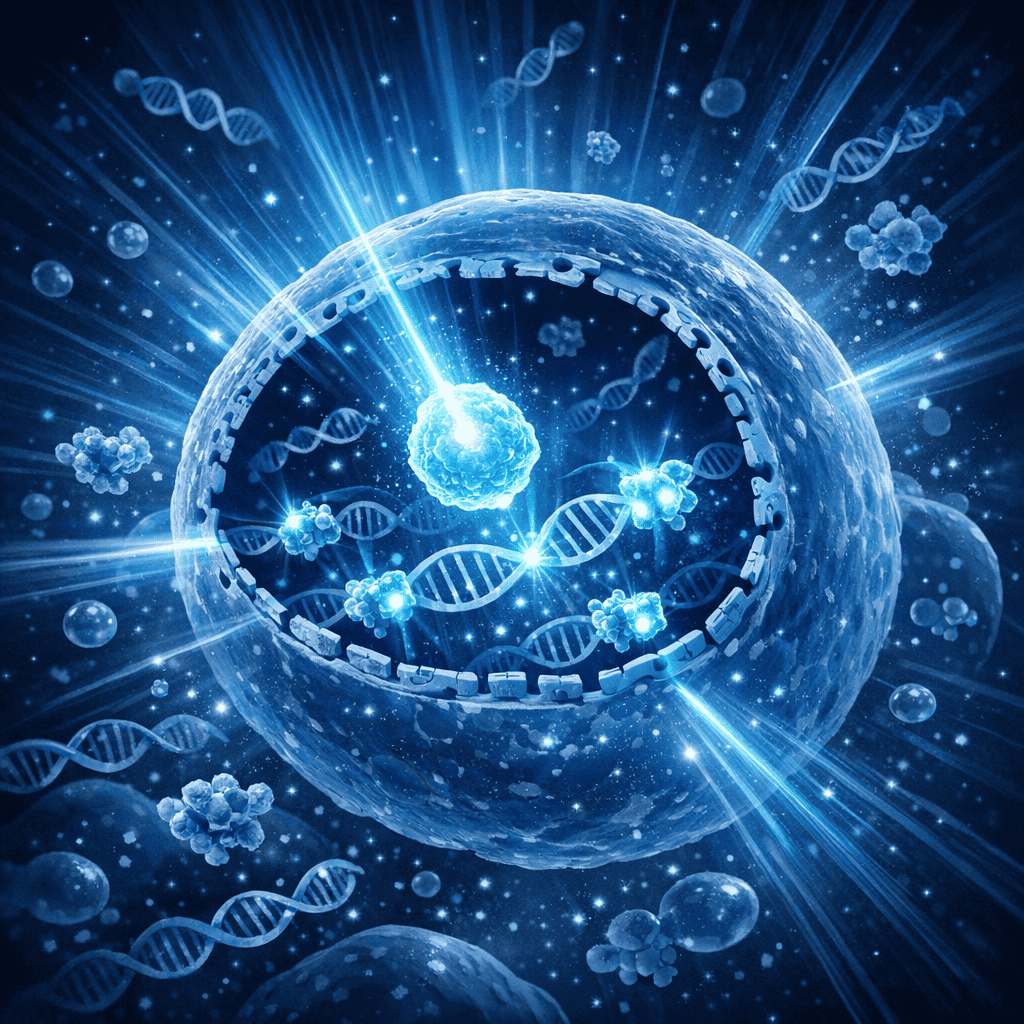
KEAP1 is a regulatory protein that acts as a redox sensor. When oxidative stress rises, KEAP1 detects it through reactive cysteine residues that react with electrophiles and oxidants. This detection triggers KEAP1 to release a transcription factor called NRF2. Once freed, NRF2 enters the nucleus and activates dozens of genes involved in protein quality control, including genes that encode heat shock proteins, proteasome components, and antioxidant enzymes. The system is elegant: the same stress that damages proteins also activates the machinery to handle them.
The KEAP1-NRF2 pathway is sometimes called the “master regulator” of cellular stress response, though that phrase gets overused. What matters is that KEAP1 sits at a critical junction. It’s not just responding to oxidative stress; it’s coordinating a recovery that protects protein folding capacity across the entire cell.
What the research shows
Cell biology studies have demonstrated that when oxidative stress rises, KEAP1 undergoes conformational changes that weaken its ability to target NRF2 for degradation. Normally, KEAP1 binds NRF2 and marks it for destruction through the proteasome. Under stress, this binding weakens. NRF2 accumulates, enters the nucleus, and binds to antioxidant response elements (AREs) in DNA. Within hours, cells increase production of chaperone proteins like HSP70 and HSP90, which directly assist protein folding. They also upregulate proteasome subunits, enhancing the cell’s ability to dispose of irreparably damaged proteins.
Research using oxidative stressors like hydrogen peroxide or electrophilic compounds shows that KEAP1-deficient cells have constitutively active NRF2. These cells produce high levels of protective proteins even without stress. Conversely, cells with impaired KEAP1 function sometimes show resistance to certain types of damage, suggesting the pathway’s protective role. However, the picture is more nuanced than a simple “more KEAP1 activation equals better outcomes.”
Studies tracking protein aggregation in cells under stress reveal that the timing matters. Early activation of the KEAP1-NRF2 pathway prevents protein aggregates from forming. If the pathway doesn’t activate quickly enough, misfolded proteins cross a threshold and begin clumping. Once aggregates form, even elevated chaperone levels struggle to reverse the damage. This suggests KEAP1 functions as an early warning system, not a cleanup crew.
Why cells need this
Protein misfolding is catastrophic. Aggregated proteins trigger inflammatory signalling, activate cell death pathways, and can propagate to neighbouring cells. In multicellular organisms, widespread protein aggregation contributes to neurodegenerative disease and ageing. Cells that can detect oxidative stress early and boost their protein quality control systems survive and maintain function. Cells that can’t respond adequately accumulate damage and eventually die or become dysfunctional.
Evolution favoured organisms with responsive KEAP1 systems because oxidative stress was unavoidable. Metabolism produces reactive oxygen species as a byproduct. Environmental stressors like heat, radiation, and chemical exposures generate more. Any cell lineage that could sense this stress and mount a coordinated defence had a survival advantage. The KEAP1-NRF2 pathway is found across animal species, from simple organisms to humans, suggesting it solved a fundamental problem that persists across billions of years of evolution.
The system also links antioxidant production to protein folding support. This coupling makes biological sense. Antioxidants reduce free radical levels, which directly prevents protein damage. Simultaneously, the pathway activates chaperones that handle any damage that does occur. It’s a two-pronged defence: reduce the threat and increase capacity to handle remaining threats.
What affects KEAP1 signalling
Several factors influence how robustly the KEAP1-NRF2 pathway functions. Genetic variation matters; some people carry KEAP1 variants that alter its redox sensitivity. Age is significant too. As cells age, KEAP1 signalling becomes less responsive. Older cells take longer to activate NRF2 in response to oxidative stress, and the magnitude of the response diminishes. This slowdown correlates with reduced protein quality control capacity in ageing.
Environmental exposures shape KEAP1 function as well. Chronic oxidative stress can lead to sustained NRF2 activation, which has mixed effects. Short term, it’s protective. Long term, constantly elevated NRF2 signalling disrupts other cellular processes and can even promote survival of cells that should die. Heat stress, exercise, and dietary compounds containing electrophiles (like sulforaphane from broccoli) all influence KEAP1 activity, though the practical significance of dietary effects remains debated in the research community.
Metabolic state also plays a role. Cells with high energy demand show different KEAP1 sensitivity than quiescent cells. Inflammation alters KEAP1 signalling through post-translational modifications. Some pathogens have even evolved mechanisms to interfere with KEAP1, hijacking the pathway to suppress the host cell’s stress response.
What remains unknown
Scientists still don’t fully understand why KEAP1 signalling declines with age. Is it genetic changes, cumulative damage to KEAP1 itself, altered post-translational modifications, or changes in the cellular environment? Probably multiple factors, but the relative contributions remain unclear. How cells integrate KEAP1-NRF2 signals with other stress pathways is also incompletely understood. Cells face multiple simultaneous stresses, and they must coordinate responses. How does KEAP1 signalling compete for attention with other systems, like unfolded protein response pathways triggered by endoplasmic reticulum stress?
The threshold question is also open. What level of oxidative stress triggers KEAP1 response, and why? Some cells respond robustly to modest stress; others require severe damage. The molecular basis for this variability isn’t settled. Additionally, researchers don’t know whether KEAP1-mediated protein folding support is ever insufficient. Under what conditions do cells overwhelm their protein quality control capacity even when KEAP1 is active?
Whether targeting KEAP1 could therapeutically benefit cells under chronic stress is a live question. Initial enthusiasm has tempered as researchers recognise that artificially elevating NRF2 signalling has downsides. Understanding how to selectively enhance KEAP1 responsiveness without triggering system-wide changes remains an open problem.
The KEAP1-NRF2-protein folding axis represents one of the cell’s most important survival mechanisms, and yet we’re still learning its full details. That gap between what we know and what we don’t points to an active area of research. Understanding how cells sense oxidative stress and activate coordinated defences isn’t just academic exercise. It’s central to understanding how cells maintain function under challenge, and what goes wrong when they can’t.

Matt Elliott is the editor of Redox News Today, an independent publication covering peer-reviewed research on cellular health, redox signalling, and related biomedical science.