
Your kidneys filter about 180 litres of blood every day, removing waste while keeping everything else in place. That extraordinary workload generates a problem: reactive molecules that damage kidney cells faster than the organ can repair them. Scientists now track these damaging molecules through specific biomarkers, and what they’re finding suggests redox stress might be one of the earliest warning signs that kidney disease is progressing.
What is redox stress
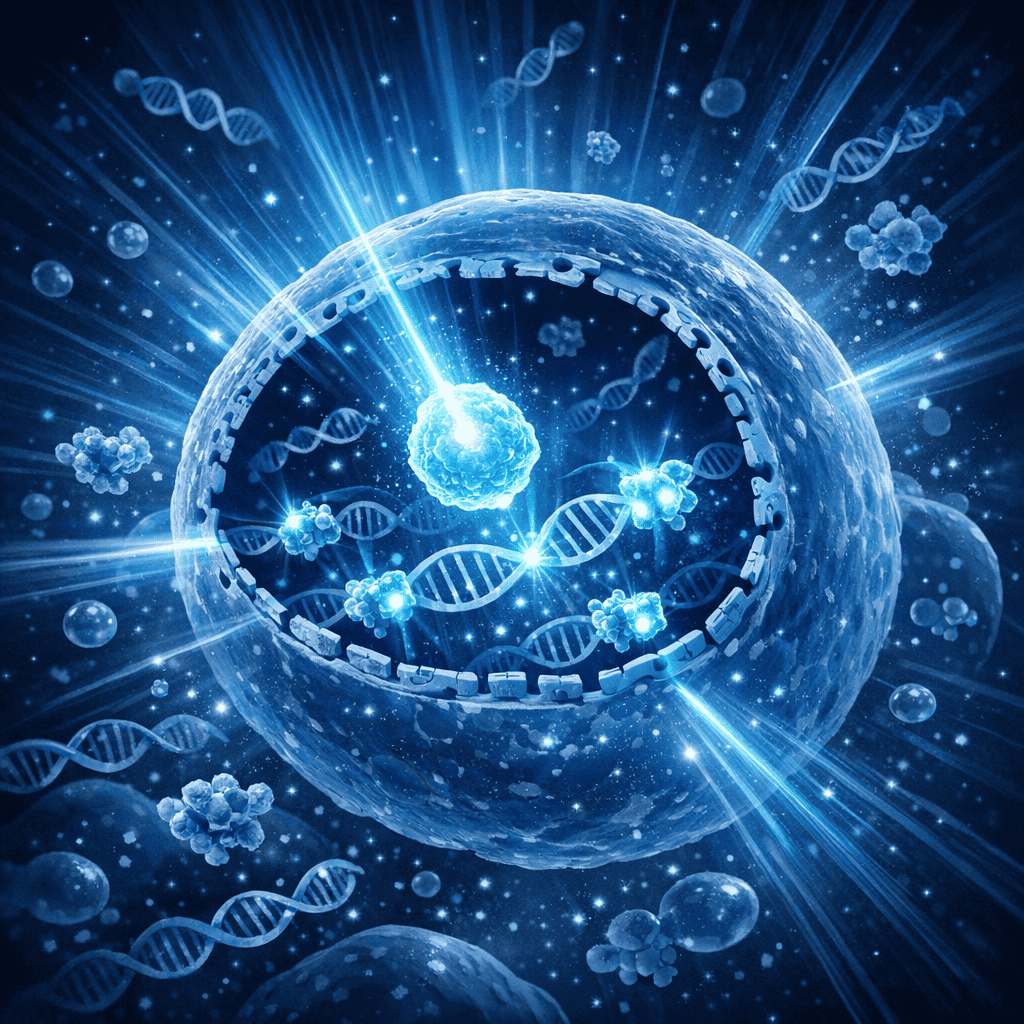
Redox stress occurs when cells lose control of their chemical balance between oxidising and reducing molecules. Think of oxidising molecules as cellular scissors that can cut apart proteins, fats, and DNA. Cells normally keep these scissors locked in a drawer using antioxidant systems. When too many scissors escape at once, or when the locking mechanisms fail, damage spreads.
The kidneys face this threat constantly. Metabolism produces reactive oxygen species as a byproduct, filtration concentrates toxic substances the body wants to expel, and kidney cells burn enormous amounts of energy to transport ions and move waste. Each of these processes generates oxidative pressure. When redox balance tips toward oxidation, cells can’t keep up with repairs.
Scientists measure redox stress indirectly by looking for the damage it causes. They track biomarkers like oxidised proteins, damaged lipids, and modified nucleotides. These aren’t the dangerous molecules themselves but rather the fingerprints they leave behind. Finding these fingerprints tells researchers how severe the redox stress has been.
What the research shows
Studies examining kidney disease patients have found a consistent pattern: people with worse kidney function show higher levels of redox stress biomarkers in both their blood and urine. More striking is the direction of cause and effect. Elevated biomarkers appear early in disease progression, sometimes before conventional markers like creatinine levels show obvious decline.
Researchers studying different kidney conditions have observed that redox stress biomarkers correlate with how fast kidney disease advances. Patients with steadily rising biomarker levels tend to experience faster drops in filtration capacity over the following months. The relationship isn’t perfect but it’s persistent across different patient populations.
One pattern that emerges is tissue specific. Kidney cells experience higher redox stress than most other organs because of their metabolic demands. Biomarkers measured in urine often show stronger signals than those in blood, suggesting the damage occurs primarily within kidney tissue itself rather than being a systemic problem.
Why cells need redox balance
Redox stress isn’t something that cells can simply eliminate. A certain level of oxidising molecules is necessary for normal signalling. Cells use them as chemical messengers to trigger inflammation, growth, and repair responses. The trick is maintaining control. Too little oxidative signalling and cells can’t respond to threats. Too much and the same signalling systems become destructive.
Kidney cells evolved with multiple layers of antioxidant defence because their job is uniquely demanding. They maintain massive ion gradients, filter continuously, and reabsorb valuable molecules back into blood. This work requires constant energy production, which inevitably generates reactive molecules. Evolution preserved robust antioxidant systems, including enzymes like catalase and superoxide dismutase, plus protective molecules like glutathione.
When chronic disease develops, these defence systems gradually fail. Some get overwhelmed by sustained oxidative pressure. Others become less effective because inflammation and metabolic dysfunction interfere with their synthesis. The result is a creeping loss of redox control that precedes structural kidney damage.
What affects redox stress in kidneys
Age is a primary factor. As people get older, antioxidant enzyme activity declines across most tissues, and kidney cells are no exception. Accumulated mitochondrial damage also worsens with age because cells gradually lose the ability to clear damaged mitochondria, which are major sources of reactive molecules.
Metabolic conditions accelerate redox stress significantly. Diabetes raises blood glucose, which generates reactive molecules through multiple pathways. Obesity alters kidney metabolism and promotes chronic inflammation. High blood pressure increases the mechanical stress on kidney cells, driving up their energy demands and reactive molecule production.
Dietary factors matter too. High salt intake appears to increase oxidative pressure in kidney tissue. Diets rich in refined carbohydrates amplify the problem. Conversely, intake of dietary antioxidants from vegetables and other sources correlates with lower redox stress biomarkers, though the mechanism remains incompletely understood.
Medications and existing kidney damage create feedback loops. Some drugs accumulate in kidney tissue and generate reactive molecules. Pre-existing glomerular or tubular damage forces remaining healthy tissue to work harder, generating more oxidative stress and accelerating further decline.
What remains unknown
Scientists still can’t predict which patients will progress rapidly based purely on biomarker levels. Two people with identical redox stress profiles might experience very different disease trajectories. This suggests other factors interact with redox stress in ways researchers haven’t fully mapped yet.
The sequence of events remains unclear. Does redox stress drive chronic kidney disease progression, or does kidney disease progression cause redox stress? Most evidence suggests both happen simultaneously, but teasing apart the relative contributions requires more targeted research. Understanding causation matters because it determines whether targeting redox stress could actually slow disease.
Researchers also disagree about which specific biomarkers predict outcomes best. Different studies emphasise different markers, suggesting either that multiple biomarkers together provide better information than any single one, or that the most predictive markers vary between patient populations. Standardising which biomarkers to measure would help answer this.
The therapeutic question looms largest. We know kidney cells try to defend themselves against redox stress through multiple pathways, including the NRF2 system that activates protective genes. Whether pharmaceutical or dietary interventions can strengthen these defences enough to slow real disease remains unproven.
The convergence of redox stress biomarkers with kidney function decline points to something fundamental about how chronic disease develops. Cells have elaborate systems to maintain chemical balance, but when those systems fail, damage accumulates in measurable ways. Redox stress biomarkers give researchers a window into that failure before structural decline becomes obvious. Whether that window enables earlier intervention remains the defining question for the field.

Matt Elliott is the editor of Redox News Today, an independent publication covering peer-reviewed research on cellular health, redox signalling, and related biomedical science.