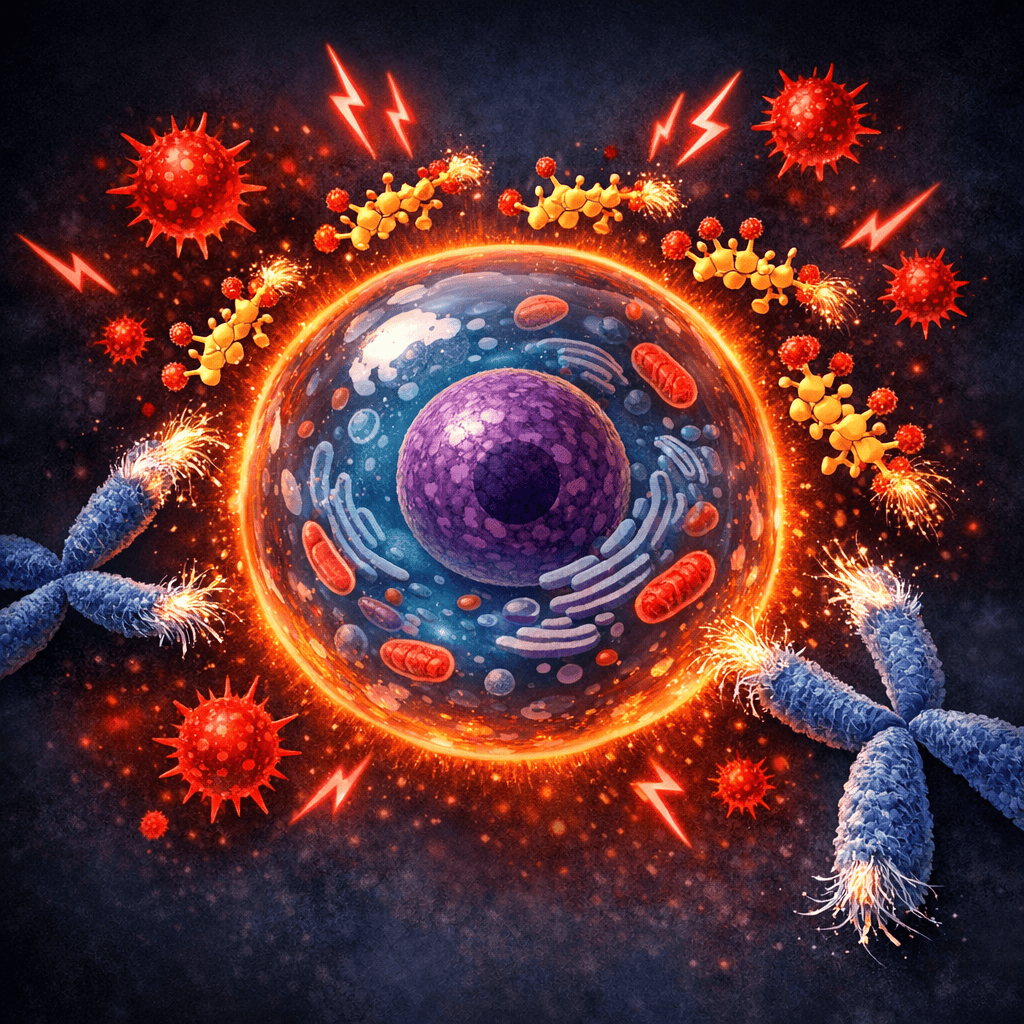

Your body recognises a threat. Your heart rate climbs. Your palms sweat. And deep inside your blood vessels, something else shifts: free radicals spike, and your platelets start clustering together more readily. Psychological stress doesn’t just feel bad. It rewires your coagulation system at the molecular level, and oxidative stress is the mechanism driving it.
What is the stress-coagulation link
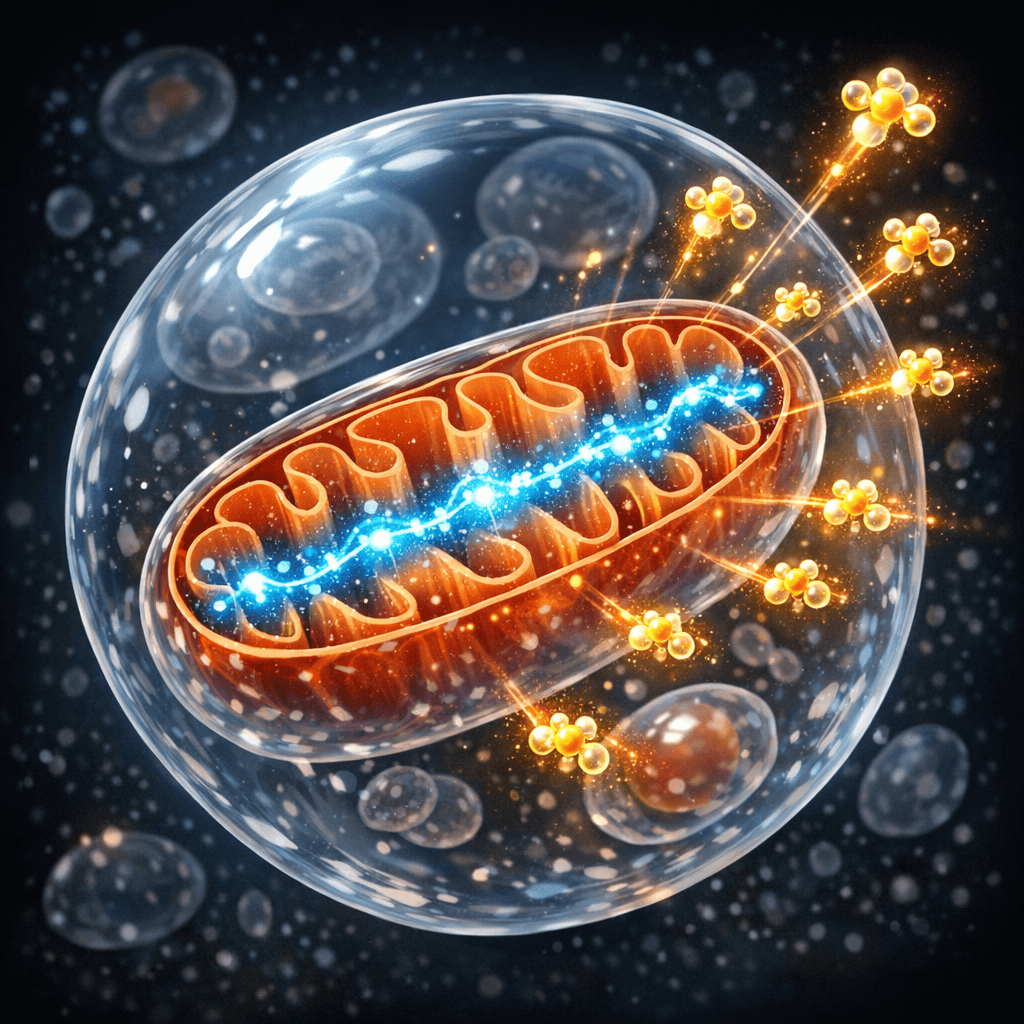
When you experience psychological stress, your nervous system floods your bloodstream with catecholamines (adrenaline and noradrenaline). These hormones were designed to prepare you for physical danger. They increase heart rate, redirect blood flow, and prepare muscles for action. But they also trigger something less obvious: a wave of reactive oxygen species (ROS) flooding your circulation.
Your platelets, those disc-shaped cells responsible for forming clots, are particularly sensitive to oxidative stress. Under normal conditions, they circulate freely without sticking to vessel walls or each other. But free radicals activate signalling pathways that make platelets hyperreactive. They become more likely to aggregate, more prone to releasing clotting factors, and more inclined to form thrombi (blood clots). This shift happens within minutes of acute stress, not hours or days.
The mechanism involves multiple pathways. Stress hormones activate NADPH oxidase enzymes in platelets and endothelial cells, which produce superoxide. That superoxide cascades into other ROS including hydrogen peroxide and hydroxyl radicals. These molecules then activate protein kinase C and other signalling pathways that increase platelet sensitivity to clotting triggers like thrombin and ADP.
What the research shows
Scientists have observed that acute psychological stress reliably increases platelet aggregation in human volunteers. Studies measuring platelet activity before, during, and after stressful tasks (mental arithmetic challenges, public speaking, cold pressor tests) consistently find elevated clotting tendency during stress exposure. The effect peaks quickly and reverses as stress subsides, suggesting direct causation rather than correlation.
Oxidative stress markers in blood, including malondialdehyde and protein carbonyls, rise alongside platelet activation during psychological stress. Researchers have also found that antioxidant defence systems appear overwhelmed during acute stress. Levels of glutathione and superoxide dismutase activity drop relative to ROS production, tipping the balance toward oxidative stress rather than redox balance.
Chronic psychological stress produces a different pattern. People experiencing ongoing stress show persistently elevated baseline platelet reactivity and sustained increases in oxidative markers. Their endothelial cells produce fewer protective nitric oxide molecules (which inhibit clotting) and more endothelin (which promotes vasoconstriction and platelet activation). The coagulation system essentially shifts into a pro-thrombotic state.
Interestingly, individuals with depression or anxiety disorders show exaggerated platelet responses to laboratory stressors compared to controls. Their free radical production during stress appears amplified, suggesting that chronic psychological conditions may sensitise the coagulation system to oxidative insult.
Why cells need this response
This seems counterintuitive. Why would evolution preserve a mechanism that makes blood more likely to clot during stress?
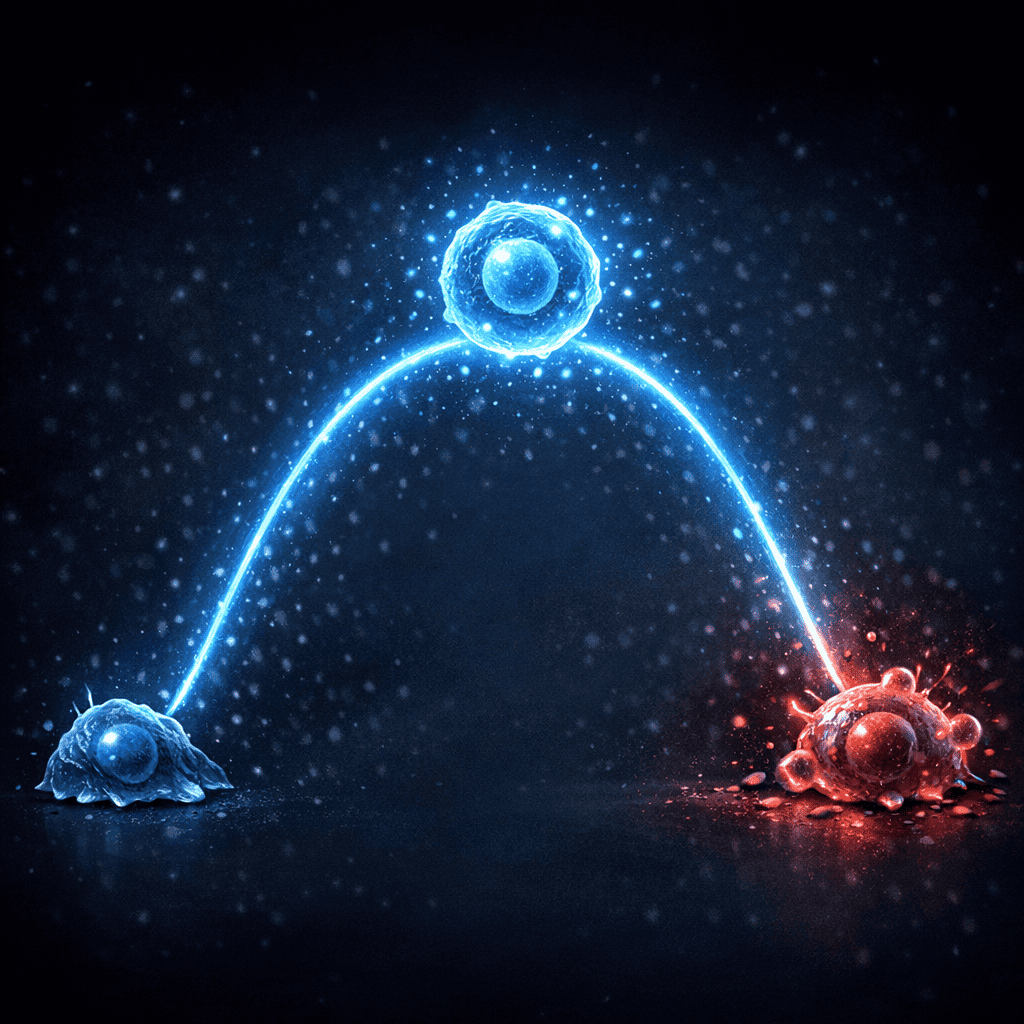
The answer lies in ancestral environments. For most of human history, psychological stress meant physical threat: a predator, a rival, an injury risk. In those contexts, hypercoagulability made sense. If you were about to fight or flee, you might sustain wounds. A blood system primed for rapid clotting could mean the difference between bleeding out and survival. Faster platelet response saves lives when you’re injured.
Free radical production during stress served as an alarm signal. ROS activate pain pathways, heighten alertness, and prepare tissues for damage. Oxidative stress itself functions as a threat detector within cells. This system worked brilliantly in ancestral contexts where stress meant immediate physical challenge.
Modern psychological stress, however, activates the same response without the physical threat. Your blood becomes pro-thrombotic because your nervous system thinks you might be injured soon. Except you’re not. You’re sitting in a meeting or reading an email. The system that once protected you now works against you in the modern environment.
What affects stress-induced coagulation
Not everyone shows identical coagulation responses to stress. Age matters. Older adults show exaggerated platelet aggregation during psychological stress compared to younger people, and their antioxidant defence systems appear more easily overwhelmed. Sex also influences the response. Some research suggests women may show greater stress-induced platelet activation, though this remains incompletely understood.
Lifestyle factors substantially modulate the effect. Aerobic exercise training reduces both stress-induced free radical production and platelet hyperreactivity. People who exercise regularly show blunted ROS responses to acute psychological stressors. Sleep quality matters too. Sleep deprivation amplifies stress-induced oxidative stress and makes platelets more reactive. Just one night of poor sleep increases baseline free radical markers and stress-induced platelet aggregation.
Diet influences the system through antioxidant availability. Diets rich in polyphenols and other dietary antioxidants correlate with lower baseline oxidative stress and reduced stress-induced coagulation responses. Conversely, high refined carbohydrate and processed fat consumption appears to amplify the effect.
Habitual stress exposure fundamentally rewires the response. Chronic stress doesn’t just cause temporary spikes in ROS and platelet activity. It downregulates antioxidant enzyme expression, increases basal oxidative stress, and leaves the coagulation system in a persistently activated state. The system becomes sensitised, responding more dramatically to new stressors.
What remains unknown
Scientists still can’t fully explain why the stress response remains so broadly reactive. Why does your entire coagulation system change rather than a more targeted response? Is there something protective about systemic coagulation activation we haven’t recognised yet?
The relationship between chronic psychological stress and actual thrombotic events remains incompletely mapped. We know stressed individuals have elevated platelet reactivity and oxidative stress markers. We know certain psychological conditions correlate with increased cardiovascular events. But the chain connecting lab measurements to clinical outcomes remains unclear in many cases.
Individual variation is particularly puzzling. Some people show massive platelet responses to mild stressors while others barely respond to intense psychological challenges. Genetic factors clearly matter, but we haven’t identified the specific variants that determine stress sensitivity in coagulation systems. Epigenetic modifications likely play a role too, but research is early.
Finally, we’re only beginning to understand how to interrupt this cascade therapeutically. Targeting specific steps (ROS production, free radical scavenging, platelet sensitivity) works in laboratory settings, but translating this to clinical benefit remains uncertain.
Your blood’s response to psychological stress reveals something fundamental about cellular biology: evolution armed us with powerful defence mechanisms that worked brilliantly for our ancestors but sometimes misfires in the modern world. Understanding how oxidative stress links psychological state to physical coagulation changes opens a window into how our nervous system shapes our basic physiology. The question isn’t whether stress affects your blood. It clearly does. The real questions are how much it matters clinically and what we can actually do about it.

Matt Elliott is the editor of Redox News Today, an independent publication covering peer-reviewed research on cellular health, redox signalling, and related biomedical science.