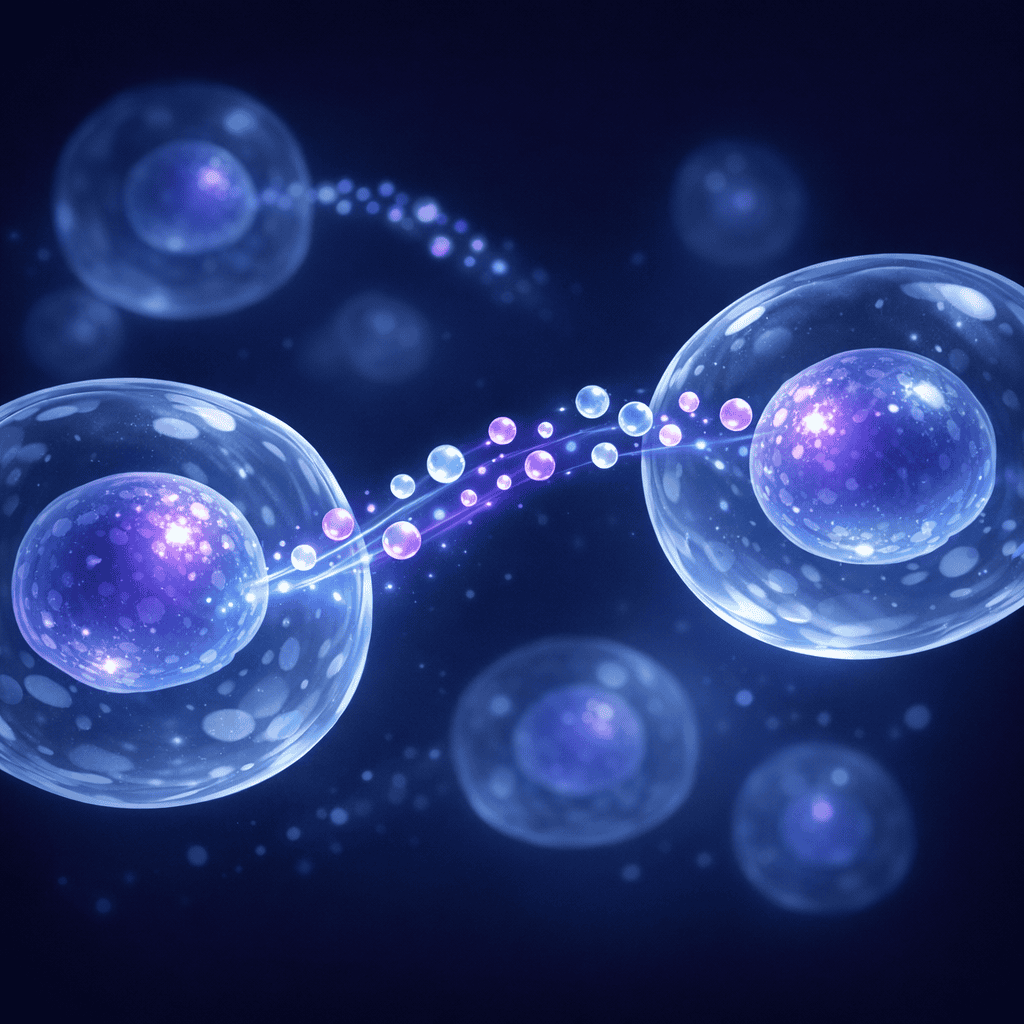

Your immune cells are having conversations you never hear about. When a macrophage or T cell detects an invader, it doesn’t just flip a single switch. Instead, it activates an enzyme called inducible nitric oxide synthase, or iNOS, which then orchestrates a cascade of decisions about how aggressively to respond, whether to change shape, and even how long to stay alive. What’s striking is that iNOS does far more than produce nitric oxide. It acts as a regulatory hub, rewiring immune cell behaviour through pathways that have nothing to do with its famous gaseous product.
What is iNOS?
iNOS is an enzyme that lives inside immune cells, waiting for activation. Unlike its cousins eNOS (in blood vessels) and nNOS (in nerves), iNOS doesn’t exist at baseline. Cells make it only when they encounter signals of danger: bacterial lipopolysaccharides, inflammatory cytokines like tumour necrosis factor, or interferon gamma from activated T cells. Once induced, iNOS churns out nitric oxide, a tiny molecule that diffuses across cell membranes and into neighbouring cells, carrying chemical messages.
The enzyme itself is the interesting part. It’s a large protein with several functional domains. Some researchers have observed that iNOS doesn’t just sit there synthesising nitric oxide. It also engages with other signalling proteins, binds to regulatory molecules, and generates reactive nitrogen species that alter other cellular molecules through processes like nitrosylation and nitration. These reactions modify proteins, lipids, and nucleic acids in specific ways that change their function.
What the research shows
Studies over the past decade have revealed that iNOS-expressing cells behave differently depending on what else is happening in their environment. When researchers compare macrophages with functional iNOS to those engineered to lack it, they find striking differences beyond nitric oxide levels.
Cells with active iNOS show altered metabolic programmes. They shift how they burn fuel and redistribute energy toward different biosynthetic pathways. Their mitochondria function differently. Their gene expression patterns change in ways that can’t be explained by nitric oxide alone, because even when nitric oxide production is blocked pharmacologically, some of these changes persist. This tells us iNOS is doing something independent of its canonical product.
The enzyme also influences how immune cells migrate and adhere to tissue. Immune cells need to physically move through tissues to find invaders, and the presence of iNOS affects their cytoskeletal organisation and their ability to interact with adhesion molecules. Additionally, iNOS signalling influences the lifespan of immune cells, affecting how long they persist and whether they eventually undergo apoptosis or continue expanding.
Why cells need this
From an evolutionary perspective, iNOS probably started as a nitric oxide factory. Nitric oxide is genuinely useful in immune defence: it kills pathogens directly, damages their DNA, and disrupts their metabolism. But immune cells face a problem. They need to respond proportionally to threats. An infection in your lungs requires a different response than a paper cut on your finger. They also need to coordinate with other cells and avoid damaging their own tissues.
This is where iNOS’s non-canonical functions come in. By acting as a regulatory node that coordinates multiple pathways simultaneously, iNOS helps cells integrate information. It acts like a dashboard that reflects the cell’s overall state while simultaneously pushing that cell toward particular behaviours. A macrophage expressing high iNOS is committing to a pro-inflammatory programme. It’s not just making nitric oxide; it’s fundamentally reorganising its priorities around antimicrobial defence.
The beauty of this system is its flexibility. Different cell types express different amounts of iNOS. Tissue-resident macrophages behave differently from circulating monocytes, partly because of how much iNOS they make and how they use it. This allows the immune system to have specialised units adapted to different locations and threats.
What affects iNOS activity
iNOS expression isn’t constant. It responds to a spectrum of signals. The strongest inducers are lipopolysaccharides from gram-negative bacteria combined with interferon gamma. Either signal alone induces iNOS weakly, but together they create a strong response. This makes biological sense: the immune system checks twice before fully committing.
Age affects iNOS regulation. Studies in older animals show that iNOS induction becomes dysregulated. Immune cells may express less iNOS in response to stimuli, or the response may take longer. Some research suggests the opposite in certain contexts: baseline iNOS expression creeps upward with age, contributing to chronic low-grade inflammation.
Metabolic state matters too. Cells with different energy availability regulate iNOS differently. Nutrient availability, oxygen levels, and the balance between glycolysis and oxidative metabolism all influence how much iNOS a cell makes. This is why immune dysfunction often accompanies metabolic disease. Dietary factors, particularly those affecting antioxidant defences, also influence iNOS regulation, though the mechanisms remain partly unclear.
Environmental stressors like chronic inflammation or repeated infections alter iNOS signalling patterns over time, shifting how sensitive immune cells become to future stimuli.
What remains unknown
Despite substantial research, fundamental questions persist. We don’t fully understand the complete set of proteins that iNOS interacts with or which interactions matter most for immune cell behaviour. The relationship between iNOS’s catalytic function and its scaffolding functions (its role as a docking site for other proteins) remains murky.
We’re also uncertain how cells distinguish between different levels of iNOS expression and calibrate their responses accordingly. Does a cell expressing twice as much iNOS behave twice as aggressively, or does it follow a threshold model where only high expression triggers certain behaviours?
The tissue-specific aspects deserve more attention. iNOS in gut-associated immune cells might operate differently than iNOS in liver macrophages or lung dendritic cells, but comparative studies are limited. Finally, we don’t yet have a complete picture of how iNOS regulation changes during chronic disease states or how to pharmacologically modulate these functions without compromising immune defence.
What emerges from all this is a picture of immune cells as sophisticated decision makers. iNOS isn’t just an enzyme that makes a signalling molecule. It’s a regulatory hub that helps cells integrate danger signals and coordinate their behaviour with their environment. Understanding how it works reminds us that even the simplest-sounding biological systems usually involve layers of regulation most of us never notice. This system illustrates why immune dysfunction often involves not just the presence or absence of immune cells, but their ability to make appropriate decisions about when and how to respond.

Matt Elliott is the editor of Redox News Today, an independent publication covering peer-reviewed research on cellular health, redox signalling, and related biomedical science.