
A beluga whale surfaces in the Beaufort Sea, its white skin scarred and mottled. Inside its tissues, a different kind of damage is happening at the cellular level: persistent organic pollutants are accumulating faster than the whale’s defence systems can handle them. The result is oxidative stress, a state where cells are literally being corroded from within by reactive molecules called free radicals.
This isn’t a hypothetical problem. Arctic marine mammals face one of the most challenging toxicological environments on Earth. They live in regions where pollutants don’t break down easily, where cold temperatures slow metabolism, and where prey chains concentrate contaminants to dangerous levels. Understanding how these animals respond to chemical stress tells us something vital about cellular resilience, adaptation, and the limits of an organism’s repair systems.
What is oxidative stress
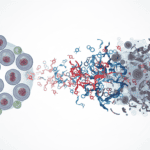
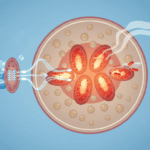
Your cells are constantly making energy. The process generates free radicals as a byproduct: unstable molecules with unpaired electrons that will steal electrons from anything nearby. In small numbers, free radicals serve useful functions. They help kill bacteria, regulate gene expression, and signal cells to adapt. But when production spirals out of control, these molecules start damaging DNA, proteins, and the lipid membranes that hold cells together.
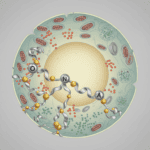
Cells maintain balance through antioxidant defence systems. Enzymes like superoxide dismutase and catalase neutralise free radicals before they cause harm. Molecules like glutathione and vitamin E scavenge stray reactive oxygen species. When contaminants enter the picture, they disrupt this equilibrium. Some toxins generate free radicals directly. Others inhibit the enzymes meant to clean them up. The result is a mounting imbalance where damage accumulates faster than repairs can happen.
Arctic marine mammals face this situation constantly. Persistent organic pollutants like polychlorinated biphenyls (PCBs) and polycyclic aromatic hydrocarbons (PAHs) don’t dissolve in water. They accumulate in fat tissue and bioaccumulate as you move up the food chain. A small fish might carry traces. A seal eating hundreds of small fish carries much more. A killer whale eating dozens of seals carries even more. By the time these contaminants reach the top predators, concentrations can be staggering.
What the research shows
When scientists examine tissue samples from Arctic whales, seals, and walruses, they find markers of oxidative damage throughout. Malondialdehyde levels are elevated, indicating lipid peroxidation. Protein carbonyls accumulate, showing that amino acids have been chemically modified. DNA damage markers appear in liver cells and immune cells. These aren’t subtle changes; they reflect a cellular environment under serious assault.
Studies comparing Arctic animals to temperate-water populations reveal consistent patterns. Beluga whales in the Canadian Arctic show higher oxidative stress markers than those in less contaminated regions. Ringed seals accumulating PCBs demonstrate reduced antioxidant enzyme activity in their livers. The damage correlates with contaminant concentrations: animals with higher pollutant loads show more oxidative stress signalling.
What’s particularly telling is how their antioxidant defences respond. Rather than remaining constant, enzyme levels fluctuate dramatically. Some animals show elevated superoxide dismutase and catalase, suggesting their cells are mounting a defensive response to ongoing stress. But this elevation often plateaus; the system appears to hit a ceiling beyond which it cannot increase protection further. In the worst cases, enzyme activity actually declines, possibly reflecting damage to the enzymes themselves or depletion of cellular resources needed to produce them.
Immune cells appear especially vulnerable. White blood cells from highly contaminated animals show signs of oxidative stress and reduced function. This matters because oxidative damage to immune cells can impair their ability to respond to infections. Arctic marine mammals already face challenges from viral and bacterial pathogens; adding immune suppression from chemical stress creates a compounding problem.
Why cells need this defence system
Evolution has maintained oxidative stress responses across virtually all animal life because the problem is ancient. Long before industrial pollutants existed, organisms had to manage free radicals from normal metabolism, from exposure to sunlight and radiation, and from immune responses to infection. The system that allows cells to detect oxidative stress and mount a response is so fundamental that even bacteria possess it.
For marine mammals specifically, Arctic life presents particular metabolic demands. These animals maintain body temperature in waters near or below freezing. They dive to extraordinary depths where pressure increases. They fast for months while nursing offspring. All of these behaviours generate oxidative stress, which is why Arctic marine mammals evolved enhanced antioxidant defences compared to temperate relatives.
The problem arises when environmental contamination pushes stress levels beyond what even these enhanced systems can manage. A beluga whale’s antioxidant machinery evolved to handle the oxidative load of Arctic life, not the additional burden of decades of accumulated PCBs. The biological system works fine within its design envelope. Push it beyond that, and it begins to fail.
What affects oxidative stress in Arctic marine mammals
Contaminant concentration is the primary driver, but the relationship isn’t simple. The type of pollutant matters. PCBs generate oxidative stress through one mechanism, PAHs through another. Heavy metals like mercury and cadmium affect antioxidant enzymes directly. Different contaminants interact, potentially amplifying harm when combined.
Age plays a significant role. Older animals accumulate more contaminants over their lifetimes, yet they often show reduced antioxidant capacity with age, a universal pattern across mammals. Young animals with high contaminant loads can sometimes mount stronger defence responses than older animals, though the long-term consequences remain uncertain.
Nutritional status influences the system’s function. Antioxidant defences depend on trace elements like selenium and zinc. Food availability in the Arctic is seasonally variable and unpredictable. Animals in better nutritional condition maintain stronger antioxidant responses. Those weakened by food scarcity show amplified oxidative stress despite similar contaminant loads.
Reproductive status matters too. Pregnant and lactating females mobilise stored fat, releasing sequestered contaminants into circulation. This mobilisation can temporarily spike oxidative stress. Calves nursing on contaminated milk accumulate pollutants rapidly during a critical developmental window when their defence systems are still maturing.
What remains unknown
We don’t yet understand which populations are approaching critical thresholds where oxidative damage begins causing population-level effects. Individual animals clearly experience cellular stress, but whether this translates into reduced survival rates, reproductive failure, or disease susceptibility remains incompletely characterised.
The long-term consequences of chronic oxidative stress in marine mammals remain largely unexplored. Does persistent oxidative damage accelerate ageing? Does it increase cancer risk? Does it impair cognitive function in cetaceans with large brains? These questions matter but require long-term monitoring of wild populations, which is logistically challenging in remote Arctic regions.
We also lack clear understanding of adaptation potential. Some populations seem to tolerate high contaminant loads better than others. Are there genetic adaptations enhancing antioxidant capacity? Or is variation simply reflecting differences in contaminant exposure and nutritional status? If populations can adapt, how quickly, and is there a limit to adaptation when exposure continues increasing?
Finally, the interaction between oxidative stress and other stressors remains poorly understood. Climate change alters Arctic ecosystems, affecting food availability, ice habitat, and temperature. Contaminant stress and climate stress likely interact in ways we’ve barely begun to characterise.
The story of oxidative stress in Arctic marine mammals illustrates a fundamental principle: cellular defence systems evolved to handle natural challenges within expected ranges. Anthropogenic contaminants push well beyond those ranges, overwhelming mechanisms refined across millions of years. Understanding this system reveals not just the vulnerability of Arctic wildlife, but the remarkable engineering of cellular protection and how even the most robust systems can reach their limits.

Matt Elliott is the editor of Redox News Today, an independent publication covering peer-reviewed research on cellular health, redox signalling, and related biomedical science.