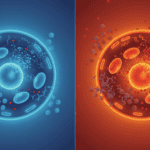
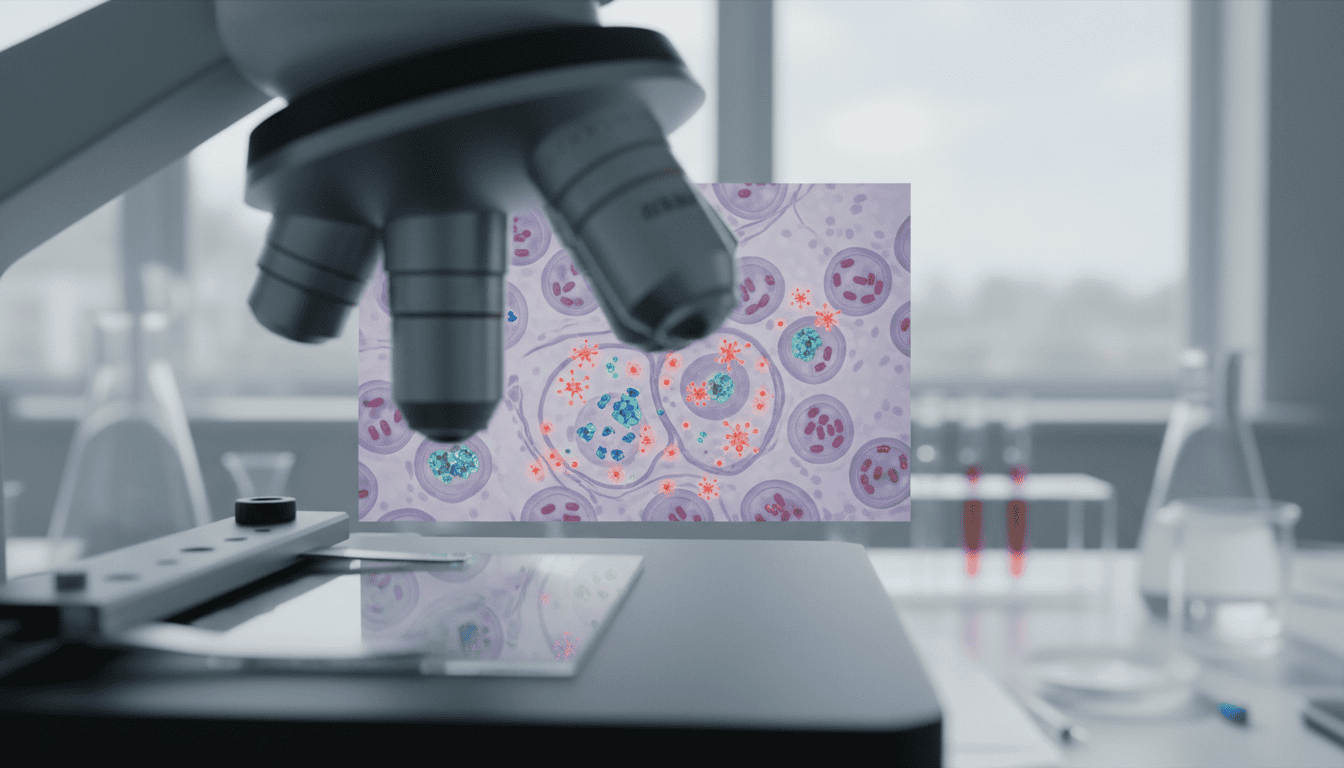
Your liver filters roughly 1.5 litres of blood every minute. It’s also now filtering microplastics. Particles smaller than 5 millimetres have been detected in human liver tissue, and emerging research suggests they’re not just passing through. When these particles accumulate, they appear to trigger a cascade of cellular damage that looks remarkably like what happens when cells face severe oxidative stress.
What is oxidative stress in liver cells
Oxidative stress occurs when cells produce more reactive oxygen species (ROS) than their antioxidant defences can neutralise. Think of it like a fire spreading faster than you can throw water on it. ROS are chemically unstable molecules that damage proteins, lipids, and DNA. The liver is particularly vulnerable because it’s constantly metabolising toxins, generating free radicals as a byproduct of that work.
Normally, cells keep this under control. Enzymes like superoxide dismutase and catalase convert ROS into harmless water and oxygen. Antioxidant molecules like glutathione stand ready to neutralise any that escape. But when the system gets overwhelmed, the damage spreads. Mitochondria start leaking more electrons. Inflammation cascades. Cell death follows if it gets severe enough.
Microplastics appear to be throwing a wrench into this carefully balanced machinery.
What the research shows
Studies examining how liver tissue responds to microplastic exposure reveal a clear pattern. When researchers expose hepatocytes (liver cells) to microplastics in culture, ROS levels spike within hours. The cells’ antioxidant reserves deplete. Simultaneously, inflammatory markers appear. Cytokines like tumour necrosis factor and interleukin-6 increase, signalling that the cell is in distress.
The damage isn’t uniform. Polyvinyl chloride (PVC) and polystyrene particles trigger stronger oxidative stress responses than polyethylene terephthalate (PET), suggesting that polymer composition matters. Particle size matters too. Smaller particles, particularly those under 1 micrometres, penetrate cell membranes more effectively and cause more direct damage to mitochondria where energy production happens.
Animal studies show these responses scale up in living organisms. Mice exposed to microplastics show elevated liver oxidative stress markers, reduced antioxidant enzyme activity, and histological evidence of inflammation. What’s concerning is the persistence. Unlike many toxins the liver can process and eliminate, microplastics accumulate. Repeated exposure compounds the oxidative burden.
Why cells need these defence mechanisms
The liver’s job is brutal. Every metabolite, medication, pollutant, and alcohol molecule that enters the bloodstream passes through hepatocytes. The enzymes that neutralise these substances, the cytochrome P450 family among others, generate ROS as collateral damage. This has been happening for hundreds of millions of years.
Evolution didn’t eliminate free radicals because eliminating them entirely would require shutting down metabolism itself. Instead, organisms developed sophisticated antioxidant defences that scale up when demand increases. This system worked brilliantly for natural stressors. A heavy meal, intense exercise, infection, exposure to smoke or pollution – the liver adapted to each of these challenges.
Microplastics, however, present a novel problem. They’re persistent, indigestible, and accumulate over time. The liver’s defence system evolved to handle transient threats, not the steady, increasing burden of synthetic particles that lodge in tissue and repeatedly trigger oxidative damage.
What affects microplastic-induced oxidative stress
Age significantly influences susceptibility. Older livers show diminished antioxidant enzyme activity even without microplastic exposure. Add microplastics to the picture, and aged hepatocytes struggle to mount an adequate defence. The margin between manageable stress and harmful inflammation narrows considerably.
Diet plays a measurable role. Antioxidant intake from foods rich in polyphenols, vitamins C and E, and selenium supports the cell’s natural defence systems. Research shows that animals fed antioxidant-rich diets experience less severe oxidative stress when exposed to microplastics, suggesting nutritional status buffers the effect. However, even robust antioxidant status cannot fully compensate if microplastic exposure becomes chronic and high.
Pre-existing liver disease amplifies the problem. Individuals with fatty liver disease or viral hepatitis already have elevated baseline oxidative stress and compromised antioxidant capacity. Microplastic exposure becomes an additional stressor on an already struggling system. Environmental factors like pesticide exposure and air pollution also contribute, as they independently trigger oxidative stress through different mechanisms.
Individual genetic variation in antioxidant enzyme expression matters too. People with naturally higher SOD and catalase production tolerate oxidative stress better than those with lower baseline expression. This genetic lottery partly explains why some individuals show signs of microplastic-induced harm earlier than others.
What remains unknown
The mechanisms of microplastic translocation into hepatocytes remain incompletely understood. Researchers know the particles get there, but the exact pathways by which they cross cell membranes and reach mitochondria need clarification. Some evidence suggests endocytosis plays a role, but direct penetration may also occur.
The long-term consequences of accumulated microplastics in liver tissue remain poorly characterised. We don’t yet know whether chronic low-level exposure causes progressive, irreversible organ damage or whether the liver can eventually adapt if exposure stabilises. We also don’t understand whether microplastics trigger oxidative stress primarily through physical presence or through leaching of chemical additives, or some combination of both.
Individual microplastic particles themselves vary enormously in composition, coating, and associated chemicals. Most research has tested a handful of pristine polymer types. Real-world microplastics are weathered, fragmented, and often contaminated with persistent organic pollutants and heavy metals. How these realistic particles behave in human tissue remains largely unexplored.
The dose-response relationship isn’t firmly established. We know microplastics can trigger oxidative stress in cell cultures and animal models, but translating that to actual human exposure levels requires more epidemiological data than currently exists. How much microplastic exposure does it take to cause measurable liver dysfunction in humans? The answer remains uncertain.
Microplastics represent a peculiar kind of cellular challenge. Unlike traditional toxins, they’re neither metabolised nor easily cleared. They persist, accumulate, and repeatedly trigger the same defence mechanisms over years or decades. The liver’s antioxidant systems evolved to handle stress, but they were never designed for an opponent that doesn’t go away. Understanding how oxidative stress from microplastics differs from stress from other sources points toward how cellular defence systems function and where they’re vulnerable. That insight matters well beyond microplastics alone.

Matt Elliott is the editor of Redox News Today, an independent publication covering peer-reviewed research on cellular health, redox signalling, and related biomedical science.