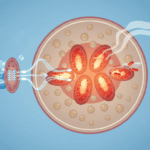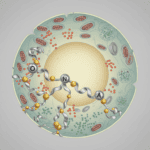

When a virus sneaks into your cells, the first responder isn’t a white blood cell racing through your bloodstream. It’s the mitochondria, those tiny power plants scattered throughout nearly every cell in your body. These organelles don’t just make energy. They’re sophisticated surveillance systems that can detect molecular trouble and sound the alarm within seconds.
What is mitochondrial immune signalling
Mitochondria sit at the crossroads of cellular energy production and immune defence. Every cell contains hundreds of these oval-shaped organelles, each surrounded by two membranes and packed with their own DNA. When pathogens invade or cellular damage occurs, mitochondria shift from energy production into defence mode.
This transformation happens through several key mechanisms. Mitochondria can release specific molecules into the cell’s interior that act as danger signals. They can also change their shape, forming networks or fragmenting into smaller pieces depending on the threat. Most remarkably, they can sacrifice themselves through controlled destruction, releasing their contents to amplify immune responses.
The process involves specialised proteins that patrol mitochondrial membranes, constantly sampling the cellular environment. When these sensors detect viral RNA, bacterial components, or signs of cellular stress, they trigger cascading reactions that ultimately activate immune genes throughout the cell.
What the research shows
Laboratory studies reveal that mitochondria respond to different threats in distinct ways. When researchers expose cells to viral infections, mitochondria rapidly fragment into smaller pieces. This fragmentation isn’t random damage. It’s a calculated response that helps the cell mount a more effective antiviral defence.
Scientists have also observed mitochondria releasing their DNA into the cell’s cytoplasm during times of stress. This mitochondrial DNA acts like a molecular alarm bell, triggering the same pathways that normally respond to bacterial infections. The cell essentially treats its own mitochondrial DNA as a foreign invader, ramping up inflammation and immune activity.
Temperature studies show another layer of complexity. When cells experience heat stress, mitochondria change their metabolism and begin producing different ratios of reactive oxygen species. These molecules serve dual purposes as both potential cellular damage and crucial signalling molecules that fine-tune immune responses.
Researchers tracking mitochondrial behaviour during bacterial infections found that these organelles can actually move towards sites of pathogen entry, clustering near areas where the cell membrane has been breached.
Why cells need this
This dual role makes evolutionary sense. Mitochondria descended from ancient bacteria that were engulfed by early eukaryotic cells billions of years ago. They retained many bacterial characteristics, including circular DNA and specific molecular patterns that immune systems recognise as foreign.
Having immune sensors distributed throughout every cell provides immediate local responses to threats. Unlike circulating immune cells that must travel to infection sites, mitochondria are already positioned where they’re needed. They can detect problems and begin countermeasures within minutes rather than hours.
The energy connection also matters. Immune responses require enormous amounts of cellular fuel. By linking immune activation directly to the cell’s power plants, evolution created a system where energy production can be rapidly redirected to support defence functions when necessary.
This arrangement also allows for graduated responses. Minor threats might only trigger local mitochondrial changes, while severe infections can cause widespread mitochondrial destruction that sends powerful danger signals throughout tissues.
What affects mitochondrial immune function
Age significantly impacts how well mitochondria perform their immune duties. Older mitochondria accumulate damage to their DNA and proteins, making them less responsive to threats. They also become more likely to release danger signals inappropriately, contributing to chronic inflammation.
Physical activity influences mitochondrial immune capacity. Regular exercise promotes the formation of new mitochondria and helps existing ones maintain their membrane integrity. This appears to improve their ability to distinguish real threats from false alarms.
Dietary factors also play roles. Caloric restriction studies in laboratory animals show that limiting food intake can enhance mitochondrial immune signalling pathways. Conversely, high-fat diets appear to make mitochondria more prone to releasing inflammatory signals even without genuine threats.
Environmental toxins can disrupt mitochondrial immune functions by damaging their membranes or interfering with their protein machinery. Even low-level exposures to certain chemicals can alter how mitochondria respond to subsequent immune challenges.
What remains unknown
Scientists are still mapping exactly how mitochondria communicate with different immune cell types. While research shows clear connections between mitochondrial signals and immune responses, the precise molecular conversations remain partially mysterious.
The timing of mitochondrial immune responses also needs clarification. Researchers can observe the end results but struggle to track the split-second decisions that determine whether mitochondria fragment, release DNA, or change their metabolism in response to specific threats.
Questions persist about individual variation. Some people’s mitochondria seem naturally more reactive to immune challenges, while others remain relatively quiet. The genetic and environmental factors that create these differences aren’t fully understood.
Another puzzle involves mitochondrial recovery after immune activation. How do cells rebuild their mitochondrial networks after defensive fragmentation? What determines whether new mitochondria will be more or less reactive than their predecessors?
Understanding mitochondrial immune function opens new perspectives on cellular defence. These organelles represent one of biology’s most elegant solutions to the challenge of protecting complex cells from microscopic threats. As research continues mapping their sophisticated surveillance systems, we’re discovering that the boundary between energy production and immune defence is far blurrier than anyone previously imagined. Every cell carries its own security force, powered by the same structures that keep cellular lights on.

Matt Elliott is the editor of Redox News Today, an independent publication covering peer-reviewed research on cellular health, redox signalling, and related biomedical science.