
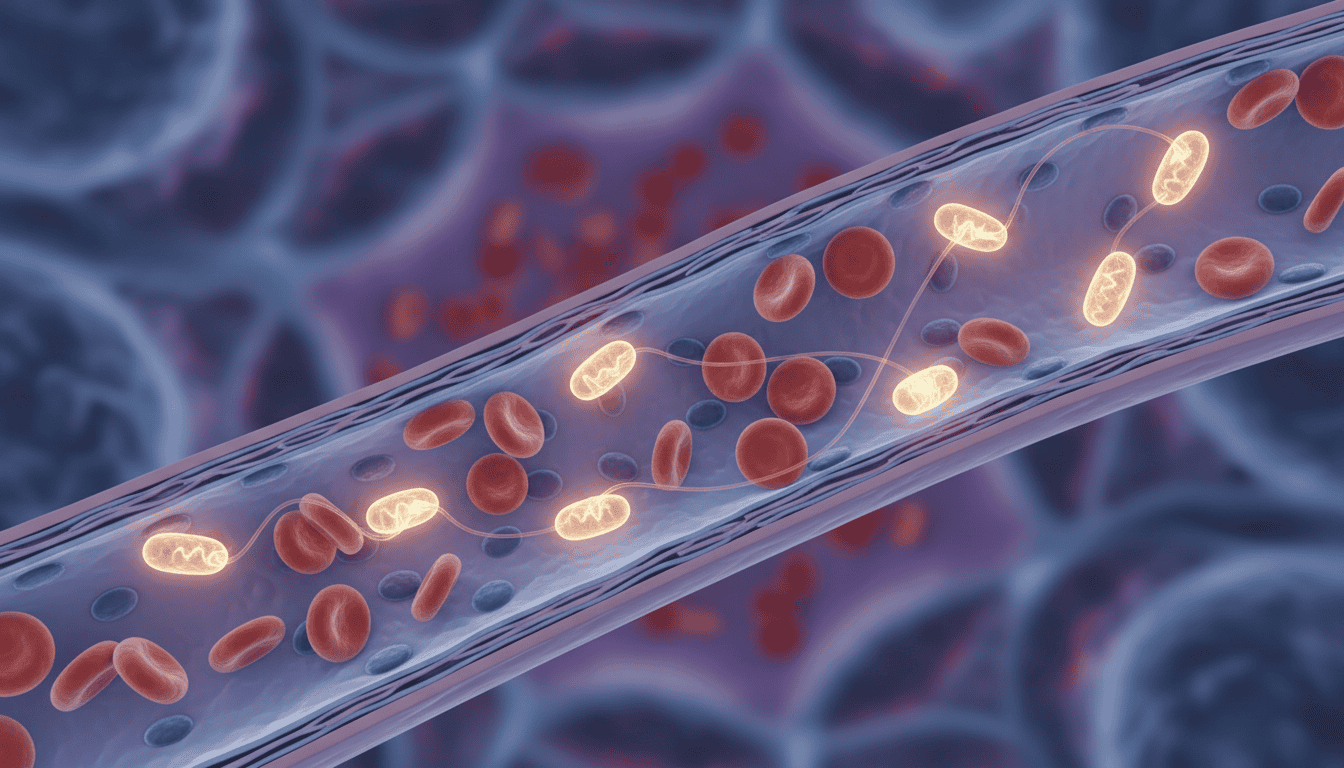
Your blood vessels contain a single layer of cells called the endothelium that faces constant oxidative assault. Every heartbeat pushes blood through these vessels, creating friction and turbulence that generates reactive oxygen species. These endothelial cells must balance energy production with antioxidant defence, and their mitochondria sit at the centre of this balancing act.
What is endothelial mitochondrial function
The endothelium lines every blood vessel in your body like cellular wallpaper. These cells do more than just provide a barrier. They regulate blood flow, control inflammation, and manage the passage of nutrients and waste products between blood and tissues.
Endothelial mitochondria operate differently from those in muscle or liver cells. They produce less ATP per unit but generate more signalling molecules. When blood flow changes or oxygen levels fluctuate, these mitochondria respond by adjusting their output of both energy and reactive oxygen species.
This cellular powerhouse network constantly communicates with the nucleus through retrograde signalling. Mitochondria release specific molecules that travel to the cell’s control centre, influencing gene expression patterns. The result is a dynamic system where energy production, oxidative stress response, and cellular repair programs coordinate in real time.
What the research shows
Studies reveal that endothelial mitochondria exist in distinct subpopulations within each cell. Some cluster near the nucleus, others position themselves close to the cell membrane where they can respond quickly to changes in blood flow. Each group has different metabolic characteristics and stress responses.
When researchers examine diseased blood vessels, they find mitochondrial dysfunction precedes many vascular problems. The organelles become fragmented, lose their membrane potential, and shift their metabolism toward glycolysis. This metabolic switch reduces ATP production but helps cells survive periods of oxidative stress.
Scientists have observed that endothelial cells can rapidly remodel their mitochondrial networks. During inflammation, mitochondria elongate and form interconnected networks that help distribute stress responses throughout the cell. When the threat passes, they fragment again and return to baseline function.
Research also shows these mitochondria produce nitric oxide, a molecule that helps blood vessels relax and maintain proper tone. This production depends on adequate oxygen supply and proper electron transport chain function. Disruption of either process leads to reduced nitric oxide availability and impaired vessel function.
Why cells need this
Blood vessels face unique evolutionary pressures that shaped endothelial metabolism. Unlike other tissues, the endothelium experiences constant mechanical stress from flowing blood. Cells needed a way to sense these forces and respond appropriately to maintain vessel integrity.
The strategic positioning of mitochondrial subpopulations allows rapid local responses to stress without disrupting the entire cell. When blood flow increases in one area, nearby mitochondria can ramp up production of signalling molecules while distant organelles continue normal operations.
Evolution also preserved the ability of these mitochondria to switch between oxidative phosphorylation and glycolysis. This metabolic flexibility provides a survival advantage during ischaemia or periods of high oxidative stress. Cells can maintain essential functions even when oxygen delivery becomes compromised.
The connection between mitochondrial function and nitric oxide production serves another evolutionary purpose. Blood vessels must dilate during exercise or stress to meet increased tissue demands. Mitochondria that directly contribute to this process ensure the response happens quickly and efficiently.
What affects endothelial mitochondrial function
Age significantly impacts mitochondrial performance in blood vessel cells. Older endothelial mitochondria show reduced respiratory capacity and increased production of reactive oxygen species. They also become less responsive to changes in blood flow and metabolic demands.
Exercise training improves endothelial mitochondrial function through multiple mechanisms. Regular physical activity increases mitochondrial biogenesis, enhances antioxidant enzyme activity, and improves the organelles’ ability to handle oxidative stress. The benefits appear within weeks of starting consistent exercise.
Diet influences these cellular powerhouses through substrate availability and antioxidant content. High glucose levels can overwhelm endothelial mitochondria, leading to increased reactive oxygen species production. Conversely, periods of nutrient restriction appear to stimulate mitochondrial efficiency and stress resistance pathways.
Environmental factors like air pollution and smoking directly damage endothelial mitochondria. These exposures increase oxidative stress beyond the organelles’ ability to cope, leading to dysfunction and reduced cellular performance. The damage can persist long after exposure ends.
What remains unknown
Scientists still don’t fully understand how different mitochondrial subpopulations within endothelial cells communicate with each other. Current research methods can observe the organelles but cannot easily track real-time signalling between mitochondrial clusters during stress responses.
The relationship between mitochondrial dynamics and endothelial aging presents another puzzle. Researchers know the organelles change with age, but they haven’t determined whether dysfunction drives aging or aging drives dysfunction. This chicken-and-egg problem complicates efforts to develop targeted interventions.
Questions remain about how endothelial mitochondria integrate multiple stress signals simultaneously. Blood vessels face mechanical stress, chemical stress, and metabolic stress at the same time. How mitochondria prioritise and respond to these competing demands needs more investigation.
The role of mitochondrial-derived peptides in endothelial function represents an emerging area of uncertainty. These small signalling molecules appear to influence cellular stress responses, but their specific functions and regulation in blood vessel cells remain poorly characterised.
Understanding endothelial mitochondrial function opens a window into how our circulatory system maintains itself under constant stress. These cellular powerhouses don’t just make energy; they act as sophisticated sensors and responders that help blood vessels adapt to changing conditions. As research continues to unveil the complexity of these systems, it becomes clear that vascular health depends on the intricate dance between energy production, oxidative stress management, and cellular signalling at the mitochondrial level.

Matt Elliott is the editor of Redox News Today, an independent publication covering peer-reviewed research on cellular health, redox signalling, and related biomedical science.