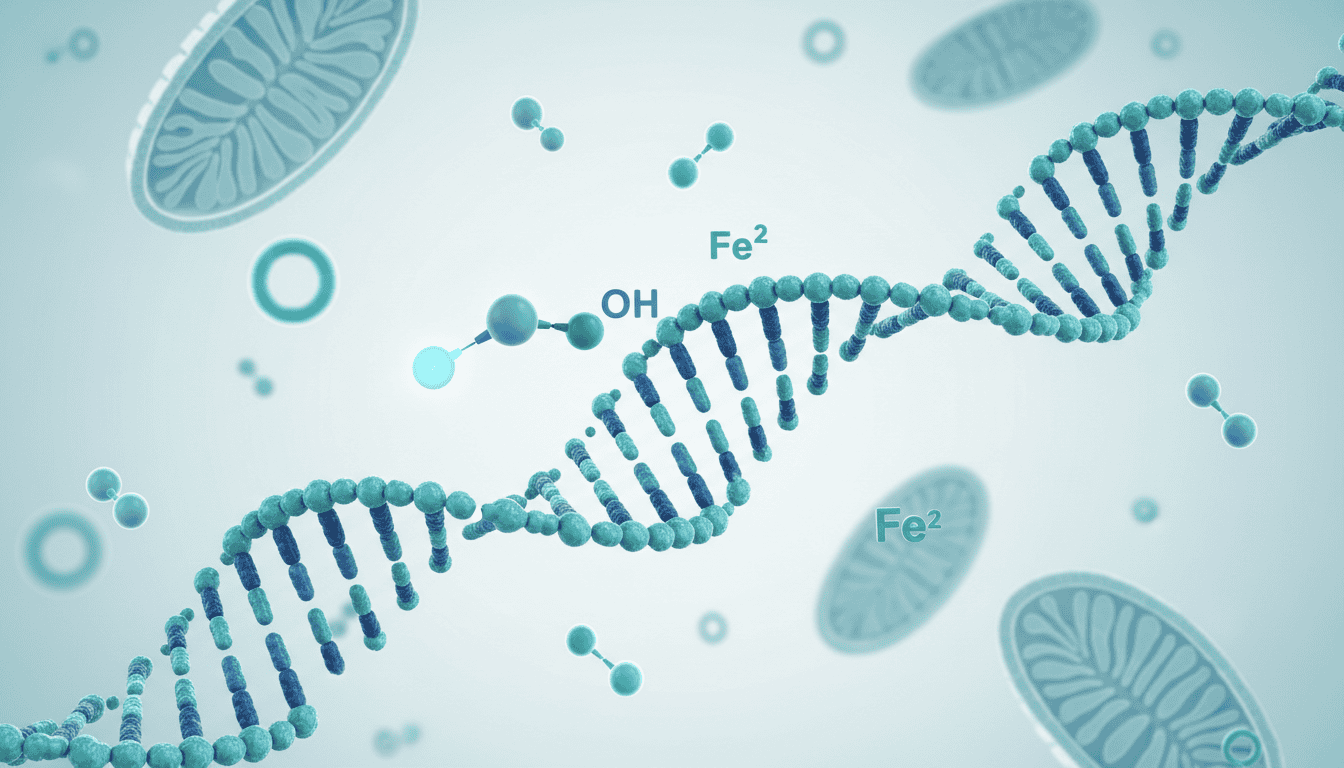
A single hydroxyl radical can rip through a DNA strand in less than a nanosecond. These molecular missiles form constantly inside your cells, created when metal ions meet hydrogen peroxide or when radiation splits water molecules. Unlike other reactive species that cells can sometimes harness for useful work, hydroxyl radicals destroy almost everything they touch.
What is hydroxyl radical chemistry
Hydroxyl radicals are oxygen atoms bonded to hydrogen, missing a single electron. This makes them desperately reactive. They’ll steal electrons from DNA, proteins, or cell membranes within microseconds of forming.
The chemistry happens fast and without discrimination. When iron or copper ions catalyse the Fenton reaction, they split hydrogen peroxide into hydroxyl radicals and hydroxide ions. Radiation does the same thing to water molecules directly. The result is always the same: a molecular fragment that will oxidise whatever it encounters first.
This speed creates a problem for cells. Most antioxidant systems work by intercepting reactive species before they cause damage. But hydroxyl radicals react too quickly for enzymatic defences to catch them. Instead, cells focus on preventing their formation by controlling iron levels and removing hydrogen peroxide before it becomes dangerous.
What the research shows
Recent studies reveal that hydroxyl radical damage follows predictable patterns. Researchers tracking oxidative damage in real time found that these radicals attack specific sites on biomolecules based on electron density and accessibility.
DNA takes the worst hits at guanine bases, creating 8-oxoguanine lesions that can trigger mutations if repair systems miss them. Proteins suffer oxidative modification at cysteine and methionine residues, sometimes destroying enzyme active sites completely. Cell membranes lose structural integrity when hydroxyl radicals initiate lipid peroxidation chains.
Scientists have also mapped how different cellular compartments handle hydroxyl radical formation. Mitochondria, which produce both iron ions and hydrogen peroxide during energy generation, show sophisticated compartmentalisation strategies. They sequester iron in ferritin complexes and maintain high concentrations of catalase to break down peroxide before Fenton chemistry occurs.
The endoplasmic reticulum faces similar challenges during protein folding, when oxidative conditions help form disulphide bonds. Cells balance this by expressing specific peroxidases that can distinguish between useful oxidative chemistry and potentially harmful peroxide accumulation.
Why cells need this
Cells don’t need hydroxyl radicals themselves, but they need the chemical processes that create them as byproducts. Iron catalysis drives essential biochemistry, from oxygen transport in haemoglobin to electron transfer in cytochromes. Hydrogen peroxide serves as a cellular signalling molecule and helps immune cells kill pathogens.
Evolution solved this by developing prevention rather than cure. Cells evolved iron-binding proteins that keep metal ions away from hydrogen peroxide. They developed rapid peroxide-clearing systems. They built DNA repair mechanisms that can fix oxidative lesions faster than they accumulate under normal conditions.
This prevention strategy makes biological sense. Since hydroxyl radicals react too quickly to intercept, cells focus upstream on controlling the conditions that create them. It’s like preventing house fires by removing matches and gasoline rather than relying on sprinkler systems.
What affects hydroxyl radical formation
Age increases hydroxyl radical production as iron regulation becomes less precise and hydrogen peroxide clearance slows down. Mitochondrial efficiency declines, leading to more superoxide production that dismutates into peroxide. DNA repair systems also become less reliable, allowing oxidative damage to accumulate.
Exercise creates a temporary spike in radical formation as oxygen consumption increases and metal ions mobilise from storage proteins. But regular physical activity strengthens antioxidant defences and improves iron handling, creating net protection over time.
Dietary iron affects the balance directly. Heme iron from meat absorbs more readily than plant-based iron, potentially increasing cellular iron loads. But iron deficiency creates problems too, forcing cells to upregulate iron uptake systems that can become dysregulated.
Environmental toxins often work by disrupting normal iron chemistry. Lead and cadmium can displace iron from regulatory proteins. Cigarette smoke delivers iron particles directly to lung tissue while overwhelming local antioxidant defences.
What remains unknown
Scientists still debate how cells sense and respond to hydroxyl radical damage in real time. Unlike other forms of oxidative stress that trigger specific signalling pathways, hydroxyl radical damage appears more random and harder for cells to detect until after it occurs.
The relationship between chronic low-level hydroxyl radical formation and cellular ageing remains murky. Some research suggests that small amounts of oxidative damage might actually strengthen cellular defences through hormetic mechanisms. Other studies indicate that even minimal hydroxyl radical activity contributes to progressive cellular dysfunction.
Researchers are also investigating how different cell types have evolved specialised protection strategies. Brain cells, which consume lots of oxygen but rarely divide, might use different approaches than rapidly dividing intestinal cells or long-lived muscle fibres.
The intersection between hydroxyl radical chemistry and cellular metabolism presents another puzzle. As cells shift between different fuel sources, they alter their internal iron and peroxide levels in ways that aren’t fully understood.
Understanding hydroxyl radical chemistry reveals why cellular antioxidant systems focus so heavily on prevention. These molecular wrecking balls demonstrate that sometimes the best defence is avoiding the fight entirely. The elegance lies not in neutralising every threat, but in controlling the conditions that create threats in the first place.

Matt Elliott is the editor of Redox News Today, an independent publication covering peer-reviewed research on cellular health, redox signalling, and related biomedical science.