Your body contains millions of cells that refuse to die. They’ve stopped dividing, stopped performing their jobs properly, and started pumping out inflammatory signals that damage their neighbours. Scientists call them senescent cells, but “zombie cells” captures their essence better.
What is cellular senescence
Cellular senescence is what happens when cells hit the brakes permanently. Instead of dividing or dying, they enter a state of suspended animation. These cells remain metabolically active but lose their ability to replicate.
The process starts when cells detect serious damage. This might be DNA breaks from radiation, oxidative stress from free radicals, or simply the wear and tear of repeated division. Once triggered, senescent cells activate a complex programme that stops cell division cold.
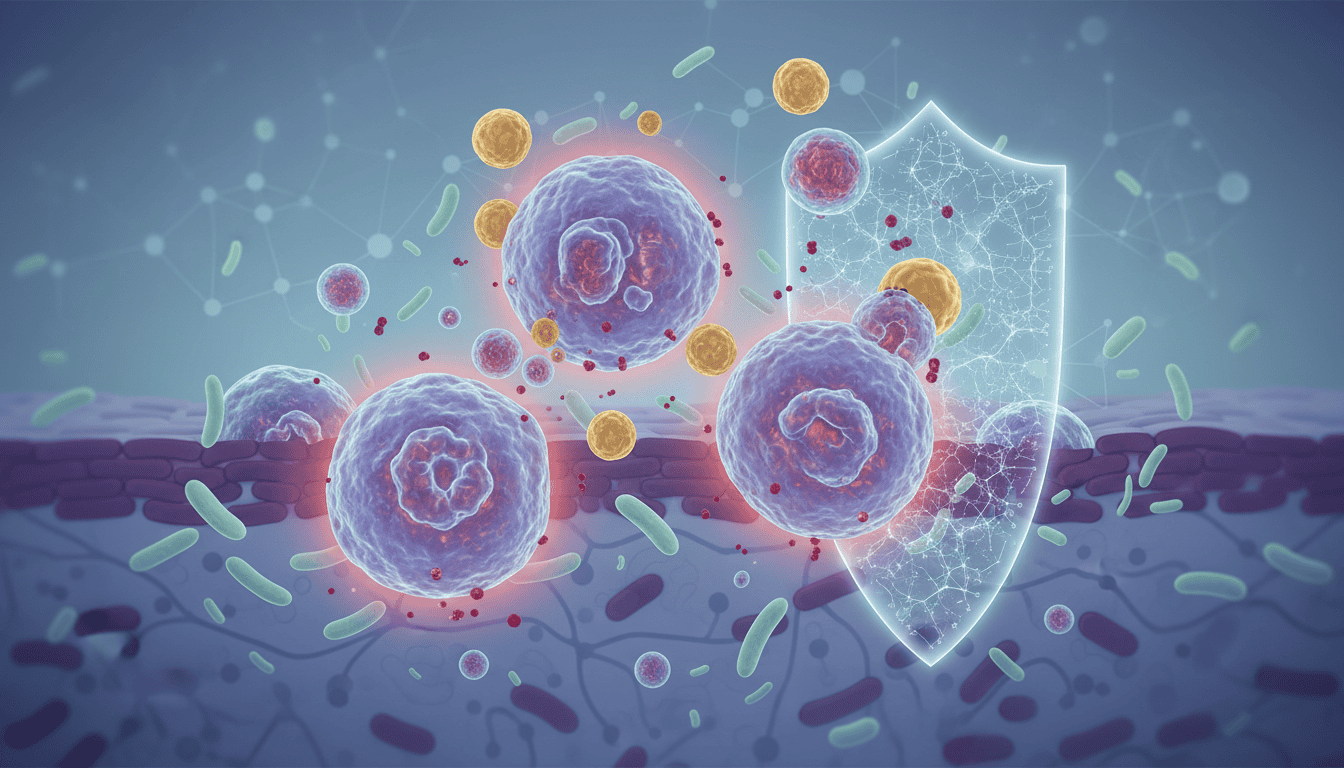
But senescent cells don’t go quietly. They secrete a cocktail of inflammatory molecules, growth factors, and enzymes called the senescence-associated secretory phenotype, or SASP. This molecular soup affects everything around them, changing tissue structure and function.
Think of senescent cells as broken streetlights that can’t be switched off. They don’t provide useful light anymore, but they keep drawing power and interfering with the electrical grid.
What the research shows
Scientists first discovered cellular senescence in the 1960s when they noticed that normal human cells could only divide about 50 times in culture before stopping permanently. This “Hayflick limit” revealed that cells have built-in counting mechanisms.
Research has since identified multiple triggers for senescence. Telomere shortening acts like a molecular clock, counting down cell divisions. Oncogene activation, the process that could lead to cancer, paradoxically triggers senescence as a safety mechanism. DNA damage, mitochondrial dysfunction, and chronic inflammation all push cells toward this zombie state.
Studies using senescence markers show these cells accumulate with age across virtually every tissue. They cluster around sites of age-related pathology. In aged skin, senescent fibroblasts lose their ability to produce collagen. In blood vessels, senescent endothelial cells contribute to arterial stiffening.
Mouse experiments have provided the most dramatic evidence. When researchers selectively eliminated senescent cells from aged mice, the animals lived longer and healthier lives. Their tissues functioned better, and age-related decline slowed significantly.
Why cells need this mechanism
Senescence might sound entirely negative, but evolution preserved it for good reasons. The primary benefit is cancer prevention. When cells detect damage that could lead to malignant transformation, senescence acts as an emergency brake.
This makes biological sense. A cell with damaged DNA poses a threat if it keeps dividing. Better to shut down replication permanently than risk creating a tumour. Young organisms benefit enormously from this trade-off.
Senescent cells also play positive roles in wound healing and tissue repair. During injury, some cells become temporarily senescent, secreting factors that recruit immune cells and promote regeneration. Once healing completes, the immune system typically clears these senescent cells away.
The problem emerges with ageing. The immune system becomes less efficient at removing senescent cells, while the rate of cellular damage increases. What started as a protective mechanism becomes a source of chronic inflammation and tissue dysfunction.
What affects cellular senescence
Age is the primary driver, but lifestyle factors significantly influence the accumulation of senescent cells. Chronic stress accelerates senescence through sustained cortisol elevation and inflammatory signalling. Poor sleep disrupts cellular repair mechanisms, allowing damage to accumulate faster.
Diet plays a substantial role. High sugar intake promotes senescence through glycation, where glucose molecules bind to proteins and create inflammatory compounds. Processed foods rich in advanced glycation end products directly trigger senescence pathways. Conversely, caloric restriction consistently reduces senescent cell burden across species.
Environmental toxins accelerate cellular senescence. UV radiation damages DNA and triggers senescence in skin cells. Air pollution particles generate oxidative stress that pushes cells toward the zombie state. Even chronic infections can drive senescence through persistent inflammatory signalling.
Exercise appears protective. Physical activity enhances immune function, improving the body’s ability to clear senescent cells. It also activates cellular stress response pathways that make cells more resilient to damage.
What remains unknown
Scientists are still working out the precise molecular mechanisms that control senescence entry and exit. Some cells can reverse senescence under certain conditions, but researchers don’t fully understand what determines this plasticity.
The relationship between senescent cells and stem cell function needs clarification. Senescent cells might impair tissue regeneration by interfering with stem cell niches, but the exact mechanisms remain unclear.
Timing presents another puzzle. When senescent cells help with wound healing versus when they become harmful isn’t well defined. This distinction matters enormously for developing therapeutic interventions.
The heterogeneity of senescent cells complicates research. Different cell types become senescent through different pathways and secrete different inflammatory factors. A liver senescent cell behaves very differently from a senescent immune cell, but scientists are still mapping these differences.
Cellular senescence represents one of biology’s classic double-edged swords. The same mechanism that protects young organisms from cancer contributes to decline in older ones. Understanding this balance helps explain why ageing is universal among complex organisms. Every species that uses senescence for cancer protection eventually accumulates enough zombie cells to impair function. The research suggests that managing cellular senescence might be key to understanding how tissues maintain themselves over time, and why this process eventually breaks down as organisms age.

Matt Elliott is the editor of Redox News Today, an independent publication covering peer-reviewed research on cellular health, redox signalling, and related biomedical science.