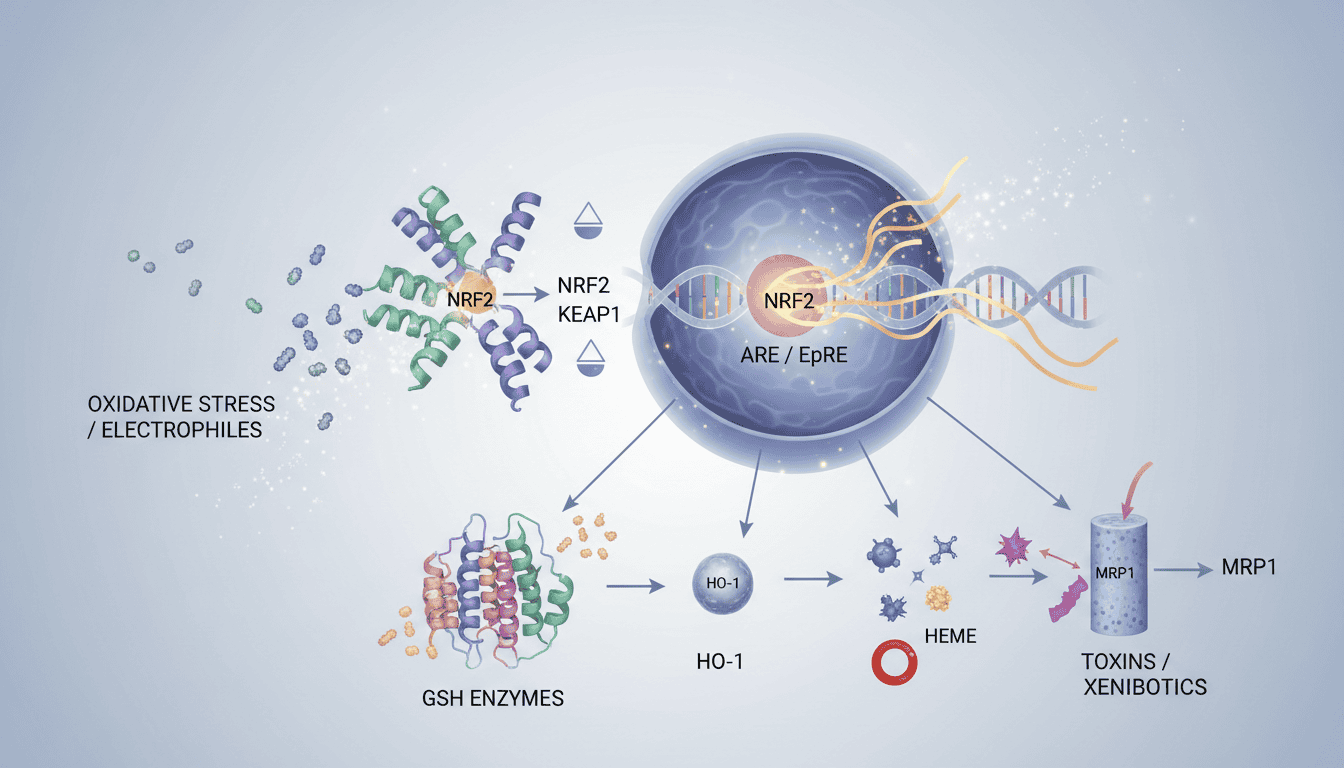
Every minute, your liver processes thousands of potentially harmful compounds from your morning coffee, car exhaust, and even your own metabolism. A single protein called NRF2 coordinates this massive cleanup operation by switching on an army of specialised enzymes. Without this molecular conductor, your cells would drown in their own chemical waste.
What is the NRF2 detoxification system
NRF2 acts like a cellular alarm system that detects trouble and calls in reinforcements. When cells encounter oxidative stress or toxic compounds, NRF2 breaks free from its normal restraints and rushes to the nucleus. There, it binds to specific DNA sequences called antioxidant response elements and flicks on dozens of protective genes at once.
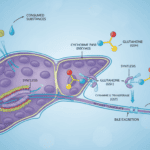
The enzymes NRF2 activates belong to what scientists call the Phase II detoxification system. These proteins specialise in making harmful compounds more water-soluble so cells can flush them out easily. Think of them as molecular garbage trucks that collect toxic waste and prepare it for disposal.
The most important Phase II enzymes include glutathione S-transferases, which tag toxins with glutathione for removal, and UDP-glucuronosyltransferases, which attach sugar molecules to make compounds easier to excrete. NRF2 also ramps up production of NAD(P)H quinone dehydrogenase 1, an enzyme that neutralises dangerous quinones before they can damage DNA.
What the research shows
Studies reveal that NRF2 doesn’t just randomly activate detoxification genes. It responds to specific molecular signals that indicate cellular stress. Researchers have identified over 200 compounds that can trigger NRF2 activation, from sulforaphane in broccoli to curcumin in turmeric.
When scientists knock out the NRF2 gene in laboratory animals, the results are dramatic. These animals show increased sensitivity to toxins, higher rates of cancer, and accelerated ageing. Their Phase II enzymes remain stuck at baseline levels even when cells face serious chemical threats.
Conversely, animals with enhanced NRF2 activity demonstrate remarkable resilience to environmental toxins. Their cells pump out higher levels of detoxification enzymes and clear harmful compounds much faster than normal. The protective effect extends beyond detoxification to include anti-inflammatory responses and improved cellular energy production.
Human studies show similar patterns. People with certain genetic variants that reduce NRF2 function face higher risks of developing diseases linked to poor detoxification, including some cancers and neurodegenerative conditions.
Why cells need this defence system
Evolution shaped this system over millions of years as organisms encountered countless environmental challenges. Early life forms that developed better detoxification systems survived longer and reproduced more successfully. The NRF2 pathway represents one of biology’s most elegant solutions to the universal problem of cellular pollution.
Modern humans face a chemical burden our ancestors never experienced. We encounter thousands of synthetic compounds daily, from plastics to pharmaceuticals to industrial chemicals. Our ancient detoxification machinery must now handle this unprecedented load.
The Phase II system also clears metabolic waste products that cells generate during normal operations. Even basic cellular processes like energy production create reactive molecules that need quick removal. Without efficient detoxification, these internal toxins would accumulate and damage cellular machinery.
What affects NRF2 detoxification activity
Age significantly impacts NRF2 function. Research shows that NRF2 activity declines as we get older, partly explaining why ageing increases susceptibility to toxins and disease. The protein itself doesn’t disappear, but the cellular machinery that regulates it becomes less responsive.
Diet plays a major role in NRF2 activation. Cruciferous vegetables contain compounds called isothiocyanates that strongly stimulate the pathway. Green tea polyphenols, olive oil compounds, and various herbs and spices also trigger NRF2 responses. The Mediterranean diet pattern naturally provides many NRF2-activating compounds.
Physical exercise activates NRF2 through controlled oxidative stress. The temporary increase in reactive molecules during exercise signals cells to beef up their antioxidant defences. This creates a protective effect that lasts well beyond the exercise session itself.
Environmental factors can either support or suppress NRF2 function. Chronic stress, poor sleep, and exposure to certain pollutants can impair the system. Conversely, mild stressors like heat exposure or intermittent fasting may enhance NRF2 activity through hormetic effects.
What remains unknown
Scientists still don’t fully understand how NRF2 decides which genes to activate in different situations. The protein can bind to thousands of sites in the genome, but it doesn’t activate all of them simultaneously. Something determines this selectivity, but researchers haven’t cracked the code.
The timing of NRF2 activation also puzzles scientists. Some triggers produce immediate responses while others take hours to show effects. The mechanisms controlling these temporal patterns remain largely mysterious.
Individual variations in NRF2 function present another puzzle. People respond differently to the same NRF2 triggers, suggesting unknown genetic or epigenetic factors influence the pathway. Identifying these variables could help personalise approaches to supporting detoxification.
Researchers also wonder about potential downsides of chronic NRF2 activation. While short-term activation clearly benefits cells, some studies suggest that permanent activation might have unexpected consequences. Cancer cells sometimes hijack the NRF2 system to resist chemotherapy, highlighting the complexity of this pathway.
The NRF2 detoxification system reveals how cells have evolved sophisticated mechanisms to handle chemical challenges. As our understanding deepens, this pathway offers insights into why some people age more gracefully than others and how cellular resilience develops. The research points to a future where we better understand the delicate balance between chemical exposure and cellular defence, though many pieces of this molecular puzzle still await discovery.

Matt Elliott is the editor of Redox News Today, an independent publication covering peer-reviewed research on cellular health, redox signalling, and related biomedical science.