Your body starts an inflammatory response in milliseconds when faced with injury or infection. But switching that inflammation off? That’s the harder trick. Scientists studying cellular defence systems have discovered that NRF2, a protein better known for fighting oxidative stress, also plays a crucial role in helping inflammation resolve properly.
What is inflammatory resolution
Inflammation isn’t just about the initial alarm bells. The process has two distinct phases: the inflammatory response that brings immune cells rushing to the scene, and resolution, where your body actively winds down that response and clears away the cellular debris.
Think of it like a fire brigade. The inflammatory response is the sirens, the rush of trucks, the dousing of flames. Resolution is the careful cleanup afterwards, making sure no embers remain smouldering and that the site is ready to rebuild. Without proper resolution, you get chronic inflammation.
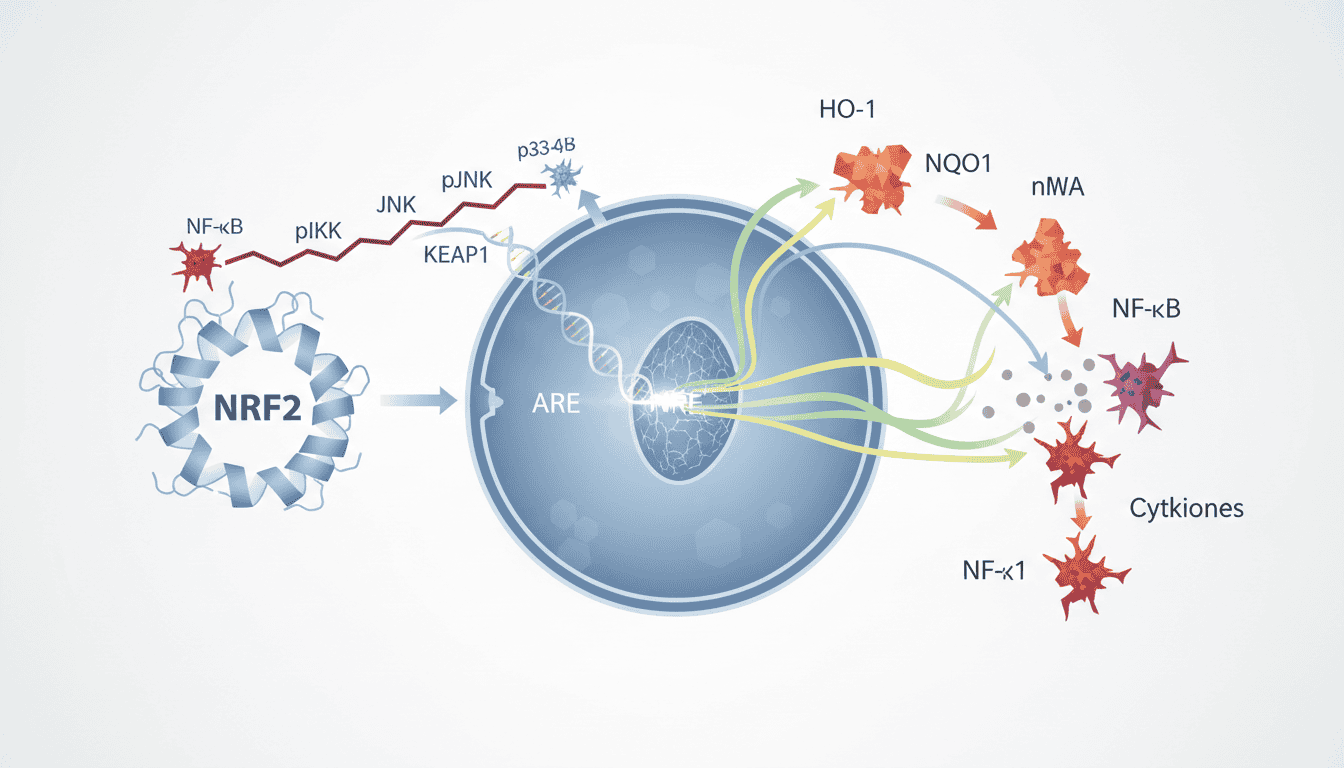
NRF2 sits at the centre of this process. When cells detect stress or damage, NRF2 moves into the nucleus and switches on hundreds of protective genes. These genes don’t just make antioxidant enzymes. They also produce proteins that help immune cells change their behaviour from pro-inflammatory to pro-resolution.
What the research shows
Laboratory studies reveal that NRF2 directly controls the production of specialised molecules called resolvins and protectins. These aren’t just anti-inflammatory compounds that block inflammation. They’re pro-resolution mediators that actively promote healing.
When researchers knock out NRF2 in experimental models, inflammation persists longer than normal. The initial inflammatory response might start normally, but the cleanup phase falters. Immune cells that should switch from attack mode to repair mode get stuck in their aggressive state.
The connection works through several pathways. NRF2 boosts production of enzymes like heme oxygenase-1, which breaks down inflammatory molecules and generates anti-inflammatory byproducts. It also increases levels of glutathione, which helps immune cells survive the toxic environment they create during inflammation.
More intriguingly, NRF2 appears to coordinate timing. Studies show it helps orchestrate the shift from neutrophils (early inflammatory cells) to macrophages (cleanup cells) that occurs during healthy resolution.
Why cells need this
Evolution faced a tricky problem with inflammation. Make it too weak, and infections kill you. Make it too strong or too persistent, and the cure becomes worse than the disease. The solution was to develop sophisticated control systems.
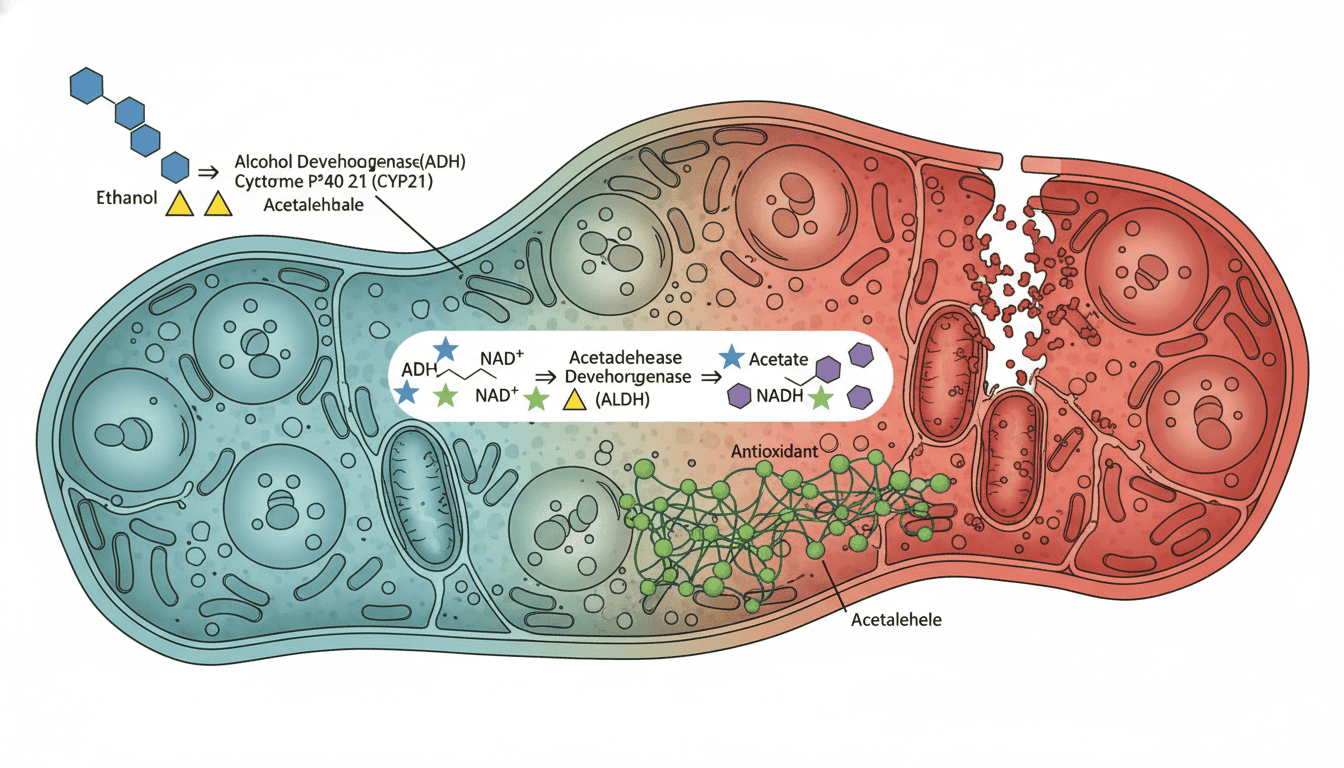
NRF2’s dual role makes biological sense. During inflammation, cells generate massive amounts of reactive oxygen species as weapons against pathogens. But these same molecules damage your own tissues if left unchecked. Having the same system that clears oxidative stress also promote inflammatory resolution creates an elegant feedback loop.
This coupling also explains why chronic inflammation and oxidative stress so often appear together in disease. When NRF2 signalling becomes impaired, both problems accumulate simultaneously.
The system evolved to be self-limiting. As NRF2 clears oxidative stress and promotes resolution, the signals that originally activated it begin to fade. This creates a natural shutdown mechanism that prevents the anti-inflammatory response from going too far in the other direction.
What affects NRF2 and resolution
Age significantly impacts this system. Older cells show reduced NRF2 activity, which correlates with slower inflammatory resolution. This may explain why older adults experience more prolonged inflammation after injuries or infections.
Certain dietary compounds can influence NRF2 activity. Sulforaphane from broccoli, curcumin from turmeric, and compounds in green tea all activate NRF2 signalling in laboratory studies. However, the relationship between dietary intake and actual inflammatory resolution in humans remains complex.
Chronic stress appears to impair the system. Elevated cortisol levels can interfere with NRF2 function, potentially explaining the link between psychological stress and inflammatory diseases. Sleep deprivation shows similar effects, disrupting the normal rhythms of both NRF2 activity and inflammatory resolution.
Exercise presents an interesting paradox. Acute exercise temporarily increases both oxidative stress and inflammation, which should impair NRF2 function. But regular exercise actually enhances NRF2 signalling over time, possibly through hormetic effects where mild stress strengthens the system.
What remains unknown
Scientists still don’t fully understand how NRF2 coordinates the timing of inflammatory resolution. The protein clearly responds to oxidative stress, but what determines when it shifts from antioxidant mode to resolution mode remains unclear.
The tissue-specific effects of NRF2 need more investigation. The protein behaves differently in different organs, and researchers are still mapping out these variations. What works in liver cells may not apply to brain cells or muscle cells.
Drug development faces significant challenges. While activating NRF2 sounds beneficial, the protein’s effects are complex and context-dependent. Too much activation at the wrong time could potentially interfere with necessary immune responses.
The interaction between NRF2 and the circadian clock adds another layer of complexity. Both systems influence each other, but researchers are still working out the details of this relationship and how disrupted sleep cycles affect inflammatory resolution.
This research illuminates how cellular defence systems work as integrated networks rather than isolated pathways. NRF2’s role in inflammatory resolution demonstrates that the same mechanisms protecting cells from oxidative damage also help orchestrate the delicate transition from inflammation to healing. Understanding these connections offers insights into why some people recover quickly from inflammatory challenges while others struggle with persistent inflammation.

Matt Elliott is the editor of Redox News Today, an independent publication covering peer-reviewed research on cellular health, redox signalling, and related biomedical science.