Elite cyclists finishing a gruelling mountain stage show something peculiar in their blood tests. Their glutathione levels have plummeted by 40% or more. This tiny tripeptide molecule, present in every cell of your body, takes a hammering during intense exercise yet somehow determines whether you bounce back quickly or struggle for days.
What is glutathione
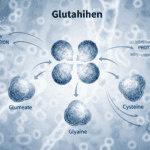
Glutathione is your body’s most abundant intracellular antioxidant. Made from three amino acids (glutamate, cysteine, and glycine), it exists in virtually every cell. Think of it as a cellular janitor with superpowers.
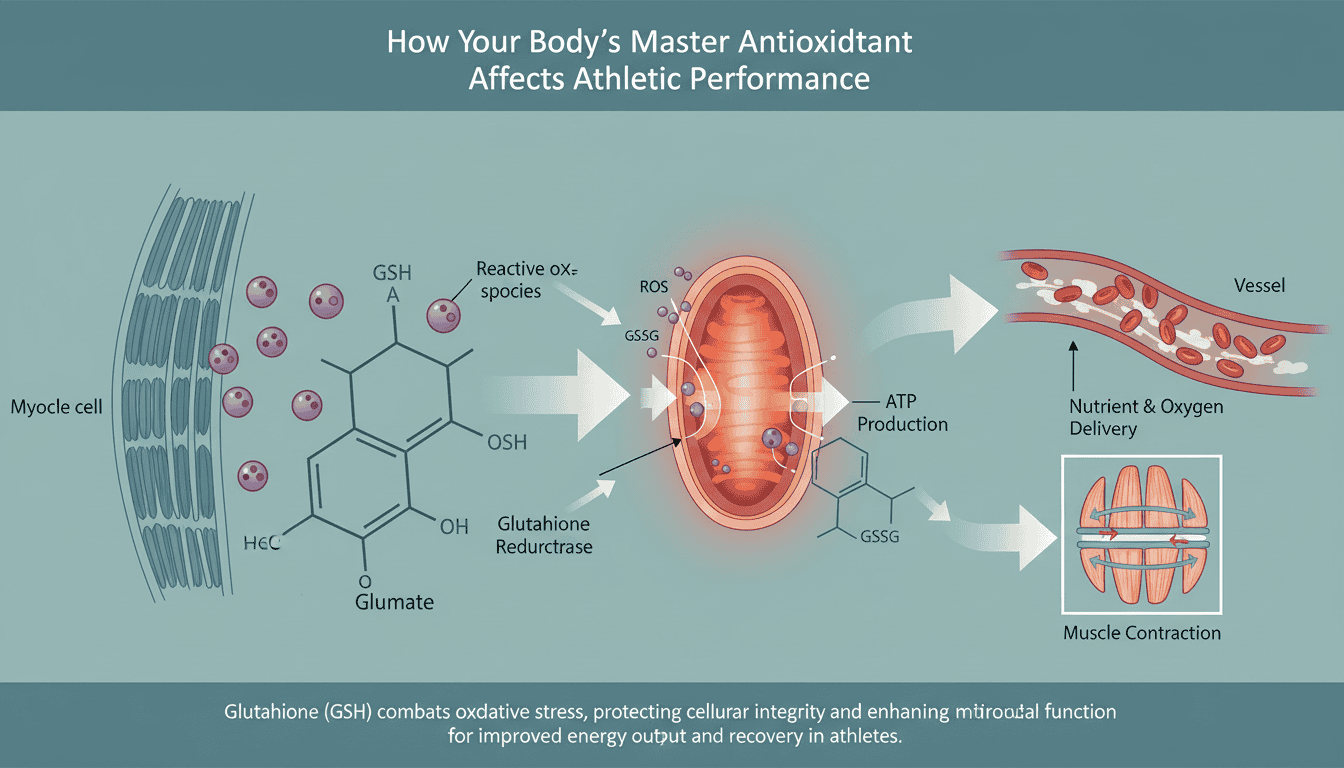
When your cells burn fuel for energy, they create reactive oxygen species as a byproduct. These molecules can damage proteins, lipids, and DNA if left unchecked. Glutathione neutralises these threats directly and recycles other antioxidants like vitamin C and vitamin E back to their active forms.
The molecule works in two main forms: reduced glutathione (GSH) and oxidised glutathione (GSSG). When GSH encounters a harmful free radical, it donates an electron and becomes GSSG. Your cells then use an enzyme called glutathione reductase to convert GSSG back to GSH, completing the cycle.
Beyond antioxidant defence, glutathione helps detoxify harmful compounds, supports immune function, and maintains the proper folding of proteins. Your liver relies heavily on glutathione to process toxins, while your muscles depend on it to handle the oxidative stress of contraction.
What the research shows
Studies consistently show that intense exercise depletes glutathione levels across different tissues. Researchers measuring blood glutathione in marathon runners found levels dropped by 20-45% immediately after races. The harder and longer the exercise, the greater the depletion.
This depletion appears linked to performance capacity. Athletes with naturally higher baseline glutathione levels tend to maintain power output longer during exhaustive exercise. When researchers gave trained cyclists glutathione precursors (the building blocks needed to make more glutathione), the athletes showed improved time to exhaustion and reduced markers of muscle damage.
Recovery patterns also correlate with glutathione status. Athletes whose glutathione levels return to baseline faster typically report less muscle soreness and fatigue in the days following intense training. Their inflammatory markers also normalise more quickly.
Interestingly, different types of exercise affect glutathione differently. High-intensity interval training causes sharp but temporary drops, while moderate steady-state exercise may actually boost glutathione production over time. Resistance training shows mixed effects depending on volume and intensity.
Age plays a role too. Older athletes show greater glutathione depletion from the same exercise stimulus compared to younger ones. They also take longer to replenish their levels, which may partly explain why recovery becomes more challenging with age.
Why cells need this during exercise
Exercise creates a perfect storm of oxidative stress. Your oxygen consumption can increase 15-20 fold during intense activity. Muscle fibres contract repeatedly, generating mechanical stress. Blood flow patterns shift dramatically, creating ischaemia-reperfusion cycles that spawn reactive oxygen species.
Without adequate glutathione, this oxidative assault would quickly overwhelm your cellular defences. Proteins would become damaged, impairing muscle contraction. Lipids in cell membranes would oxidise, affecting membrane integrity. DNA damage would accumulate, potentially triggering inflammatory cascades.
Glutathione acts as the first line of defence against this oxidative tide. It directly scavenges harmful molecules before they can damage cellular structures. Just as importantly, it maintains the activity of other antioxidant systems that might otherwise become overwhelmed.
The molecule also supports mitochondrial function during exercise. These cellular powerhouses produce most of your ATP but generate substantial oxidative stress in the process. Glutathione helps protect mitochondrial membranes and enzymes, maintaining efficient energy production when you need it most.
What affects glutathione levels
Training status significantly influences glutathione metabolism. Well-trained athletes typically have higher baseline levels and more robust recycling systems compared to sedentary individuals. However, this adaptation takes months to develop and can be easily disrupted by overtraining.
Nutrition plays a major role. Your body needs adequate protein to synthesise glutathione, particularly cysteine, which often becomes the limiting factor. Selenium and riboflavin are cofactors for glutathione-related enzymes. Inadequate intake of any of these nutrients can compromise glutathione production.
Sleep deprivation consistently reduces glutathione levels. Studies show that even one night of poor sleep can decrease tissue glutathione by 15-20%. Chronic sleep restriction has cumulative effects, progressively depleting glutathione stores.
Environmental factors matter too. Heat stress accelerates glutathione depletion during exercise. Altitude exposure initially decreases levels but may stimulate adaptive increases over weeks. Air pollution places additional demands on glutathione systems, particularly in urban athletes.
Certain medications and supplements can influence glutathione metabolism. Acetaminophen depletes liver glutathione. Some research suggests that high-dose vitamin C or E supplementation might interfere with natural glutathione recycling, though this remains controversial.
What remains unknown
Scientists are still working out the optimal glutathione levels for athletic performance. Blood levels don’t necessarily reflect what’s happening inside muscle cells, and current measurement techniques have limitations. Researchers need better ways to assess tissue-specific glutathione status in living athletes.
The timing of glutathione depletion and recovery varies enormously between individuals. Some athletes bounce back within hours while others need days. The factors driving these differences aren’t fully understood, though genetics likely plays a role.
Whether you can meaningfully boost glutathione through diet or supplements remains contentious. Direct glutathione supplementation faces absorption challenges, while precursor approaches show mixed results. Some promising compounds are being investigated, but definitive recommendations await more research.
The relationship between glutathione and different training adaptations needs clarification. Some oxidative stress appears necessary for triggering beneficial adaptations. Completely preventing glutathione depletion might theoretically interfere with training responses, but this hasn’t been properly tested.
This research reveals how deeply cellular biochemistry influences athletic capacity. Your body’s ability to manage oxidative stress through molecules like glutathione may be just as important as your cardiovascular fitness or muscle strength. As scientists develop better ways to measure and potentially optimise these systems, our understanding of human performance continues to expand from the cellular level up.

Matt Elliott is the editor of Redox News Today, an independent publication covering peer-reviewed research on cellular health, redox signalling, and related biomedical science.