Inside every cell in your body, a molecular war plays out millions of times per second. Free radicals attack proteins, trying to steal electrons and leave behind damaged molecular wreckage. Standing guard against this chaos is thioredoxin, a small protein that works like a cellular repair crew, fixing oxidised proteins before they can cause havoc.
What is thioredoxin
Thioredoxin is a 12-kilodalton protein found in virtually every living organism on Earth. That’s smaller than most cellular proteins, but what it lacks in size it makes up for in versatility. The protein contains two cysteine amino acids that can flip between oxidised and reduced states, giving thioredoxin its electron-shuttling superpowers.
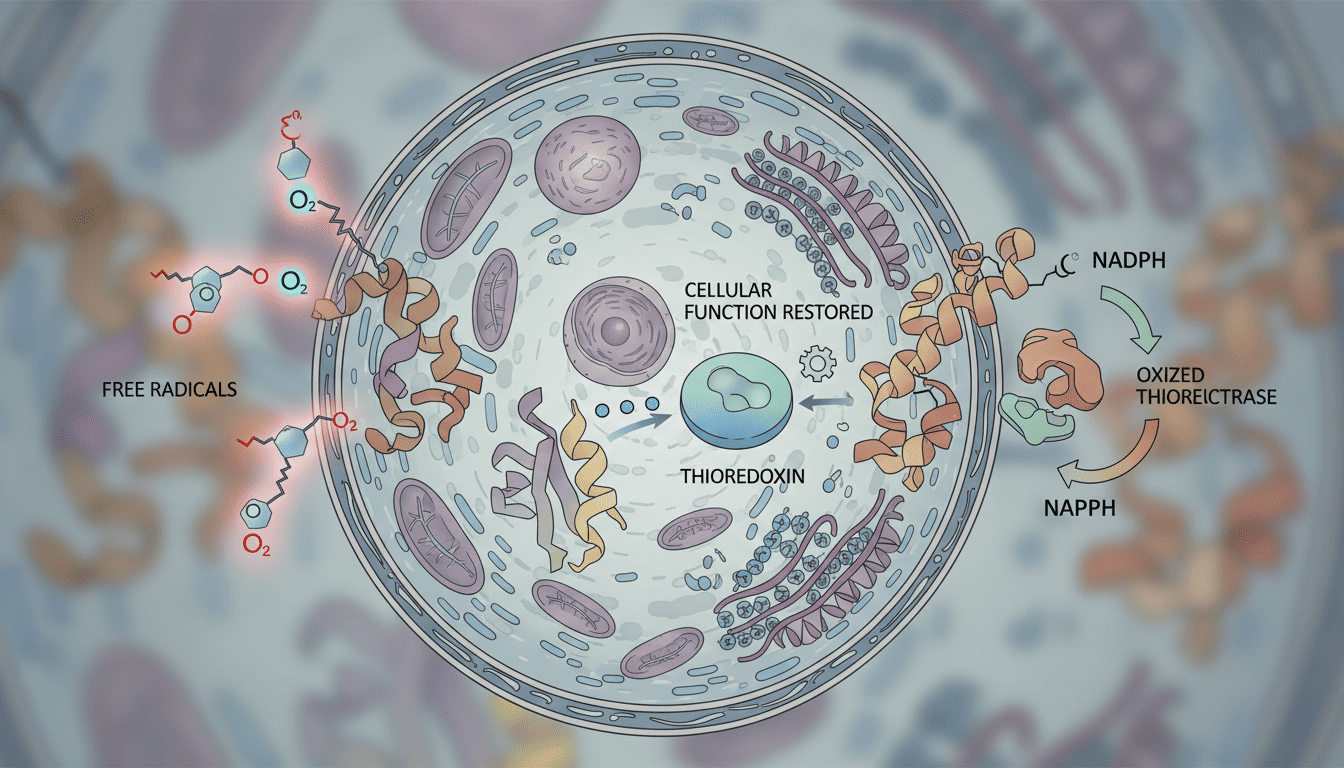
Think of thioredoxin as a molecular battery that can charge and discharge repeatedly. When it encounters an oxidised protein with damaged sulfur bonds, thioredoxin donates electrons to restore the protein’s normal structure. This leaves thioredoxin itself oxidised, but another enzyme called thioredoxin reductase quickly recharges it using electrons from NADPH.
Cells contain two main versions of this protein. Thioredoxin-1 operates in the cytoplasm and nucleus, while thioredoxin-2 works exclusively in mitochondria. Both perform similar functions but in different cellular neighbourhoods, ensuring comprehensive antioxidant coverage throughout the cell.
What the research shows
Scientists have discovered that thioredoxin does far more than simple antioxidant duty. When researchers track thioredoxin activity in living cells, they see it interacting with over 300 different proteins. Some of these interactions involve classic antioxidant work, but many reveal thioredoxin’s role as a redox signalling molecule.
Studies using fluorescent markers show thioredoxin levels fluctuating dramatically during different cellular states. During periods of oxidative stress, thioredoxin expression can increase five-fold within hours. But researchers also observe thioredoxin actively participating in normal cellular processes like DNA synthesis and protein folding, even when oxidative stress levels remain low.
Laboratory experiments demonstrate thioredoxin’s influence on gene expression. The protein directly regulates transcription factors, including NF-kappaB and AP-1, by modifying critical cysteine residues in these molecular switches. When thioredoxin reduces these cysteines, it can turn gene programs on or off, influencing everything from immune responses to cell division.
Perhaps most surprisingly, research reveals thioredoxin operating outside cells as well. Cells release thioredoxin into their surroundings, where it functions as a signalling molecule that communicates oxidative status to neighbouring cells.
Why cells need this
Every cell faces an unavoidable paradox. Oxygen allows efficient energy production, but it also generates reactive oxygen species as metabolic byproducts. These free radicals serve useful purposes in small quantities, acting as signalling molecules and helping immune cells destroy pathogens. Too many, however, damage essential cellular machinery.
Evolution solved this problem by developing sophisticated redox control systems, with thioredoxin as a key component. Rather than simply mopping up all reactive oxygen species, thioredoxin helps cells maintain precise redox balance. It can rapidly reduce oxidised proteins when antioxidant defences are overwhelmed, but it also preserves beneficial oxidative signals when they’re needed.
The thioredoxin system provides cells with flexibility that simple antioxidants cannot match. Vitamin C or vitamin E can only donate electrons until they’re consumed. Thioredoxin, backed by thioredoxin reductase and NADPH, creates a renewable electron supply that adapts to changing cellular conditions.
Mitochondrial thioredoxin-2 serves particularly critical functions. These cellular powerhouses produce most of the cell’s free radicals as inevitable consequences of energy generation. Without robust thioredoxin activity, mitochondrial proteins would quickly succumb to oxidative damage, grinding cellular energy production to a halt.
What affects thioredoxin
Age significantly impacts thioredoxin system function. Research shows both thioredoxin and thioredoxin reductase activity declining with advancing age, while oxidative damage markers increase correspondingly. This decline appears linked to reduced NADPH availability and changes in gene expression that affect thioredoxin production.
Environmental factors also influence thioredoxin activity. Air pollution exposure increases thioredoxin expression as cells attempt to cope with elevated oxidative stress. Similarly, UV radiation, cigarette smoke, and industrial chemicals all trigger thioredoxin upregulation, though chronic exposure can eventually exhaust the system’s capacity.
Nutrition plays a complex role in thioredoxin function. Selenium deficiency severely impairs thioredoxin reductase activity since this mineral forms the enzyme’s active site. Meanwhile, foods rich in NADPH precursors help maintain the electron supply that keeps thioredoxin functional. Exercise creates an interesting paradox, temporarily increasing oxidative stress while simultaneously boosting thioredoxin expression and activity.
Certain medications can interfere with thioredoxin systems. Some chemotherapy drugs deliberately target thioredoxin reductase, exploiting cancer cells’ dependence on antioxidant systems. Other compounds, including some psychiatric medications, can unintentionally suppress thioredoxin activity as a side effect.
What remains unknown
Despite decades of research, scientists still puzzle over many aspects of thioredoxin biology. The protein’s extensive interaction network makes it difficult to predict how manipulating thioredoxin levels might affect overall cellular function. Researchers continue investigating which protein interactions represent direct enzymatic activity versus indirect signalling effects.
The relationship between cytoplasmic and mitochondrial thioredoxin systems remains incompletely understood. While both systems operate independently, evidence suggests cross-talk between them, though the mechanisms remain unclear. Scientists are still mapping how these systems coordinate their activities during different types of cellular stress.
Extracellular thioredoxin functions represent another frontier. Researchers know cells release thioredoxin and that it affects neighbouring cells, but the full scope of this intercellular communication system requires further investigation. Understanding how thioredoxin contributes to tissue-level redox signalling could reveal new aspects of organ function and disease processes.
The developmental and evolutionary aspects of thioredoxin also hold mysteries. While the protein exists across all domains of life, subtle differences between species suggest ongoing evolutionary refinement. Scientists want to understand what selective pressures continue shaping thioredoxin evolution and how these changes affect cellular redox control.
Thioredoxin exemplifies how cells have evolved elegant solutions to fundamental biological challenges. Rather than crude antioxidant systems that simply neutralise all reactive molecules, cells developed nuanced redox control mechanisms that preserve beneficial signalling while preventing harmful damage. This sophisticated approach reveals cellular biology’s remarkable capacity for maintaining order within the organized chaos of living systems, balancing the creative and destructive potential of chemistry itself.

Matt Elliott is the editor of Redox News Today, an independent publication covering peer-reviewed research on cellular health, redox signalling, and related biomedical science.