
Picture this: a damaged heart cell struggling to produce energy after a heart attack suddenly receives a shipment of fresh, healthy mitochondria from a neighbouring cell. The powerhouses integrate seamlessly and begin churning out ATP. What sounds like cellular science fiction is now happening in laboratories around the world, as researchers explore whether transplanting mitochondria could repair damaged tissues.
What is mitochondrial transplantation
Mitochondrial transplantation involves moving healthy mitochondria from one cell to another. Think of it as an organ transplant, but at the cellular level.
The process sounds straightforward enough. Scientists isolate mitochondria from healthy donor cells, then inject them directly into recipient cells or tissues that have damaged or dysfunctional mitochondria. The donor mitochondria can come from the same organism, from a different individual, or even from a completely different tissue type within the same body.
Unlike traditional organ transplants, mitochondria don’t trigger the same immune rejection responses. They slip into cells through various mechanisms, including direct injection, co-culture techniques where cells naturally exchange organelles, or even intravenous delivery where mitochondria find their way to target tissues. Once inside, they begin producing energy alongside the cell’s existing mitochondrial population.
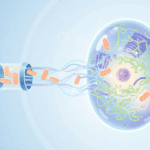
The technique builds on a natural phenomenon that scientists only recently recognised. Cells routinely share mitochondria with their neighbours through tunnelling nanotubes, tiny bridges that connect adjacent cells. Healthy cells often transfer mitochondria to stressed or damaged neighbours, essentially providing emergency energy supplies during times of crisis.
What the research shows
Laboratory studies reveal that transplanted mitochondria don’t just survive in their new cellular homes. They thrive.
When researchers transplant healthy mitochondria into cells with mitochondrial dysfunction, the recipient cells show measurable improvements in energy production within hours. The new mitochondria integrate into existing cellular networks and begin producing ATP at normal rates. Even more striking, they appear to improve the function of the cell’s original, damaged mitochondria through mechanisms scientists are still working to understand.
Animal studies demonstrate even more dramatic effects. Mice with heart damage from simulated heart attacks show improved cardiac function after receiving mitochondrial transplants. Their hearts pump more efficiently, and the tissue shows less scarring and inflammation. Similar results emerge in models of stroke, kidney injury, and liver damage.
The transplanted mitochondria don’t just provide temporary energy support. They persist in recipient tissues for weeks or months, suggesting genuine integration rather than a brief metabolic boost. In some cases, the donor mitochondria even replicate within their new cellular environment, creating a lasting population of healthy powerhouses.
Perhaps most intriguingly, researchers observe improvements that go beyond simple energy production. Cells receiving mitochondrial transplants show reduced markers of oxidative stress, improved calcium handling, and better resistance to further damage. The effect appears to be systemic rather than merely additive.
Why cells need this
Mitochondria face constant threats that can compromise their function and, by extension, the entire cell’s survival.
These organelles generate enormous amounts of reactive oxygen species as a byproduct of energy production. Over time, this oxidative stress damages mitochondrial DNA, proteins, and membranes. Unlike nuclear DNA, mitochondrial DNA has limited repair mechanisms, making it particularly vulnerable to accumulating damage. When mitochondrial function declines, cells struggle to meet their energy demands.
The situation becomes critical during acute stress events like heart attacks, strokes, or severe infections. Tissues suddenly require massive amounts of energy to survive and repair damage, but their compromised mitochondria cannot deliver. This creates a vicious cycle where energy-starved cells become more damaged, further reducing their ability to produce ATP.
Natural mitochondrial sharing between cells likely evolved as an emergency response system. When one cell detects severe stress, nearby healthy cells can provide mitochondrial reinforcements through direct transfer. This cellular cooperation allows tissues to redistribute energy resources during crises, potentially preventing widespread cell death.
The mechanism also provides a way for tissues to maintain mitochondrial quality control on a community level. Cells with particularly robust mitochondrial populations can support their struggling neighbours, while severely damaged mitochondria get diluted by healthier newcomers.
What affects mitochondrial transplantation
The success of mitochondrial transplantation depends on several factors that researchers are still mapping out.
Age plays a significant role. Mitochondria from younger donors consistently show better integration and function compared to those from older sources. This makes sense given that mitochondrial quality generally declines with age, accumulating damage from decades of oxidative stress. Young mitochondria arrive in recipient cells with fewer pre-existing problems and more robust repair mechanisms.
The source tissue matters enormously. Heart mitochondria work well for cardiac applications, but muscle mitochondria might not integrate as effectively into brain cells. Each tissue type has mitochondria adapted for specific energy demands and cellular environments. Matching donor mitochondria to recipient tissue type improves outcomes.
Timing proves critical in therapeutic applications. Mitochondrial transplants work best when delivered shortly after the initial injury, during the window when cells are stressed but still viable. Wait too long, and recipient cells become too damaged to benefit from additional mitochondria. Act too quickly, and the hostile cellular environment might damage the transplanted organelles.
The delivery method influences success rates. Direct injection into tissues works well for accessible organs like the heart, but systemic delivery requires mitochondria to navigate the bloodstream and find target tissues. Some mitochondria preparations survive this journey better than others, depending on isolation and storage techniques.
Environmental factors during the transplantation process affect outcomes. Temperature, pH, and oxygen levels all influence mitochondrial viability. Even the composition of the solution used to suspend mitochondria can determine whether they arrive at their destination functional or damaged.
What remains unknown
Despite promising early results, mitochondrial transplantation raises more questions than it answers.
Scientists don’t fully understand how transplanted mitochondria integrate into existing cellular networks. Cells maintain tight control over mitochondrial populations, regularly recycling damaged organelles through autophagy. Why do foreign mitochondria sometimes escape this quality control system and establish permanent residence? The mechanisms behind successful integration remain largely mysterious.
The long-term fate of transplanted mitochondria puzzles researchers. Some studies suggest donor mitochondria eventually get replaced by the recipient cell’s own mitochondrial DNA through natural replication processes. Others show persistent donor mitochondrial DNA months after transplantation. Which scenario occurs, and what determines the outcome, remains unclear.
Safety questions loom large as the technique moves towards clinical applications. Could transplanted mitochondria carry unknown pathogens or genetic defects? Might they disrupt the recipient cell’s carefully balanced energy systems? The immune consequences of introducing foreign mitochondria, even from the same species, need thorough investigation.
The optimal dosing and timing protocols remain undefined. How many mitochondria should be transplanted? How often? Should multiple doses be given over time, or is a single large dose more effective? These practical questions will determine whether the technique can transition from laboratory curiosity to clinical tool.
Perhaps most fundamentally, researchers are still working out which conditions might benefit from mitochondrial transplantation. The approach shows promise for acute injuries like heart attacks, but its potential for chronic mitochondrial diseases or age-related decline remains largely theoretical.
Mitochondrial transplantation represents a new frontier in cellular medicine, one that recognises mitochondria as therapeutic agents rather than just cellular components. The research reveals how much we still have to learn about the complex social lives of our cells, where organelles move freely between neighbours and cooperation determines survival. Whether this cellular generosity can be harnessed to treat human disease remains to be seen, but the early evidence suggests our powerhouses might be more shareable than we ever imagined.

Matt Elliott is the editor of Redox News Today, an independent publication covering peer-reviewed research on cellular health, redox signalling, and related biomedical science.