Your neurons burn through energy at an extraordinary rate, consuming about 20% of your body’s total glucose despite your brain weighing just 2% of your total body mass. This voracious appetite means mitochondria in brain cells work overtime, churning out ATP around the clock. But this high-energy lifestyle comes with a dangerous side effect: the very process that keeps your neurons alive also generates reactive molecules that can eventually destroy them.
What are mitochondrial free radicals
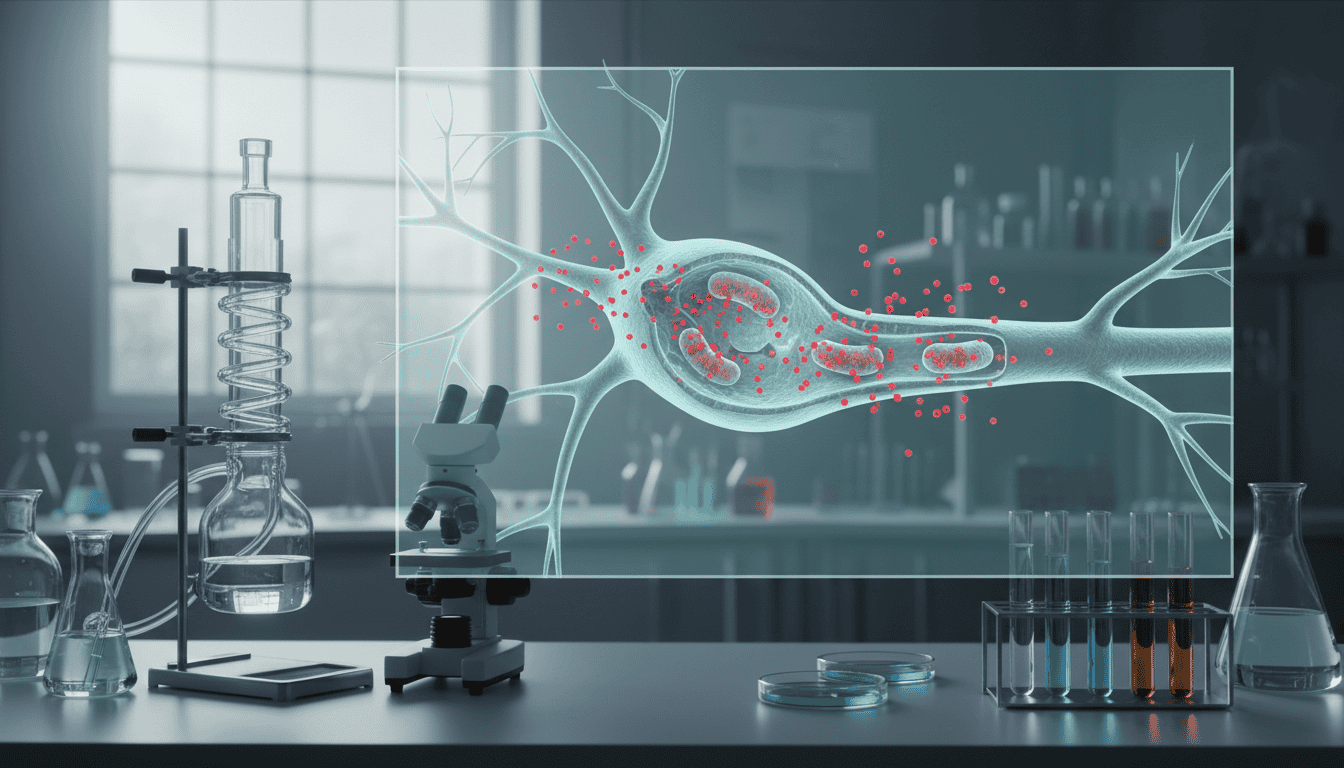
Mitochondria produce energy by moving electrons through a series of protein complexes embedded in their inner membranes. Think of it like a cellular assembly line where electrons hop from one station to the next, releasing energy at each step. But sometimes electrons escape this orderly process and react with nearby oxygen molecules, creating superoxide radicals.
These superoxide molecules are unstable and highly reactive. They desperately want to steal electrons from other molecules to stabilise themselves. When they succeed, they create a chain reaction, turning stable molecules into new radicals that continue the destructive cycle.
Neurons face a particular problem here. Unlike other cells that can divide and replace themselves, most of your brain cells are stuck with the same mitochondria for decades. This means any damage accumulates over time rather than being diluted by fresh cellular components.
What the research shows
Scientists have traced specific pathways showing how mitochondrial free radicals trigger neuronal death. When superoxide levels exceed a neuron’s defensive capacity, the radicals attack mitochondrial DNA directly. This genetic material sits right next to the electron transport chain, making it an easy target.
Damaged mitochondrial DNA produces faulty proteins for the energy-making machinery. These defective proteins leak even more electrons, creating additional free radicals in an accelerating cycle of destruction.
Researchers have also discovered that mitochondrial free radicals activate specific death programmes within neurons. They trigger the release of cytochrome c, a protein normally involved in energy production. When cytochrome c escapes from mitochondria into the cell’s main compartment, it acts like a molecular alarm bell, activating enzymes called caspases that systematically dismantle the neuron.
Brain imaging studies reveal that areas with the highest metabolic demands show the earliest signs of damage in neurodegenerative diseases. The substantia nigra in Parkinson’s disease and the hippocampus in Alzheimer’s both have extremely active mitochondria and both show early vulnerability to oxidative damage.
Why cells need this process
The relationship between mitochondrial free radicals and cell death isn’t simply an unfortunate accident. Evolution has shaped these pathways because controlled cell death serves important biological functions.
Free radical signalling helps neurons respond to stress and injury. Low levels of reactive oxygen species actually strengthen cellular defences by activating protective pathways. This hormetic response prepares cells to handle future oxidative challenges more effectively.
The cell death programmes triggered by severe mitochondrial damage also protect the brain as a whole. When neurons become too damaged to function properly, eliminating them prevents them from disrupting neural networks or releasing toxic contents that could harm neighbouring cells.
Some researchers propose that this quality control mechanism works well early in life but becomes problematic as we age. The same pathways that clear out damaged neurons in a young, resilient brain may become overly sensitive in older brains where replacement and repair mechanisms have declined.
What affects mitochondrial free radical production
Energy demand directly influences how many free radicals mitochondria produce. Mental activity, stress, and inflammation all increase neuronal energy consumption, pushing mitochondria to work harder and leak more electrons.
Age plays a major role in this process. Mitochondrial DNA accumulates mutations over time, leading to progressively less efficient energy production and more radical generation. Studies show that mitochondrial DNA damage increases exponentially after age 40 in brain tissue.
Certain genetic variants affect how well neurons can defend against oxidative damage. People with variations in genes encoding antioxidant enzymes like superoxide dismutase or catalase show different patterns of age-related brain changes.
Environmental factors also influence this balance. Air pollution, particularly fine particulate matter, can cross the blood-brain barrier and directly stress mitochondria. Head injuries disrupt normal mitochondrial function, often leading to persistent increases in free radical production.
Sleep deprivation appears to particularly affect the brain’s ability to manage oxidative stress. During sleep, glial cells actively clear metabolic waste from brain tissue, including oxidatively damaged molecules that accumulate during waking hours.
What remains unknown
Scientists still debate whether mitochondrial free radicals cause neurodegeneration or simply accelerate damage initiated by other factors. The timing and sequence of events in disease development remains murky, with researchers finding evidence for both scenarios depending on the specific condition and brain region studied.
The role of different types of reactive oxygen species is another active area of investigation. While superoxide gets most attention, neurons also produce hydrogen peroxide, hydroxyl radicals, and peroxynitrite, each with distinct cellular targets and effects.
Researchers are working to understand why some brain regions remain remarkably resistant to oxidative damage throughout life while others show early vulnerability. The cerebellum, for example, maintains relatively stable function well into advanced age despite having very metabolically active neurons.
The question of whether boosting cellular antioxidant systems can meaningfully slow neurodegeneration remains contentious. While the logic seems sound, clinical trials of antioxidant compounds have produced disappointing results, suggesting the relationship between oxidative stress and disease progression is more nuanced than initially thought.
Understanding how mitochondrial free radicals contribute to brain ageing reveals both the elegance and fragility of neural function. The same high-energy processes that enable consciousness, memory, and complex thought also contain the seeds of their own limitation. This research illuminates why the brain ages differently from other organs and why maintaining cellular energy systems becomes increasingly critical as we grow older. The mitochondria in your neurons are simultaneously keeping you alive and counting down the days, a reminder that even our most sophisticated biological systems operate within fundamental physical constraints.

Matt Elliott is the editor of Redox News Today, an independent publication covering peer-reviewed research on cellular health, redox signalling, and related biomedical science.