The Cellular Journey of Alcohol Metabolism
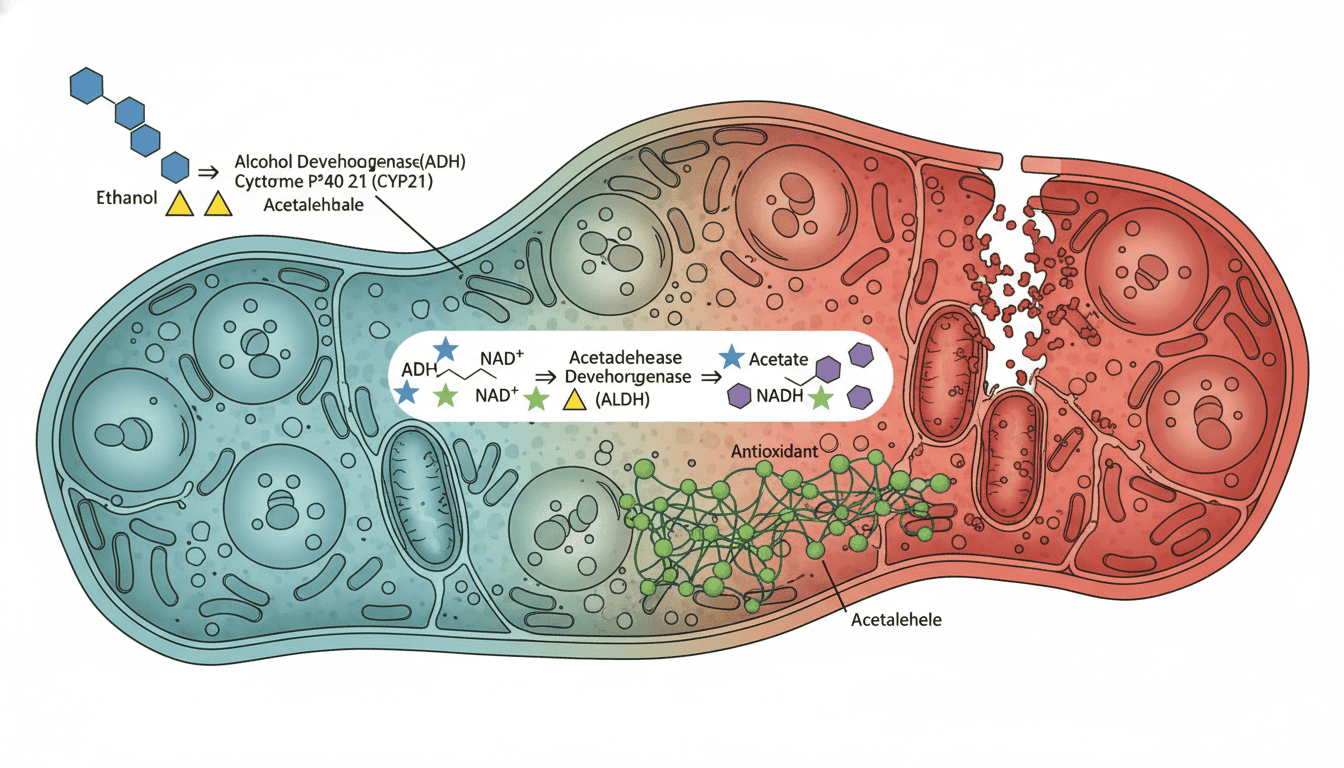
When alcohol enters our bloodstream, it embarks on a complex metabolic journey that fundamentally alters the cellular environment. The liver, our primary detoxification organ, bears the brunt of this process through a two-step enzymatic pathway. First, alcohol dehydrogenase converts ethanol into acetaldehyde, a highly reactive and toxic intermediate compound. Subsequently, aldehyde dehydrogenase transforms acetaldehyde into acetate, which can be safely eliminated from the body.
This seemingly straightforward process creates profound disruptions at the cellular level. Each step of alcohol metabolism consumes nicotinamide adenine dinucleotide (NAD+), a crucial coenzyme that maintains cellular energy production and redox homeostasis. As NAD+ levels become depleted and its reduced form NADH accumulates, cells experience a dramatic shift in their redox environment, setting off a cascade of metabolic disturbances that extend far beyond simple intoxication.
Oxidative Stress and Free Radical Formation
Alcohol metabolism generates substantial quantities of reactive oxygen species (ROS), creating an environment of oxidative stress within affected cells. The formation of acetaldehyde represents a particularly problematic aspect of this process, as this compound readily binds to cellular proteins and DNA, forming stable adducts that interfere with normal cellular function. These protein-acetaldehyde complexes can trigger inflammatory responses and contribute to long-term cellular damage.
The disruption of redox balance during alcohol metabolism overwhelms the cell’s natural antioxidant defence systems. Glutathione, one of the most important cellular antioxidants, becomes rapidly depleted as it works to neutralise the excess free radicals generated during alcohol processing. This depletion leaves cells vulnerable to further oxidative damage and compromises their ability to maintain proper redox signalling pathways.
Mitochondria, the cellular powerhouses responsible for energy production, are particularly susceptible to alcohol-induced oxidative stress. These organelles contain their own delicate redox systems that become severely disrupted when exposed to the metabolic byproducts of alcohol breakdown. The resulting mitochondrial dysfunction can persist long after alcohol has been cleared from the system, contributing to cellular energy deficits and ongoing oxidative stress.
Impact on Cellular Membranes and Structures
Alcohol’s effects extend beyond metabolic disruption to include direct structural damage to cellular components. The lipid bilayers that form cellular membranes are particularly vulnerable to alcohol-induced oxidative stress. Lipid peroxidation, a process where free radicals attack membrane lipids, can compromise membrane integrity and alter cellular permeability.
This membrane damage affects multiple cellular processes, including nutrient transport, waste removal, and cellular communication. When membrane function is compromised, cells struggle to maintain proper ion gradients and may lose their ability to respond appropriately to external signals. The resulting dysfunction can cascade throughout tissues and organs, contributing to the wide-ranging effects of alcohol consumption on human physiology.
Cellular organelles beyond mitochondria also suffer structural damage during alcohol exposure. The endoplasmic reticulum, responsible for protein synthesis and folding, can become swollen and dysfunctional. This damage triggers stress responses that further deplete cellular energy reserves and exacerbate oxidative stress, creating a self-perpetuating cycle of cellular dysfunction.
Disruption of Cellular Signalling Pathways
Redox balance plays a crucial role in cellular signalling, and alcohol’s disruption of this balance has far-reaching consequences for cellular communication and function. Many important signalling molecules, including various transcription factors and enzymes, are sensitive to changes in cellular redox status. When alcohol consumption shifts the cellular environment towards a more reduced state, these signalling pathways can become severely disrupted.
The accumulation of NADH during alcohol metabolism affects numerous metabolic pathways beyond the immediate detoxification process. Gluconeogenesis, the process by which cells generate glucose from non-carbohydrate sources, becomes impaired. Similarly, fatty acid oxidation is reduced, leading to the accumulation of lipids within cells. These metabolic disruptions contribute to the development of fatty liver and other metabolic complications associated with chronic alcohol consumption.
Cellular repair mechanisms also suffer under the altered redox conditions created by alcohol metabolism. DNA repair enzymes require specific redox conditions to function optimally, and the disrupted cellular environment can impair the cell’s ability to repair damage caused by oxidative stress. This creates a concerning scenario where cells are simultaneously experiencing increased damage while having reduced capacity for repair.
Recovery and Cellular Resilience
Despite the significant cellular damage caused by alcohol consumption, cells possess remarkable capacity for recovery when given the opportunity. The restoration of proper redox balance is central to this recovery process. As alcohol is cleared from the system and NAD+ levels are restored, cells can begin to repair damaged structures and restore normal metabolic function.
The timeline for cellular recovery varies considerably depending on the extent and duration of alcohol exposure. Acute alcohol consumption may cause temporary disruptions that resolve within hours to days, while chronic consumption can lead to persistent cellular damage that requires weeks or months to fully repair. Some severely damaged cells may never fully recover, highlighting the importance of understanding alcohol’s cellular effects.
Cellular antioxidant systems play a crucial role in the recovery process. As glutathione levels are replenished and other antioxidant enzymes return to normal function, cells regain their ability to maintain proper redox balance. This recovery process underscores the interconnected nature of cellular health systems and the importance of maintaining optimal conditions for cellular function.
The Broader Context of Cellular Health
Understanding how alcohol disrupts cellular redox balance provides valuable insights into the fundamental principles of cellular health and resilience. The delicate balance between oxidative and reductive processes within our cells underlies virtually every aspect of cellular function, from energy production to DNA repair. When this balance is disrupted, whether by alcohol or other factors, the consequences extend throughout the entire cellular network. This research emphasises the critical importance of maintaining optimal cellular conditions and highlights how lifestyle factors can profoundly influence our health at the most basic biological level. By appreciating these cellular mechanisms, we gain a deeper understanding of how our daily choices impact the trillions of cells that sustain our lives.

Matt Elliott is the editor of Redox News Today, an independent publication covering peer-reviewed research on cellular health, redox signalling, and related biomedical science.