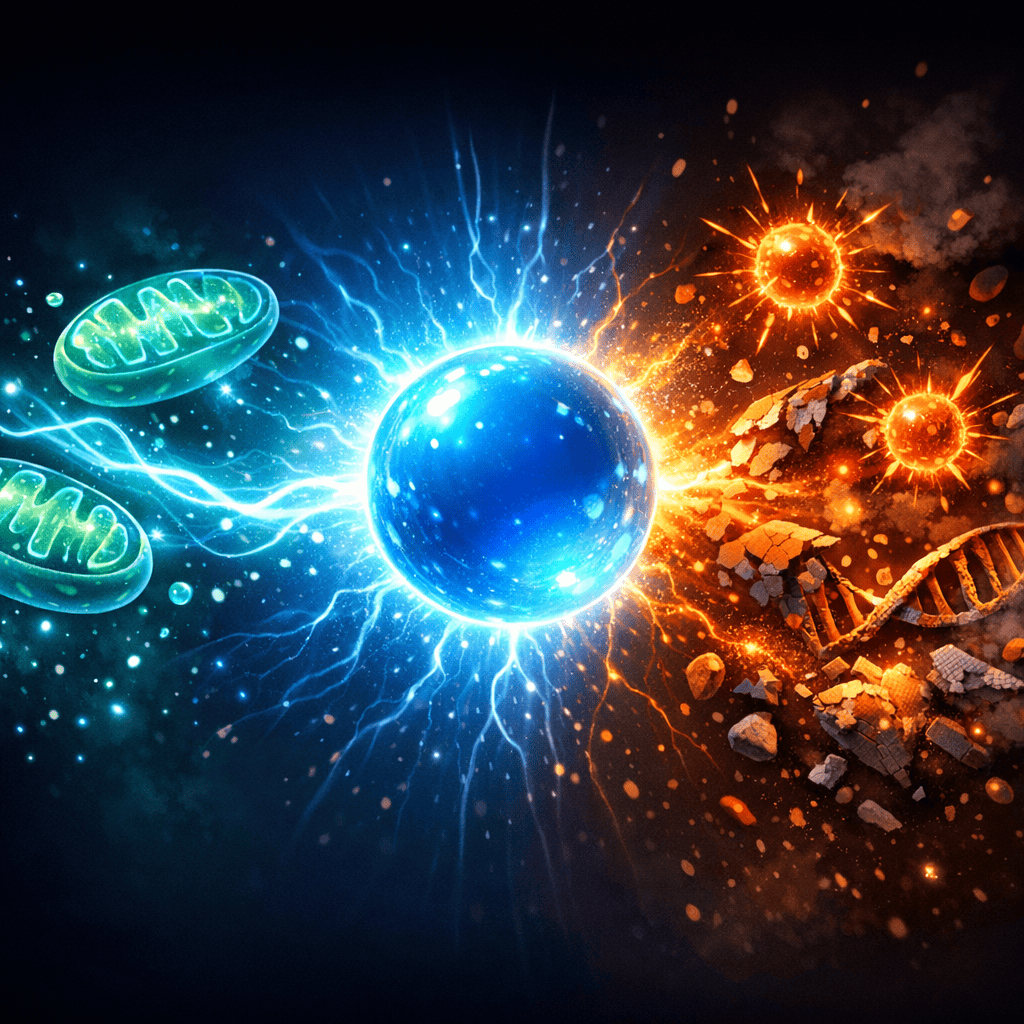

Every breath you take creates a cellular paradox. Oxygen keeps you alive, but it also generates superoxide radicals that can tear apart your DNA, proteins, and cell membranes within microseconds. Your cells solve this problem with an enzyme that works faster than almost any other biological reaction known to science.
What is Superoxide Dismutase
Superoxide dismutase, or SOD, is an enzyme that neutralises superoxide radicals before they can damage cellular components. Think of it as a molecular firefighter that responds to emergencies at lightning speed.
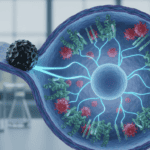
When oxygen molecules gain an extra electron, they become superoxide radicals. These charged particles are highly reactive and unstable. They bounce around inside cells like pinballs, ready to steal electrons from whatever they encounter first. SOD intercepts these radicals and converts them into hydrogen peroxide and regular oxygen through a process called dismutation.
Your cells produce three different versions of SOD, each designed for specific locations. SOD1 works in the cytoplasm and nucleus using copper and zinc as cofactors. SOD2 operates inside mitochondria and requires manganese. SOD3 functions in the extracellular space, also using copper and zinc. Each type faces the superoxide threat where it’s most likely to occur.
What the Research Shows
Scientists have discovered that SOD operates at what they call “diffusion limited” speed. This means the enzyme works so efficiently that its reaction rate is limited only by how fast superoxide radicals can physically move through the cell to reach it. The enzyme processes superoxide faster than most molecules can even collide with each other.
Studies using fluorescent probes show that cells without functional SOD accumulate superoxide within minutes. These radicals immediately begin attacking cellular structures, causing lipid peroxidation in membranes and oxidative modifications to proteins. Researchers can actually watch this damage happen in real time under microscopes.
Laboratory experiments demonstrate that SOD levels fluctuate based on cellular energy demands. When cells ramp up mitochondrial activity to produce more ATP, they simultaneously increase SOD2 production. This suggests cells have evolved sophisticated systems to match their antioxidant defences to their metabolic output.
Genetic studies reveal what happens when SOD systems fail. Mice lacking SOD2 die within days of birth due to severe mitochondrial damage. Those missing SOD1 develop normally but show accelerated ageing and increased susceptibility to oxidative stress later in life.
Why Cells Need This Defence
Superoxide generation is an inevitable consequence of aerobic metabolism. Mitochondria produce superoxide as electrons occasionally leak from the electron transport chain during ATP synthesis. Even at rest, your mitochondria generate enough superoxide to cause significant cellular damage without SOD protection.
Evolution preserved SOD across virtually all aerobic organisms because the alternative is cellular chaos. Superoxide radicals don’t discriminate in their targets. They can oxidise amino acids in critical enzymes, create breaks in DNA strands, or trigger chain reactions that destroy entire cellular membranes.
The enzyme also plays a role in cellular signalling. By controlling superoxide levels, SOD helps regulate redox-sensitive pathways that control gene expression, cell growth, and programmed cell death. Cells use the balance between superoxide production and SOD activity as a sensor for metabolic status and environmental stress.
What Affects Superoxide Dismutase Activity
Age significantly impacts SOD function. Research shows that SOD activity gradually declines in many tissues as organisms get older, while superoxide production often increases. This creates a double burden where cells face more oxidative stress precisely when their defences are weakening.
Physical exercise initially increases superoxide production in muscle cells, but it also triggers adaptive responses that boost SOD levels over time. Athletes often show higher baseline SOD activity than sedentary individuals, suggesting that controlled oxidative stress can strengthen cellular defences.
Nutritional factors influence SOD function through cofactor availability. Copper and zinc deficiencies can impair SOD1 and SOD3 activity, while manganese deficiency affects SOD2. However, excess metals can also be problematic, as free copper and iron can catalyse harmful reactions.
Environmental toxins, radiation, and inflammatory responses all increase superoxide production, potentially overwhelming SOD capacity. Cigarette smoke, air pollution, and certain medications create sustained oxidative stress that challenges the enzyme’s protective abilities.
What Remains Unknown
Scientists are still working out how cells coordinate SOD activity with other antioxidant systems. The enzyme converts superoxide into hydrogen peroxide, which then needs to be neutralised by catalase or glutathione peroxidase. Understanding these interconnected networks remains an active area of research.
The relationship between SOD and cellular ageing continues to puzzle researchers. While oxidative damage clearly accumulates over time, it’s unclear whether declining SOD activity is a cause of ageing or simply a consequence of other age-related changes.
Questions remain about how different tissues regulate SOD expression. Some cells dramatically increase SOD production under stress, while others seem unable to mount this response. Researchers are investigating what determines these different adaptive capacities.
SOD operates within complex cellular networks where its activity affects multiple signalling pathways simultaneously. Scientists are still mapping these interactions and their consequences for cellular behaviour. The enzyme’s role extends far beyond simple radical scavenging, but the full scope of its functions continues to unfold. Understanding how cells balance protection against damage with the need for controlled oxidative signalling represents one of the fundamental challenges in redox biology.

Matt Elliott is the editor of Redox News Today, an independent publication covering peer-reviewed research on cellular health, redox signalling, and related biomedical science.