You wake up at 3 AM. Your mind cycles through tomorrow’s problems. Your cells, meanwhile, are dealing with their own crisis: oxidative molecules accumulating faster than your body can neutralise them. This is where red ginseng might matter. Compounds in red ginseng appear to influence how cells defend themselves against oxidative damage, and separately, how they regulate sleep cycles. These aren’t the same process, but they’re connected by a single principle: cellular stress management.
What is oxidative stress and why sleep matters
Oxidative stress happens when reactive oxygen species (ROS) accumulate in cells faster than antioxidant systems can neutralise them. These unstable molecules damage DNA, proteins, and lipids. Your body produces ROS constantly during normal metabolism. Exercise, inflammation, and environmental toxins accelerate the process. Under normal conditions, cells keep this under control through enzymes like superoxide dismutase and catalase, plus dietary antioxidants like glutathione.
Sleep complicates this picture. During sleep, metabolic rate drops but cellular repair accelerates. The brain, which consumes roughly 20 percent of your body’s oxygen despite being 2 percent of body weight, faces particular oxidative pressure. Poor sleep doesn’t cause oxidative stress directly, but it impairs the systems that manage it. Sleep deprivation reduces antioxidant enzyme activity and increases ROS production in brain tissue.
Red ginseng is the processed root of Panax ginseng, steamed and dried. This processing creates compounds called ginsenosides. Over 40 different ginsenosides exist. The ones attracting research attention are Rb1, Re, and Rg1. These molecules have structural features that allow them to cross the blood-brain barrier, which matters because oxidative stress in neural tissue is particularly damaging.
What the research shows
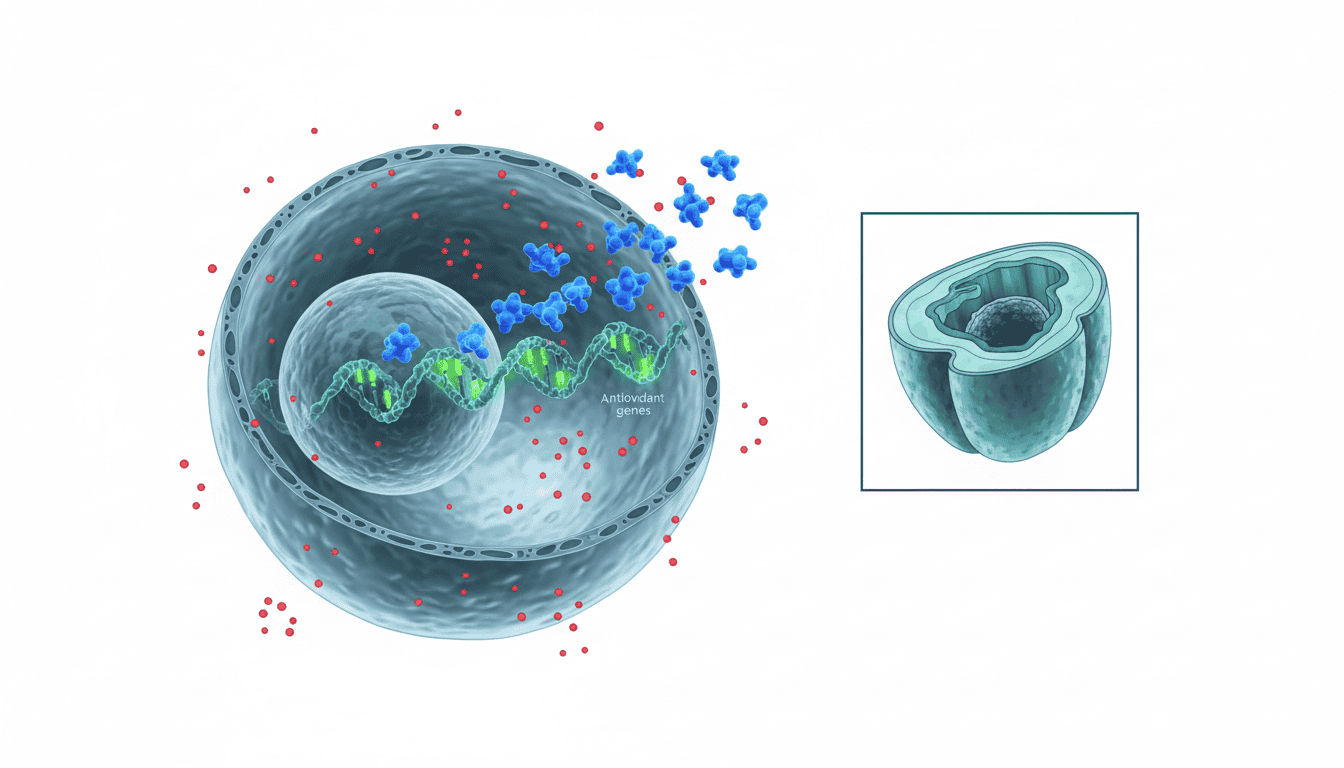
In laboratory studies, specific ginsenosides activate NRF2, a transcription factor that acts like a master switch for antioxidant defence. When cells detect oxidative stress, NRF2 moves into the nucleus and activates genes encoding protective enzymes. Researchers observed that ginsenoside Rb1 enhances this signalling pathway in cultured neurons and in animal models. The effect is dose dependent: more ginsenoside produces stronger activation, up to a saturation point.
Separately, other studies examined sleep architecture in mice given red ginseng extract. Animals showed increased time in non-REM sleep and altered brain wave patterns consistent with deeper sleep. Electroencephalography recordings revealed changes in sleep spindles, brief bursts of brain activity associated with memory consolidation. These changes correlated with reduced oxidative markers in hippocampal tissue the following morning.
Human studies are fewer and smaller. Several trials involving healthy adults reported subjective improvements in sleep quality and reduced daytime fatigue when consuming red ginseng extract over 4 to 8 weeks. Biomarker studies in these participants showed modest reductions in plasma malondialdehyde, a marker of lipid peroxidation, though changes were often within normal variation. One study measured sleep latency and found modest reductions, though the effect size was small.
Why cells need this defence system
Oxidative stress management isn’t optional. Without functioning antioxidant systems, cells accumulate DNA mutations and eventually die. This is why evolution preserved these mechanisms across nearly all organisms. Humans have multiple, redundant layers: enzymatic antioxidants, dietary antioxidants, and cellular repair systems that fix oxidative damage after it occurs.
Sleep’s role in this defence is equally ancient. During sleep, the glymphatic system activates in the brain, clearing metabolic waste including oxidative byproducts. Growth hormone, which peaks during deep sleep, stimulates antioxidant enzyme synthesis in muscle and bone. The immune system, largely inactive during waking hours for metabolic reasons, ramps up cytokine production during sleep to coordinate repair. Disrupting sleep, even partially, impairs all three processes simultaneously.
Red ginseng compounds might enhance these existing systems rather than create new ones. The hypothesis is that ginsenosides lower the activation threshold for NRF2 signalling, making cells more responsive to oxidative challenge. This would amplify an existing defence that’s already present in all humans. Whether this amplification produces meaningful benefit in people living normal lives remains the central question.
What affects oxidative stress and sleep regulation
Age shifts both processes. Antioxidant enzyme activity declines in most tissues after age 40, particularly in mitochondria. Simultaneously, sleep becomes lighter and more fragmented. This creates a double burden: older adults produce more oxidative stress and defend against it less effectively. Whether red ginseng helps specifically in ageing populations is unknown, though animal studies in aged mice suggest some benefit.
Exercise influences oxidative stress in counterintuitive ways. Intense exercise initially increases ROS production dramatically, triggering antioxidant enzyme upregulation as an adaptation. Chronic sedentary behaviour, conversely, keeps oxidative systems at baseline. Red ginseng might matter more for sedentary individuals than active ones, though this hasn’t been directly tested. Sleep quality responds clearly to exercise timing: morning and afternoon activity improves sleep, while evening activity disrupts it.
Diet shapes oxidative stress burden directly through other antioxidants. High consumption of polyphenols from tea, berries, and dark chocolate saturates antioxidant capacity. Whether adding red ginseng provides additional benefit when baseline antioxidant intake is already high is unclear. Individual genetic variation in antioxidant enzyme expression also matters. People with genetic variants that reduce NRF2 responsiveness might theoretically benefit more from compounds that enhance it, but this hasn’t been studied in humans.
Stress hormones like cortisol increase oxidative stress and impair sleep simultaneously. Red ginseng might theoretically help break this cycle, though the evidence is speculative. Chronic inflammation, obesity, and sleep apnoea all increase oxidative burden independent of ginseng consumption.
What remains unknown
The biggest gap is simple: we don’t know if the effects observed in cells and animal brains translate to meaningful change in healthy humans. Cell culture studies use isolated cells without the complex buffering systems of whole organisms. Animal studies use very high doses of extracted ginsenosides, far above what humans consume as food. The few human trials were small, involved short interventions, and measured markers that might not reflect actual biological benefit.
We also don’t know which ginsenosides matter most, or whether the mix in red ginseng is optimal. Different processing methods create different ginsenoside ratios. Whether one specific compound would be more effective than the whole extract is unexplored. Individual variation in how people absorb and metabolise ginsenosides is almost entirely unstudied in humans.
The relationship between improved oxidative defence and improved sleep remains mechanistically unclear. Do ginsenosides improve sleep because they reduce oxidative stress specifically, or through other pathways? Do they improve sleep first, which then reduces oxidative stress? The directionality matters for understanding whether they’re useful for people with normal sleep but elevated oxidative stress, or vice versa.
Long-term safety data in humans is scarce. Animal studies haven’t identified toxicity at reasonable doses, but humans haven’t been systematically monitored for multi-year consumption. Whether red ginseng interacts with common medications remains incompletely characterised.
What this research points toward is an obvious but underexplored truth: cellular defence systems are interconnected, and sleep is one of the most fundamental. The compounds in red ginseng appear to tap into existing antioxidant signalling pathways rather than creating new ones. Whether that amplification helps people who already sleep well and eat reasonably is the actual scientific question, separate from the appeal of natural compounds or the marketing that surrounds them.

Matt Elliott is the editor of Redox News Today, an independent publication covering peer-reviewed research on cellular health, redox signalling, and related biomedical science.