Cancer cells are metabolic gluttons. They consume glucose at rates that would bankrupt a normal cell, churning through fuel with reckless abandon. But what happens when you starve them? Researchers have observed something counterintuitive: fasting periods can trigger shifts in how cancer cells handle oxidative stress, the cellular damage that comes from reactive molecules piling up faster than cells can neutralise them. This isn’t about curing cancer through skipping meals. It’s about understanding a fundamental tension in cancer cell biology: the very metabolic flexibility that lets tumours survive can also create vulnerabilities.
What is oxidative stress
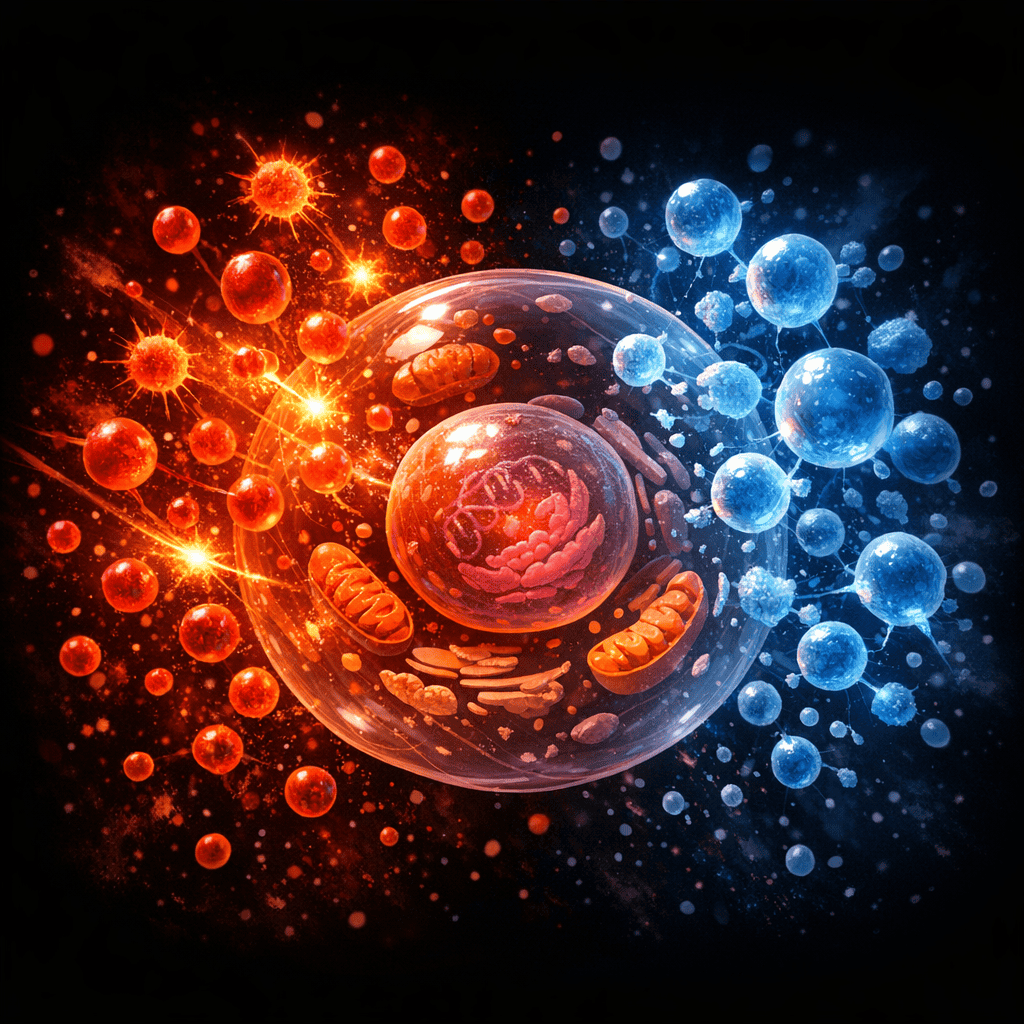
Oxidative stress occurs when reactive oxygen species (ROS) accumulate faster than a cell can clean them up. Think of ROS as molecular sparks. They form naturally during energy production, when mitochondria burn fuel. Most cells have antioxidant defences ready: enzymes like superoxide dismutase and catalase, plus molecules like glutathione that neutralise these sparks before they damage DNA, proteins, or lipids.
The balance matters. A little oxidative stress actually signals cells to strengthen their defences. Too much overwhelms the system and triggers cell death. Cancer cells sit in an odd middle ground. They generate enormous amounts of ROS because they metabolise so aggressively, yet most manage to keep stress levels just below lethal. They upregulate their own antioxidant machinery, essentially hiring extra fire brigades to handle the sparks their hyperactive metabolism creates.
What the research shows
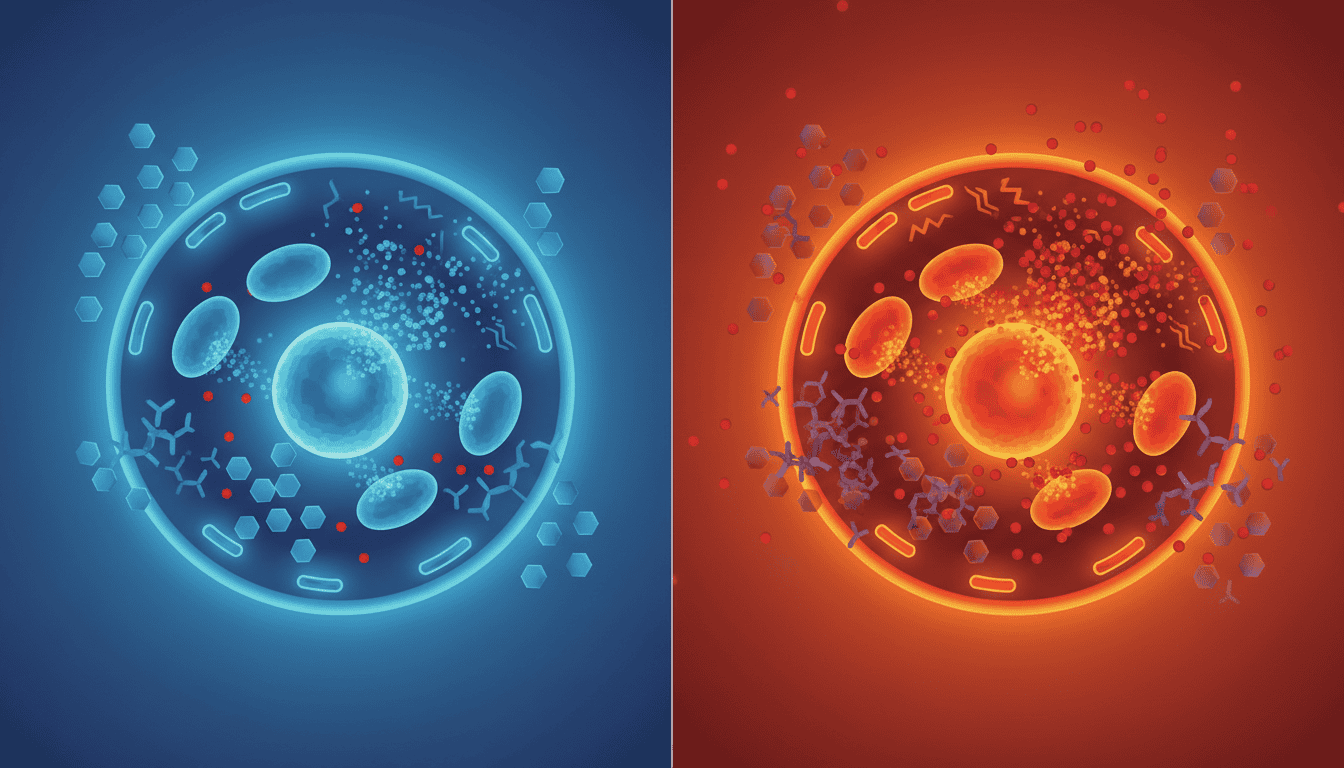
When researchers impose fasting conditions on cancer cells in laboratory settings, metabolic patterns shift. Glucose becomes scarce. Cancer cells that normally depend on rapid glycolysis for energy must switch gears, often relying more heavily on fat oxidation or amino acid metabolism. This metabolic pivot changes how much oxidative stress the cells generate and, more interestingly, how well their antioxidant defences keep pace.
Studies observe that some cancer cell types experience increased ROS during fasting periods, while their antioxidant enzyme activity doesn’t scale up equally. This mismatch creates a window where oxidative stress climbs. Other cell types respond differently, activating alternative metabolic pathways that produce less ROS overall. The variation depends heavily on which genes the cancer cells have acquired, what fuel sources remain available, and how long the fasting window lasts.
Cells also shift their signalling patterns. Nutrient sensors like AMPK activate when fuel runs low. These sensors trigger metabolic reorganisation, but they also influence how cells manage oxidative stress. Fasting activates autophagy in many cancer cells, a cellular recycling process that clears damaged components but also generates ROS during the cleanup itself. So the stress response becomes paradoxical: cells try to clean house but generate more sparks in the process.
Why cells need this
Evolution preserved oxidative stress sensing because it works as an alarm system. Healthy cells monitor ROS levels to detect metabolic problems. If energy production goes wrong, ROS spike and alert the cell to stop, repair, or die if damage is too severe. This system evolved to keep tissues functional and prevent mutations.
Cancer cells hijacked parts of this system. They upregulate antioxidant defences to survive despite their reckless metabolism. Yet this creates a strange dependency: they’ve optimised their antioxidant capacity around their usual high-glucose diet. Change the fuel supply, and that optimisation becomes less useful. During fasting, the cell faces a choice it hasn’t adapted to handle perfectly: continue burning fats and amino acids while managing spike in ROS, or activate expensive energy conservation programs that slow growth.
For normal cells, fasting triggers similar metabolic shifts but these cells have maintained broader metabolic flexibility. They can handle periods of scarcity without accumulating dangerous ROS because they’ve never been forced to optimise exclusively for glucose. Cancer’s strength under abundance becomes a liability under scarcity.
What affects oxidative stress during fasting
Cancer cell genetics matter enormously. Cells with mutations that increase antioxidant enzyme expression handle fasting stress better than those without. Tumours with high levels of NRF2 signalling, a master regulator of antioxidant genes, maintain better defences when fuel gets tight. Conversely, cells deficient in key antioxidant genes experience sharper stress increases during fasting windows.
The duration of fasting influences outcomes. Short intermittent fasting might trigger metabolic switching without overwhelming antioxidant capacity. Prolonged fasting creates more severe nutrient deprivation. The specific tumour microenvironment also shapes responses: cancer cells in oxygen poor regions face different oxidative stress dynamics than those in well perfused areas, and these differences amplify during fasting when metabolic rates shift.
Age of the cell population plays a role too. Young, rapidly dividing cancer cells generate more ROS than slower growing populations simply because rapid growth demands more energy. These cells often maintain stronger antioxidant systems to cope. Older cancer cell populations might have less metabolic reserve. Individual differences in mitochondrial function between cancer cells affect how much ROS they generate per calorie burned.
What remains unknown
Researchers are still mapping which cancer subtypes respond most strongly to fasting induced oxidative stress shifts. The field hasn’t determined whether brief intermittent fasting creates different stress patterns than longer fasting windows, or whether repeated cycles produce adaptations that cancer cells can eventually overcome. We don’t yet know whether the oxidative stress response during fasting actually influences cancer cell survival or death in living organisms, rather than just in laboratory cultures.
There’s genuine uncertainty about how cancer cell populations within a tumour respond heterogeneously. Do all cells experience the same oxidative stress during fasting, or do subpopulations with different metabolic profiles respond in entirely different ways? Can cancer cells activate stress resistance mechanisms we haven’t yet identified? Most studies work with single cancer cell lines under controlled conditions. How these findings translate to the complex, three dimensional environment of an actual tumour remains an open question.
The interaction between fasting induced oxidative stress and the immune system is largely unexplored. Does fasting change how recognisable cancer cells appear to immune cells? Does altered oxidative stress signalling affect how cancer cells communicate with surrounding immune populations?
Understanding how metabolism and oxidative stress interconnect in cancer reveals something broader about cellular biology itself: cells don’t live in isolation from their fuel supply. Change what cells eat and how they burn it, and you change how they handle damage, defend themselves, and persist. The relationship between fasting and cancer cell oxidative stress isn’t magic. It’s biochemistry revealing that cellular adaptation has limits. Tumours thrive under conditions they’ve evolved to exploit. Remove those conditions, and even cancer cells must make difficult metabolic choices.

Matt Elliott is the editor of Redox News Today, an independent publication covering peer-reviewed research on cellular health, redox signalling, and related biomedical science.