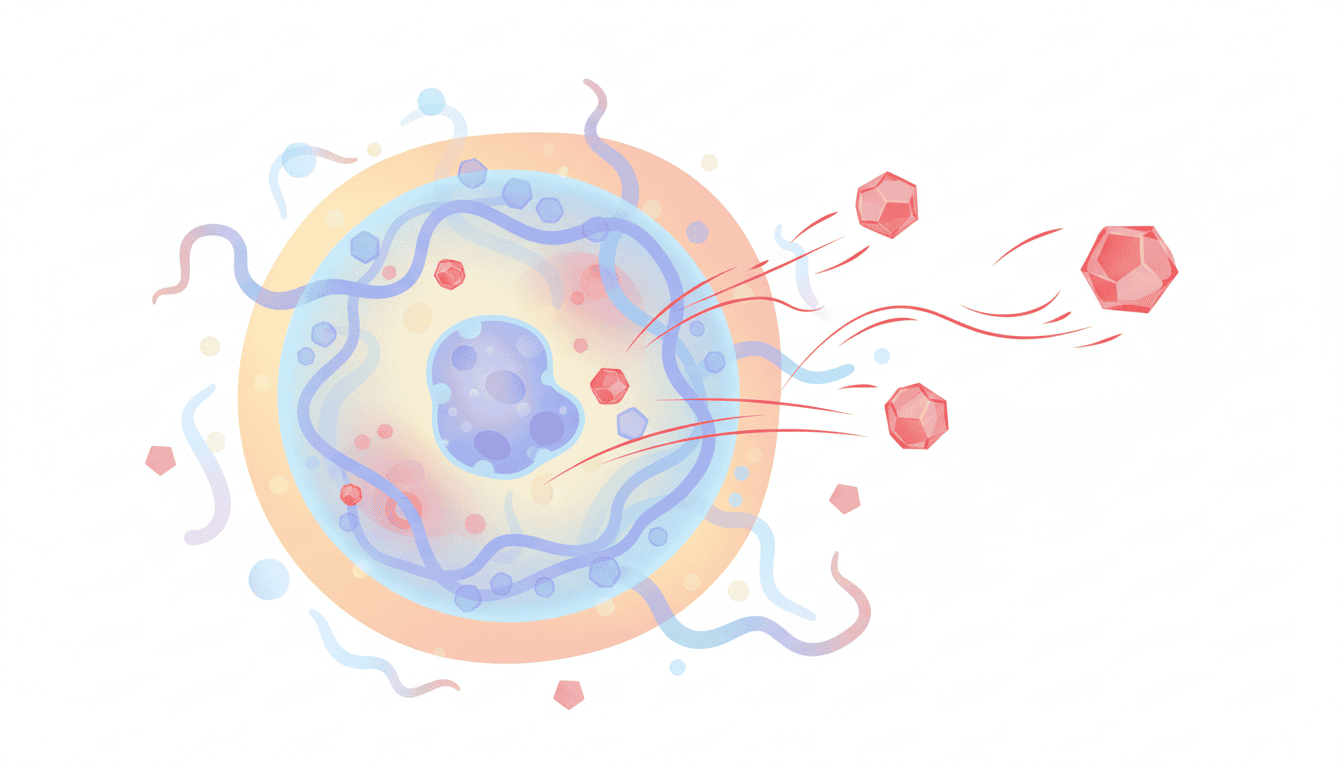
The same cellular defence system that protects healthy cells from damage can become cancer’s shield against treatment. When cancer cells activate their NRF2 signalling pathway, they essentially put on molecular armour that deflects many chemotherapy drugs. This creates one of oncology’s most frustrating paradoxes: the more a cancer cell protects itself, the harder it becomes to kill.
What is NRF2 signalling
NRF2 operates like a cellular alarm system for oxidative stress. Under normal conditions, this protein sits quietly in the cytoplasm, bound to another protein called KEAP1 that keeps it in check. When cells encounter damage from free radicals, toxins, or other threats, KEAP1 releases its grip on NRF2.
Free NRF2 then rushes to the nucleus and switches on more than 200 genes involved in cellular protection. These genes produce antioxidant enzymes, detoxification proteins, and DNA repair machinery. Think of it as a master electrician who can instantly rewire a building’s entire electrical system when danger strikes.
This response normally lasts just long enough to handle the threat before NRF2 gets degraded and the system resets. But cancer cells have learned to game this system, keeping NRF2 active far longer than intended.
What the research shows
Scientists have observed that many cancers hijack NRF2 signalling to resist chemotherapy. Lung cancers frequently carry mutations in KEAP1 that prevent it from controlling NRF2 properly. Without this brake, NRF2 stays active continuously, cranking out protective proteins around the clock.
Researchers have documented this resistance mechanism across multiple cancer types. They’ve found that tumours with hyperactive NRF2 signalling show increased resistance to platinum-based drugs, alkylating agents, and other common chemotherapies. The cancer cells essentially detoxify the drugs before they can cause lethal damage.
Laboratory studies reveal how this plays out at the molecular level. When chemotherapy drugs enter cancer cells, they typically work by generating reactive oxygen species or directly damaging DNA. But cells with overactive NRF2 produce excess amounts of glutathione, catalase, and other antioxidants that neutralise these therapeutic attacks.
Even more troubling, some cancers that initially respond to treatment later develop NRF2 hyperactivation as they evolve resistance. The selective pressure of chemotherapy favours cells that can boost their antioxidant defences.
Why cells need this defence system
Evolution shaped NRF2 signalling to handle the constant barrage of oxidative stress that comes with being alive. Every breath we take generates reactive oxygen species as a byproduct of cellular energy production. Environmental toxins, UV radiation, and inflammatory responses create additional oxidative damage.
Without NRF2’s protective response, cells would accumulate DNA damage, protein dysfunction, and membrane destruction. This system becomes especially vital during times of stress, illness, or exposure to harmful chemicals. The pathway essentially buys cells time to repair damage or triggers controlled cell death if the damage proves too severe.
Cancer cells face an unusual challenge in this regard. Their rapid growth and altered metabolism generate higher levels of oxidative stress than normal cells experience. They also encounter immune system attacks designed to destroy them. Hyperactivating NRF2 helps them survive this hostile environment, but it also makes them harder to eliminate with treatment.
What affects NRF2 activity in cancer
Genetic mutations represent the most direct way cancers alter NRF2 signalling. Mutations in KEAP1 occur in roughly 20% of lung cancers and smaller percentages of other cancer types. Some tumours develop mutations in NRF2 itself that make the protein more stable and active.
The tumour microenvironment also influences NRF2 activity. Hypoxic conditions, common in solid tumours, can activate NRF2 signalling. Chronic inflammation in the surrounding tissue provides another trigger for this pathway.
Certain chemotherapy drugs paradoxically activate NRF2 as they attempt to kill cancer cells. This creates a treatment-induced feedback loop where the therapy itself strengthens the cancer’s defences. The timing and dosing of treatment can influence how strongly this protective response kicks in.
Metabolic changes in cancer cells can also affect NRF2 signalling. Altered glucose metabolism, changes in amino acid processing, and disrupted cellular energy production all influence the pathway’s activity level.
What remains unknown
Scientists still struggle to predict which cancers will develop NRF2-mediated resistance and when this might occur during treatment. The relationship between NRF2 activity levels and actual drug resistance varies significantly between different cancer types and individual patients.
Researchers are working to understand how NRF2 signalling interacts with other resistance mechanisms. Cancer cells rarely rely on just one survival strategy, and the interplay between different protective pathways remains poorly mapped.
The question of whether temporarily blocking NRF2 during chemotherapy would improve outcomes without causing excessive toxicity needs more investigation. Early studies show promise, but the challenge lies in timing such interventions correctly.
Why some cancer types depend more heavily on NRF2 for drug resistance than others also puzzles researchers. This variability might hold clues for developing more targeted approaches to overcoming resistance.
This research illustrates how cancer exploits fundamental cellular biology for survival. Understanding these hijacked defence mechanisms offers scientists new angles for developing treatments that work around or through cellular resistance strategies. The challenge lies in distinguishing between the protective responses cancer cells need to survive and those that healthy cells require to function normally.

Matt Elliott is the editor of Redox News Today, an independent publication covering peer-reviewed research on cellular health, redox signalling, and related biomedical science.