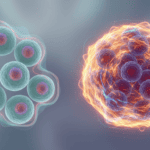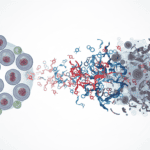

Inside every cell in your body, a molecular battle rages between damage and repair. When the balance tips toward damage, cells deploy an ancient defence system that reads like a military playbook. Now researchers have discovered that compounds from licorice root can hijack this system, essentially turning up the volume on your cellular repair mechanisms.
What is cellular oxidative stress defence
Oxidative stress happens when cells produce more reactive molecules than they can safely neutralise. Think of it like a factory producing toxic waste faster than the cleanup crew can handle it. These reactive molecules, called free radicals, grab electrons from whatever they can find. Proteins, fats, even DNA become targets.
Cells don’t just sit there and take it. They’ve evolved a sophisticated response system centred around a protein called NRF2. Under normal conditions, NRF2 stays locked up by a cellular bouncer protein called KEAP1. But when oxidative stress hits, NRF2 breaks free and rushes to the cell’s nucleus.
Once there, NRF2 acts like a conductor orchestrating an antioxidant symphony. It switches on genes that produce glutathione, the cell’s master antioxidant. It activates enzymes that neutralise toxic compounds. It even boosts the cellular recycling systems that clear out damaged proteins. This coordinated response can increase a cell’s antioxidant capacity by 200 to 300 percent.
What the research shows
Scientists studying licorice compounds have zeroed in on several key players, particularly glycyrrhizin and isoliquiritigenin. When researchers expose cells to these compounds in laboratory studies, something interesting happens. The compounds appear to disrupt the partnership between NRF2 and its cellular bouncer KEAP1.
In cell culture experiments, isoliquiritigenin consistently triggers NRF2 activation within hours. Cells treated with this compound show increased production of antioxidant enzymes like superoxide dismutase and catalase. They also ramp up glutathione synthesis, sometimes doubling their levels of this critical molecule.
The timing matters. Peak NRF2 activation typically occurs 2 to 6 hours after exposure to licorice compounds. The effect isn’t permanent though. Without continued exposure, cellular antioxidant levels return to baseline within 24 to 48 hours. This suggests the compounds act more like a temporary boost than a permanent rewiring of cellular machinery.
Animal studies have shown similar patterns. Mice given licorice extracts demonstrate increased antioxidant enzyme activity in their liver, kidney, and brain tissues. Their cells show better resistance to artificially induced oxidative damage compared to control groups.
Why cells need this system
The NRF2 pathway exists because cellular life is inherently messy. Every time a mitochondrion produces energy, it leaks reactive molecules. Every time an enzyme breaks down a toxin, it creates potentially harmful byproducts. Normal metabolism is like running a chemical factory that inevitably produces some toxic waste.
Evolution preserved the NRF2 system because cells that could rapidly upregulate their defences survived better. This pathway responds to hundreds of different stress signals, from heavy metals to inflammatory molecules to dietary compounds. It’s like having a master alarm system that can detect multiple types of danger and coordinate the appropriate response.
The system also has built-in intelligence. NRF2 doesn’t just blindly activate every antioxidant gene. It fine-tunes the response based on what type of stress the cell faces. Some compounds trigger strong glutathione production. Others preferentially activate detoxification enzymes. This targeted response prevents cells from wasting energy on unnecessary defences.
What affects licorice compound activity
The way licorice compounds influence cellular pathways depends on several factors. Concentration matters enormously. Low doses might have no effect, while very high concentrations can actually become toxic to cells. Most research suggests there’s a sweet spot where these compounds provide maximum benefit without causing harm.
Individual genetics also play a role. People carry different versions of the genes that control NRF2 activity. Some genetic variants make the pathway more responsive to dietary compounds, while others create resistance. This might explain why traditional remedies work better for some people than others.
The source and processing of licorice affects compound availability too. Fresh licorice root contains different ratios of active compounds compared to dried extracts. Heat processing can break down some beneficial molecules while concentrating others. Even the soil conditions where licorice grows influence its chemical composition.
Age appears to dampen NRF2 responsiveness across species. Older cells show blunted responses to the same compounds that strongly activate antioxidant pathways in younger cells. This age-related decline might contribute to increased oxidative damage over time.
What remains unknown
Researchers still puzzle over how exactly licorice compounds interact with the KEAP1-NRF2 system. The prevailing theory suggests they chemically modify specific amino acids on KEAP1, causing it to release NRF2. But the precise molecular choreography remains unclear.
Long-term effects represent another knowledge gap. Most studies last days to weeks, not months or years. Scientists don’t fully understand whether repeated exposure to NRF2-activating compounds might eventually exhaust cellular defence systems or lead to unexpected adaptations.
The interaction between different licorice compounds adds another layer of complexity. Licorice root contains dozens of bioactive molecules. Do they work synergistically? Do some compounds enhance others or potentially cancel them out? Current research typically studies isolated compounds rather than whole-plant extracts.
Translation from laboratory to real-world scenarios also presents challenges. Cell culture and animal studies use controlled conditions that don’t reflect the complexity of human physiology. Factors like gut bacteria, liver metabolism, and individual genetic variation all influence how these compounds actually behave in people.
The story of licorice and cellular stress defence illustrates a broader principle in biology: plants and animals have been engaged in chemical communication for millions of years. The compounds that help licorice plants survive environmental challenges can also trigger ancient defence pathways in human cells. Understanding these molecular conversations opens windows into how diet, environment, and cellular health interconnect at the most fundamental level.

Matt Elliott is the editor of Redox News Today, an independent publication covering peer-reviewed research on cellular health, redox signalling, and related biomedical science.