Your lungs contain billions of tiny cellular power plants called mitochondria, busily converting oxygen into energy. But in chronic obstructive pulmonary disease (COPD), these same organelles become damaged factories that pump out harmful molecules instead of clean energy. The result is a vicious cycle where the cells meant to help you breathe actually make breathing harder.
What is oxidative stress in COPD
Oxidative stress happens when cells produce more reactive oxygen species than they can neutralise. Think of it like rust forming faster than you can scrape it off.
In healthy lungs, cells maintain a careful balance. Mitochondria produce small amounts of reactive molecules as a normal byproduct of energy production. Antioxidant systems mop these up before they cause damage. But COPD breaks this balance in two ways.
First, chronic inflammation floods lung tissue with immune cells that release oxidising molecules as weapons against perceived threats. Second, the mitochondria themselves become dysfunctional. Instead of efficient energy production, they leak electrons that react with oxygen to form superoxide, hydrogen peroxide, and other reactive species.
The lung’s antioxidant defences become overwhelmed. Systems that normally protect cells start failing. Molecules that should be building and repairing tissue get damaged instead.
What the research shows
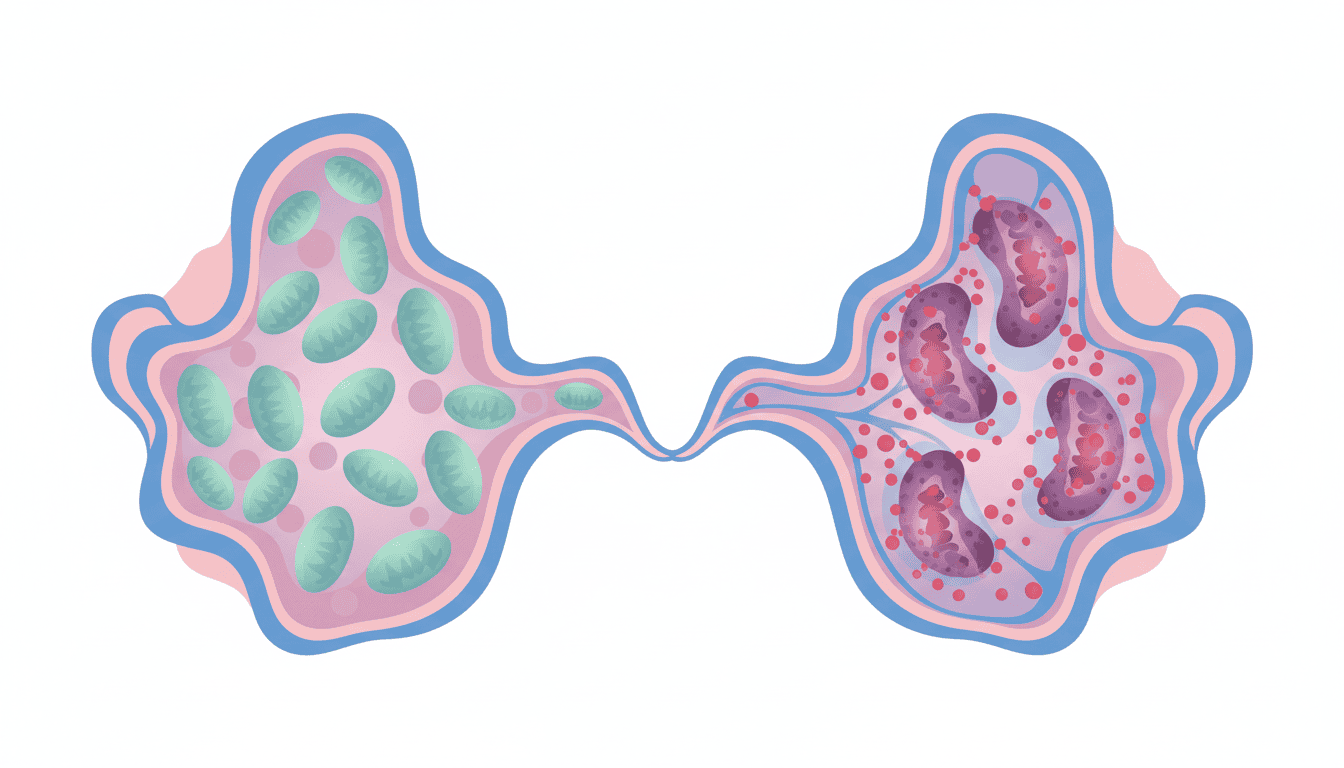
Studies of lung tissue from COPD patients reveal mitochondria in various states of disrepair. Scientists observe swollen organelles with damaged membranes and disrupted internal structures. The normal neat folds inside mitochondria become fragmented and sparse.
Researchers have measured significantly higher levels of oxidative damage markers in COPD patients compared to healthy controls. Proteins show signs of oxidative modification. DNA bears the molecular scars of reactive oxygen attack. Lipids in cell membranes become rancid from oxidation.
The mitochondrial respiratory chain, which normally transfers electrons efficiently to produce energy, becomes leaky. Electrons escape at earlier steps and react with oxygen to form damaging compounds. Energy production drops while harmful byproduct formation increases.
Laboratory studies show that exposing lung cells to cigarette smoke or other COPD triggers rapidly impairs mitochondrial function. The organelles begin producing more reactive species within hours. Over time, they lose their ability to divide and renew themselves properly.
Why cells need functional mitochondria
Lung cells work incredibly hard. The epithelial cells lining your airways constantly produce mucus, move particles upward with beating cilia, and repair damage from inhaled irritants. This cellular activity demands enormous amounts of energy.
Mitochondria evolved as separate organisms that formed partnerships with early cells over a billion years ago. They retained their own DNA and reproduction systems because energy production requires such precise control. When mitochondria fail, cells can’t maintain basic functions.
Healthy mitochondria also act as cellular quality control centres. They help regulate cell death pathways, removing damaged cells before they become problematic. They participate in calcium signalling that coordinates cellular responses. When these systems break down, tissue repair becomes chaotic.
The lung’s immune cells rely heavily on mitochondrial function to mount appropriate responses to threats. Dysfunctional mitochondria can trigger inappropriate inflammation while failing to clear real dangers like bacteria or damaged tissue.
What affects mitochondrial function in COPD
Cigarette smoke delivers a direct chemical assault on mitochondria. The thousands of compounds in tobacco smoke overwhelm antioxidant defences and damage mitochondrial DNA. Even after someone quits smoking, mitochondrial dysfunction can persist for years.
Air pollution creates similar effects through different pathways. Fine particulates and chemical pollutants trigger inflammation that spreads throughout lung tissue. Urban environments with high pollution levels correlate with increased COPD progression rates.
Age compounds these problems. Mitochondria naturally accumulate damage over time as their repair mechanisms become less efficient. The mitochondrial DNA lacks the protective mechanisms that nuclear DNA possesses. Older adults show baseline mitochondrial dysfunction even before disease develops.
Nutritional factors influence mitochondrial health. Deficiencies in key nutrients like magnesium, B vitamins, and antioxidants can impair mitochondrial function. However, the relationship between diet and COPD progression remains complex and individual.
Physical activity affects mitochondrial density and function. Exercise normally stimulates mitochondrial biogenesis, but COPD patients often reduce activity due to breathing difficulties. This creates another cycle where reduced fitness leads to further mitochondrial decline.
What remains unknown
Scientists still debate whether mitochondrial dysfunction drives COPD progression or results from it. The relationship likely works both ways, but understanding which comes first could reveal new intervention points.
The genetics of mitochondrial susceptibility in COPD remains murky. Some people develop severe disease with relatively modest exposure to risk factors, while others maintain function despite heavy smoking histories. Researchers are mapping genetic variants that might explain these differences.
How different cell types in the lung coordinate their responses to mitochondrial stress needs more investigation. Epithelial cells, immune cells, and structural cells all respond differently to oxidative damage. Their interactions determine overall tissue health.
The timing of when mitochondrial dysfunction becomes irreversible remains unclear. Early intervention might preserve function, but researchers need better markers to identify the critical windows.
Whether supporting mitochondrial function could slow COPD progression is an active area of investigation. Several research groups are testing compounds that might protect or restore mitochondrial health, but clinical results remain preliminary.
Understanding mitochondrial dysfunction in COPD illuminates how our cellular power plants can become liability when environmental stresses overwhelm their repair systems. This research reveals why lung disease often accelerates once it begins and points toward the fundamental importance of protecting our cellular energy systems throughout life. The lungs, with their constant exposure to the outside world, offer a window into how our bodies balance energy production with damage control.

Matt Elliott is the editor of Redox News Today, an independent publication covering peer-reviewed research on cellular health, redox signalling, and related biomedical science.