
Your morning diet cola contains zero calories, zero sugar, and potentially something your reproductive cells find deeply troubling. Recent research examining how artificial sweeteners interact with cellular metabolism has revealed an unexpected problem: these sugar substitutes may activate oxidative stress pathways specifically in cells responsible for reproduction. The mechanism isn’t about calories or metabolism in the traditional sense. It’s about how your cells recognise and respond to molecules they’ve never encountered in human history.
What is oxidative stress in reproductive cells
Oxidative stress occurs when cells accumulate too many unstable molecules called reactive oxygen species, or ROS. Think of ROS as cellular sparks. Your cells generate them constantly as a byproduct of energy production. In small amounts, they’re useful signalling molecules. In excess, they damage DNA, proteins, and the fatty membranes that hold cells together.
Reproductive cells face a particular vulnerability. Sperm, eggs, and the tissues supporting them divide rapidly and contain high concentrations of mitochondria, the cellular power plants that generate both energy and ROS. When oxidative stress strikes these cells, the damage can accumulate quickly. A single sperm cell or developing egg doesn’t have the luxury of being replaced if it sustains oxidative injury. Unlike skin cells that shed constantly, reproductive cells must remain viable for years or decades.
Your cells normally defend themselves with antioxidant systems. Enzymes like superoxide dismutase and catalase work continuously to neutralise ROS before they cause harm. These defence mechanisms depend on sensing when stress has occurred. That’s where artificial sweeteners enter the picture.
What the research shows
Studies examining sperm, eggs, and the cells that produce them have found something consistent: exposure to common artificial sweeteners like aspartame, sucralose, and saccharin triggers increased ROS production in reproductive tissues. The effect isn’t subtle or marginal. Researchers observed measurable increases in oxidative markers within hours of exposure.
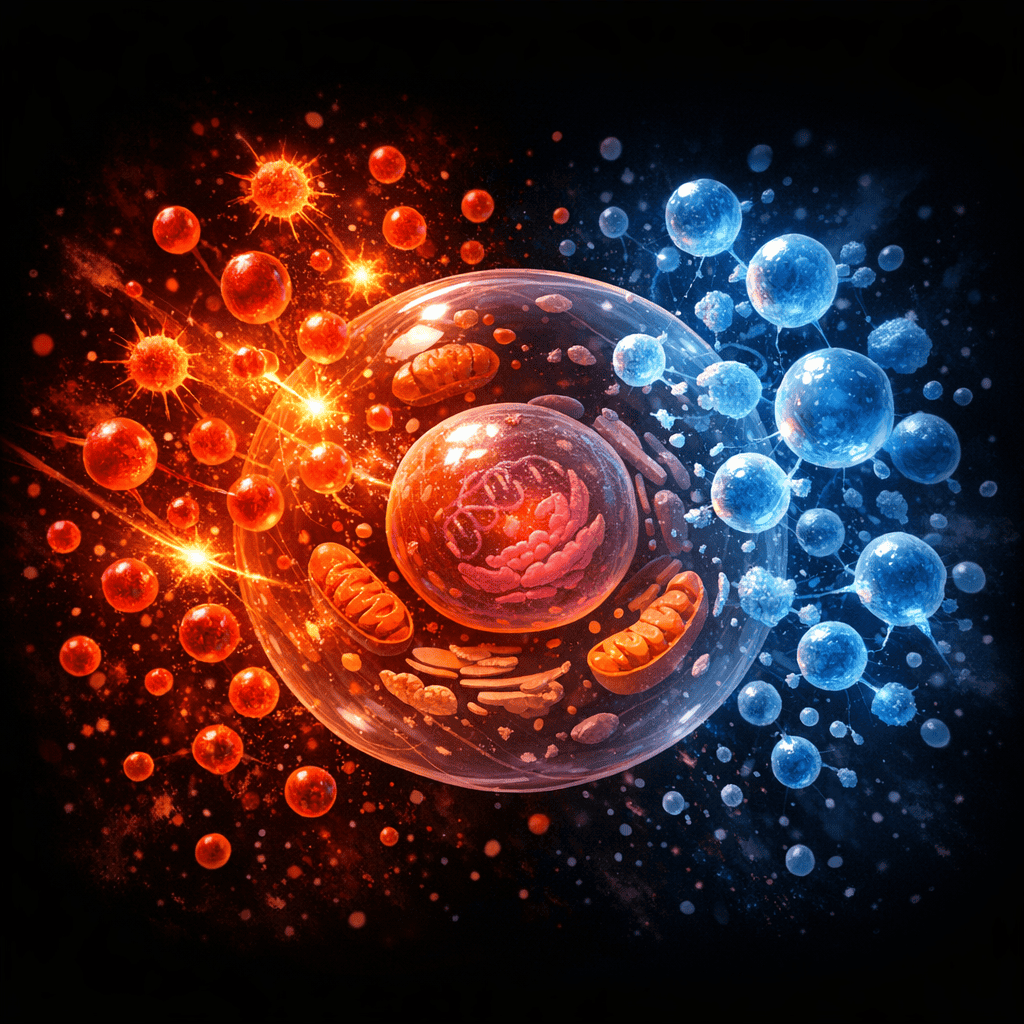
More specifically, the research indicates that artificial sweeteners appear to disrupt mitochondrial function in these cells. The mitochondria respond to the presence of these non-nutritive compounds by increasing their metabolic activity as if attempting to process them. This heightened activity generates excess ROS as a consequence. It’s a cellular misfire: the cells treat artificial sweeteners as if they’re genuine nutrients requiring metabolic breakdown, burning through energy and scattering sparks in the process.
Some studies have also noted that artificial sweeteners may activate inflammatory signalling pathways in reproductive tissues. This compounds the oxidative stress because inflammation itself generates additional ROS. The cells mount a defensive immune response to a molecule they don’t recognise, creating a self-reinforcing cycle of stress and inflammation.
Animal studies tracking this effect over weeks or months showed measurable impacts on sperm quality, including reduced motility and increased DNA fragmentation. Follicle development in female animals exposed to these sweeteners showed altered patterns compared to controls. These aren’t subtle changes in laboratory markers. Researchers observed functional consequences for reproductive capacity.
Why cells need oxidative defences
Oxidative stress isn’t a problem unique to artificial sweeteners. Your cells evolved sophisticated antioxidant systems because oxidative damage has threatened life since oxygen became abundant in Earth’s atmosphere billions of years ago. The reason reproductive cells face particular vulnerability reveals something important about how evolution prioritises different cellular systems.
Reproductive cells must pass their genetic material to the next generation. Damage to the DNA in a reproductive cell becomes damage to the child that results from conception. Evolution favoured organisms that protected reproductive cells with exceptional care. But this protective system depends on cells recognising genuine threats. When artificial sweeteners trigger false alarms, they exhaust the antioxidant defence machinery that evolved to handle legitimate metabolic stress.
The oxidative stress response exists as a kind of cellular insurance policy. A cell that detects genuine oxidative damage activates genes for antioxidant production, DNA repair, and if the damage proves irreparable, programmed cell death. This prevents a damaged cell from propagating errors. When artificial sweeteners chronically activate this system without genuine cause, cells may eventually become desensitised. The defences remain activated but become less responsive to real threats.
What affects oxidative stress from artificial sweeteners
Research shows substantial individual variation in how different people’s reproductive cells respond to artificial sweeteners. Some of this variation stems from genetic differences in antioxidant enzyme expression. People with higher baseline levels of superoxide dismutase, for example, tolerate oxidative challenges better than those with lower expression.
Age matters significantly. Younger reproductive cells generally mount stronger antioxidant responses than ageing ones. A 25-year-old’s eggs or sperm possess more robust defence systems than a 45-year-old’s, which means the same dose of artificial sweetener triggers more oxidative damage in older reproductive cells. This effect compounds over time as cells accumulate minor oxidative injuries throughout life.
Dietary context influences the severity of the effect. Cells already under oxidative stress from poor diet, smoking, or environmental pollutants show worse responses to artificial sweeteners than cells with strong antioxidant support from foods rich in polyphenols and vitamins. A person consuming high amounts of antioxidant-rich foods alongside artificial sweeteners experiences less oxidative injury in reproductive tissues than someone consuming processed foods generally.
The concentration and frequency of artificial sweetener consumption matters. A single exposure to a diet drink triggers a temporary oxidative response that cells repair within hours. Chronic daily consumption maintains constant low-level stress that never fully resolves, preventing full antioxidant system recovery.
What remains unknown
Scientists still haven’t determined whether the oxidative stress from artificial sweeteners in reproductive cells produces lasting biological consequences in humans. Animal studies show effects, but humans consume these substances in very different patterns and quantities than laboratory animals. Extrapolating from mice to humans requires enormous caution.
The mechanisms driving the mitochondrial disruption remain incompletely understood. Researchers recognise that artificial sweeteners trigger increased ROS production, but the precise molecular steps remain unclear. Do they bind directly to mitochondrial proteins? Do they interfere with electron transport chains? Different sweeteners show slightly different patterns, suggesting multiple mechanisms at work.
Long-term studies tracking reproductive outcomes in humans with different artificial sweetener consumption levels don’t yet exist. The research comes almost entirely from cell culture experiments and animal models. Establishing whether chronic consumption actually reduces fertility or damages embryos in humans requires years of careful epidemiological work.
The question of whether individual genetic variation in antioxidant genes significantly influences susceptibility has barely been explored. Some people might tolerate artificial sweeteners far better than others based on their inherited genetics, but this remains speculative.
Your cells operate according to principles shaped over billions of years of evolutionary history. Those principles work brilliantly when cells encounter molecules they’ve processed since the origin of life. When exposed to artificial compounds that mimic sugar without being sugar, your cellular machinery encounters something genuinely novel. The oxidative stress response that artificial sweeteners trigger in reproductive cells represents a cellular system designed for one world confronting the chemicals of another. Understanding how cells navigate this mismatch points toward deeper questions about how metabolism, reproduction, and chemical sensing intertwine in human biology.

Matt Elliott is the editor of Redox News Today, an independent publication covering peer-reviewed research on cellular health, redox signalling, and related biomedical science.