
A 28-year-old walks into a cardiologist’s office with a racing heart that won’t settle. No blocked arteries. No structural problems. The heart itself works fine, but something is making it hyperresponsive, triggering fight-or-flight signals at the wrong times. Post-traumatic stress disorder does this to some people. Now researchers are uncovering why: oxidative stress appears to be rewiring the very reflexes that control heart rate and blood pressure in young adults with PTSD.
What is oxidative stress
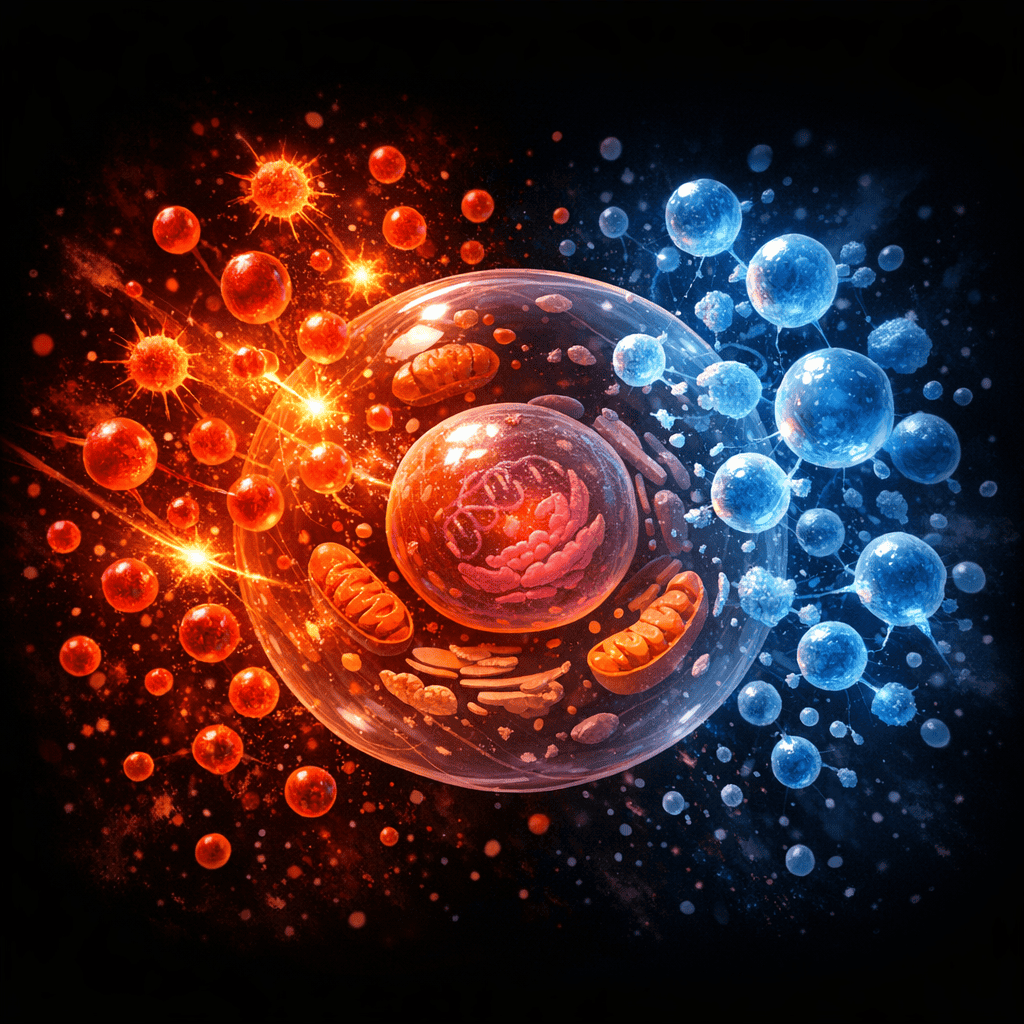
Your cells are burning fuel constantly. That process generates free radicals, unstable molecules that damage proteins, DNA, and fats if left unchecked. Your body normally handles this. Antioxidant enzymes like superoxide dismutase and catalase patrol your cells like security guards, neutralising these rogue molecules before they cause harm. Oxidative stress happens when that system gets overwhelmed. Too many free radicals. Not enough antioxidant defence. The damage accumulates.
This happens everywhere in your body, but the cardiovascular system is especially vulnerable. The heart pumps billions of times across a lifetime, burning energy relentlessly. Its mitochondria are working overtime. And the delicate cells lining your blood vessels, the endothelium, are highly sensitive to oxidative damage. When oxidative stress takes hold, these cells can’t produce enough nitric oxide, a crucial signalling molecule that helps blood vessels relax and adapt to changing demands.
What the research shows
Studies comparing young adults with PTSD to controls without trauma histories reveal a clear pattern. People with PTSD show elevated markers of oxidative stress in their blood: higher levels of lipid peroxides, oxidised proteins, and reduced antioxidant capacity. At the same time, their cardiovascular reflexes are misfiring. When researchers measure heart rate variability, the natural fluctuation in time between heartbeats, PTSD groups show reduced variability. This means their heart isn’t adapting smoothly to changing demands.
More specifically, tests of baroreflex sensitivity reveal the problem. The baroreflex is a reflex arc that detects blood pressure changes and automatically adjusts heart rate to compensate. Too much pressure? Heart slows down. Too little? Heart speeds up. It happens without conscious thought, thousands of times daily. In young adults with PTSD, this reflex is blunted. Their hearts don’t adjust as smoothly. And when researchers correlate this blunting with oxidative stress markers, a connection emerges: higher oxidative stress associates with weaker baroreflex responses.
The mechanism likely involves endothelial dysfunction. Oxidative stress damages the cells lining blood vessels and impairs their ability to produce nitric oxide. Without adequate nitric oxide signalling, the feedback loops that coordinate heart rate and blood pressure deteriorate. The system becomes rigid instead of responsive.
Why cells need this
The cardiovascular reflexes that PTSD disrupts evolved to keep you alive. Your baroreflex maintains blood pressure within a narrow range despite constant changes in posture, activity, and demand. Your parasympathetic nervous system, the brake pedal of stress response, normally dominates at rest, keeping your heart rate measured and efficient. These aren’t luxuries. They’re survival mechanisms refined over millions of years.
Oxidative stress threatens these systems because they depend on precise cellular signalling. Endothelial cells use nitric oxide to communicate with smooth muscle cells in blood vessel walls. Autonomic nerve terminals need intact proteins to transmit signals. Mitochondria need unimpaired electron transport chains to generate energy efficiently. Free radical damage frays all of this. The cells stop talking to each other as clearly.
In the context of trauma, the problem compounds. PTSD itself shifts the nervous system into a heightened state, increasing sympathetic activity. The body is primed for threat. But if oxidative stress is simultaneously damaging the reflex arcs that normally counterbalance this state, you get a system stuck in overdrive. The brake system weakens just when you need it most.
What affects oxidative stress levels
Age matters. Young adults show more resilience to oxidative stress than older people, but PTSD appears to accelerate the ageing process at the cellular level. People in their twenties and thirties with chronic PTSD show oxidative stress markers comparable to people a decade older without trauma history.
Sleep quality is a major factor. PTSD commonly disrupts sleep, and sleep deprivation increases oxidative stress production while reducing antioxidant capacity. It becomes a vicious cycle: trauma disrupts sleep, poor sleep increases oxidative damage, oxidative damage impairs the reflexes that help you stay calm, staying dysregulated makes sleep harder.
Physical inactivity worsens oxidative stress. Exercise stimulates your body’s own antioxidant production, strengthening the defence system. People with PTSD often withdraw from activity, partly due to anxiety and hypervigilance. That withdrawal removes one of the most effective natural tools for reducing oxidative stress.
Diet influences the balance too. Diets high in processed foods and low in colourful vegetables reduce antioxidant intake. The body loses supporting nutrients like vitamin C, vitamin E, and selenium that work alongside your cells’ own antioxidant enzymes.
Chronic stress hormones like cortisol and adrenaline increase oxidative stress production directly. PTSD means sustained elevation of these hormones, feeding the oxidative cycle continuously.
What remains unknown
The exact sequence of events still needs clarification. Does oxidative stress cause the cardiovascular reflex changes, or do the reflex changes create conditions that increase oxidative stress? Probably both, but the relative contributions aren’t clear. Which comes first in the causal chain matters for intervention design.
Researchers also don’t fully understand individual variation. Not all people with PTSD develop the same degree of oxidative stress or cardiovascular dysfunction. Some seem more resilient. Are there genetic factors that affect antioxidant enzyme efficiency? Do early life experiences modify how cells respond to trauma? These questions remain open.
The long term trajectory is unclear too. Does this oxidative stress and reflex dysfunction persist indefinitely, or can it reverse with appropriate support? Some evidence suggests cardiovascular reflexes can improve, but whether this requires direct intervention or happens naturally with PTSD recovery remains unknown. And whether the oxidative stress resolves alongside symptom improvement hasn’t been well studied in young people.
Why this matters
Understanding how trauma affects the cardiovascular system at the cellular level opens new angles for investigation. It explains why some people with PTSD experience pounding heart, dizziness, and what feels like a malfunctioning heart despite normal cardiac structure. The organ works, but the control systems are compromised. That’s a fundamentally different problem than structural heart disease, and it demands different approaches to understanding and potentially supporting recovery. The science here is still developing, but what’s emerging is a clearer picture of how psychological trauma writes itself into the body’s most basic regulatory systems.

Matt Elliott is the editor of Redox News Today, an independent publication covering peer-reviewed research on cellular health, redox signalling, and related biomedical science.