
Runners at altitude gasp for air. Swimmers hold their breath. Rock climbers push into the oxygen-starved zone. What feels like punishment to the lungs is actually a cellular emergency signal that triggers one of the body’s most elegant survival mechanisms. When oxygen becomes scarce, red blood cells don’t just passively wait for more. They transform.
What is hypoxic exercise
Hypoxic exercise is training under reduced oxygen availability. This happens naturally when you exercise at altitude where the air contains less oxygen, or artificially when you restrict oxygen supply during training. The mechanism is straightforward but the cellular response is anything but simple.
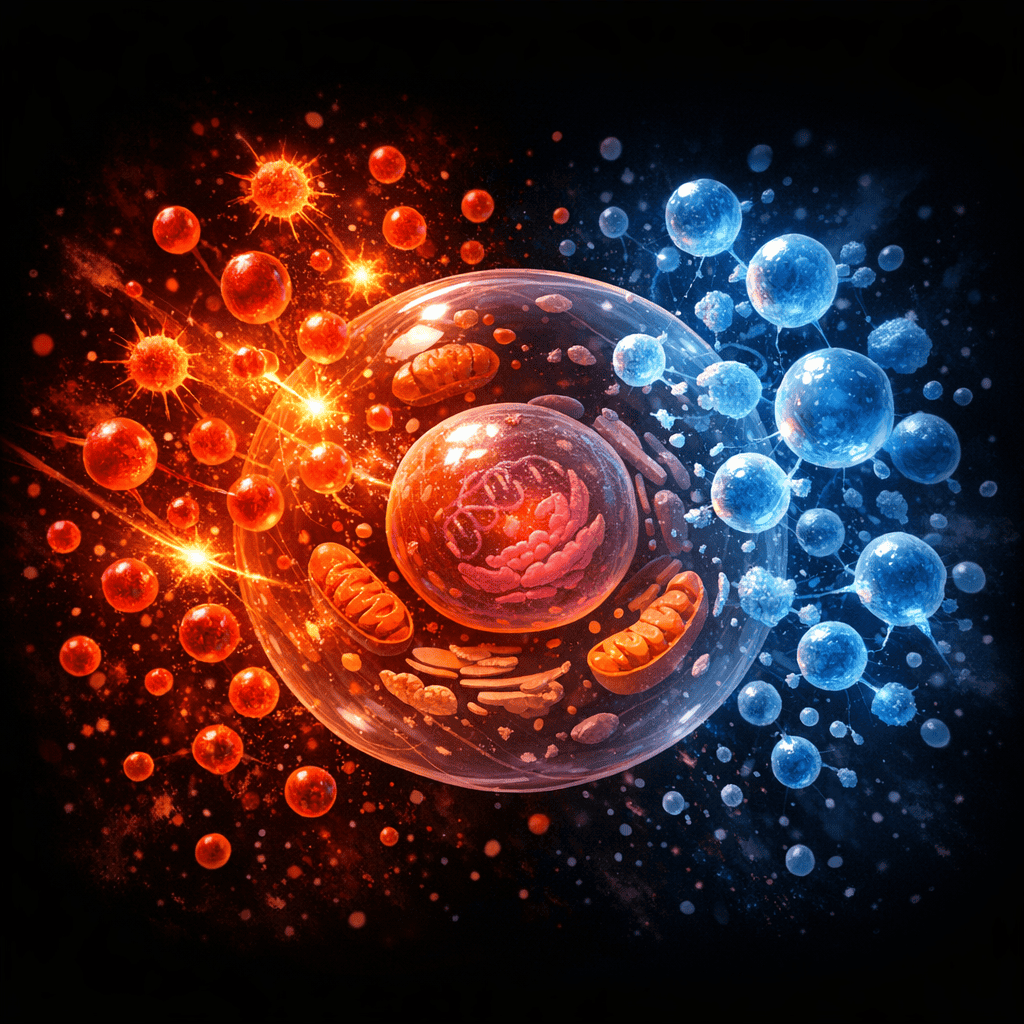
Your body detects oxygen shortage through specialised proteins called oxygen sensors. When oxygen levels drop, these sensors activate signalling pathways that cascade through the cell. The main player here is a transcription factor called HIF-1, which acts like an emergency alarm system. Once activated, HIF-1 enters the cell nucleus and switches on dozens of genes that would otherwise stay quiet.
Red blood cells face a particular challenge during hypoxic exercise. They’re not just passengers carrying oxygen around. They’re metabolic factories constantly adapting to their environment. When oxygen becomes scarce, they must rewire their entire energy production system to function efficiently in a hostile biochemical landscape.
What the research shows
Scientists studying athletes and volunteers training under hypoxic conditions have observed several concrete adaptations. First, red blood cells increase their production of 2,3-bisphosphoglycerate, or 2,3-BPG. This molecule sits inside red blood cells and fundamentally changes how haemoglobin releases oxygen to tissues. With more 2,3-BPG, haemoglobin becomes less sticky, releasing its oxygen cargo more readily even when oxygen levels are low. This is a direct response to the oxygen deficit signal.
Second, the bone marrow ramps up erythropoietin signalling, the hormone that drives red blood cell production. After a few days of hypoxic training, blood counts begin climbing. Researchers measuring haemoglobin levels in altitude-trained athletes see meaningful increases within two to three weeks. This isn’t a minor tweak. We’re talking about 5 to 10 per cent increases in oxygen-carrying capacity.
Third, red blood cells activate metabolic pathways that preserve energy. Under hypoxia, cells shift toward glycolytic metabolism rather than aerobic oxidation. They rely more on glucose breakdown and less on mitochondrial respiration to generate ATP. This shift protects cells from oxidative stress while maintaining the energy needed to pump ions and maintain membrane integrity.
Studies tracking gene expression in red blood cells during hypoxic exposure show activation of anti-inflammatory pathways and upregulation of antioxidant defence systems. These cells are preparing for environmental stress, buffering themselves against the reactive oxygen species that accumulate when oxygen is scarce.
Why cells need this
From an evolutionary perspective, this response made survival sense long before modern altitude training existed. Humans faced oxygen deprivation during illness, blood loss, or migration to high elevations. Cells that could rapidly adapt to low-oxygen environments survived. Those that couldn’t simply died, taking their genetic material with them.
Red blood cells specifically inherited a particular vulnerability and opportunity. They lack nuclei in their mature form, which means they can’t activate new genes once they’ve left the bone marrow. But they persist for four months in circulation. So they needed to develop rapid post-translational modifications, changes that happen to existing proteins without requiring new gene expression. The 2,3-BPG increase exemplifies this strategy. The molecule already exists in red blood cells. Hypoxia simply tilts the metabolic balance to produce more of it.
The broader signalling cascade that HIF-1 initiates represents a cellular consensus: oxygen is critical, and when it’s missing, every system must adapt simultaneously. Blood vessel function changes. Metabolic pathways reshuffle. Ion pumps recalibrate. This isn’t random thrashing. It’s a coordinated response refined over millions of years.
What affects red blood cell adaptation
Not everyone adapts equally to hypoxic exercise. Individual variation in the hypoxic response is substantial and driven by multiple factors.
Genetics play an outsized role. Some people carry variants in genes controlling HIF-1 function or erythropoietin signalling. These variants don’t determine whether adaptation happens, but they influence how quickly and how robustly it occurs. Athletes with certain polymorphisms show faster red blood cell count increases during altitude training.
Age matters significantly. Younger individuals typically mount stronger HIF-1 responses and faster erythropoietin signalling. The adaptation process slows with age, though older adults still show meaningful responses to sustained hypoxic training.
Training history and current fitness level influence adaptation. Well-trained athletes often show faster responses to hypoxic stress because their metabolic signalling systems are already primed. However, previously untrained individuals can still achieve substantial adaptations, sometimes with greater percentage improvements.
Nutrition and recovery status affect the speed of red blood cell production. Iron availability is critical since it’s essential for haemoglobin synthesis. Vitamin B12 and folate support the rapid cell division occurring in bone marrow. Sleep quality influences HIF-1 signalling and erythropoietin secretion.
Environmental factors like heat or cold during hypoxic training alter the magnitude of the response. Concurrent infections or inflammatory conditions can suppress erythropoietin production.
What remains unknown
Despite decades of research, fundamental questions persist about hypoxic adaptation.
The precise mechanisms controlling individual variation in HIF-1 sensitivity remain partially mysterious. We know certain genetic variants matter, but we don’t fully understand how environmental factors during development shape an individual’s hypoxic response capacity.
The long-term consequences of repeated hypoxic exposure aren’t completely mapped. Does habituation occur where the response attenuates? What happens to mitochondrial function in muscles during extended hypoxic training? Can chronic low-level hypoxia trigger maladaptive responses that persist after training stops?
The interaction between hypoxic signalling and immune function needs deeper investigation. We know HIF-1 influences inflammation, but the precise choreography between red blood cell adaptations and immune cell behaviour during hypoxic training remains partly opaque.
Most fundamentally, researchers still don’t fully understand why some hypoxic adaptations persist for weeks after returning to sea level while others fade rapidly. This retention timing varies between individuals and between different measured parameters.
Closing thoughts
Red blood cells under hypoxic stress reveal something profound about how cells work. They don’t respond to stress with panic or chaos. Instead, they activate ancient signalling programs that coordinate dozens of simultaneous changes. Every adaptation serves a purpose. Every change reflects millions of years of evolutionary refinement.
This isn’t just interesting from a training perspective. Understanding how cells detect and respond to oxygen deprivation illuminates fundamental principles of cellular signalling that apply across biology. The HIF-1 pathway involved in hypoxic adaptation also operates in wound healing, immune function, and cancer progression. Red blood cells training in thin air are teaching us how cells talk to their environment and reorganise themselves in response.

Matt Elliott is the editor of Redox News Today, an independent publication covering peer-reviewed research on cellular health, redox signalling, and related biomedical science.