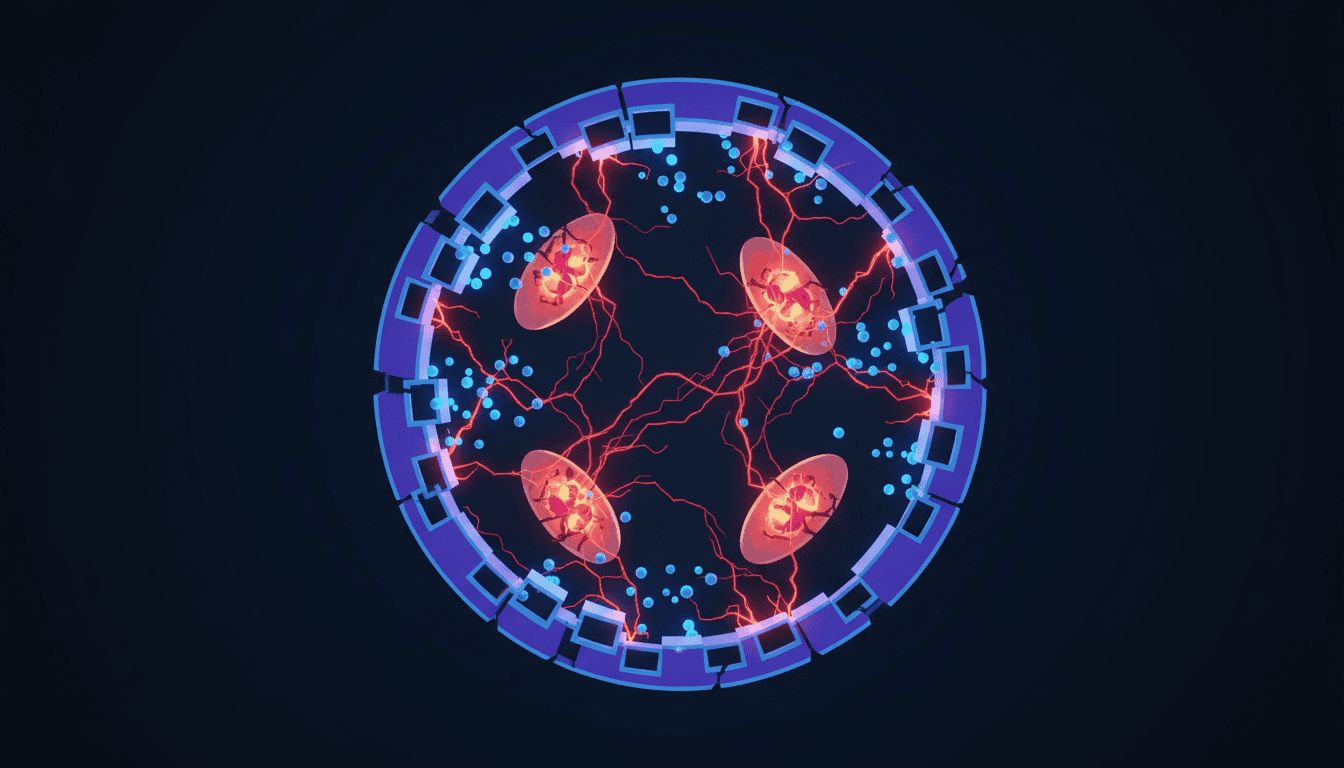
A cancer cell sits in your tissue, minding its business, when a burst of electrical energy arrives. In microseconds, the cell membrane becomes porous. Calcium floods in. Mitochondria lose control. Reactive oxygen species spike catastrophically. The cell doesn’t just die. It implodes from the inside, unable to handle the oxidative chaos. This is irreversible electroporation, or IRE, and it represents one of those rare moments in oncology where the mechanism of cell death is as interesting as the clinical application.
What is irreversible electroporation
Irreversible electroporation is a physical therapy that uses short, high-voltage electrical pulses to create permanent nanometre-scale pores in cell membranes. Unlike reversible electroporation, which punches temporary holes that cells can repair, IRE punches holes so numerous and so damaging that the cell cannot seal them fast enough. The membrane becomes a sieve. The electrical field itself is brief, applied across a few hundred volts per centimetre for just microseconds. This precision matters because it allows doctors to target tumours without cooking surrounding tissue.
The electrical pulses don’t directly kill the cell. They breach the boundary. What happens next is chemistry, and that chemistry involves oxidative stress. Once the membrane integrity fails, cellular homeostasis collapses. Ion gradients flatten. Calcium rushes in from outside the cell where it sits at millimolar concentrations. Intracellular calcium rises to levels the cell was never designed to tolerate. This triggers a cascade: mitochondria overload, energy production fails, and reactive oxygen species accumulate to lethal levels.
What the research shows
Studies tracking cells during and after IRE reveal a clear sequence. The electrical pulse itself arrives and goes in milliseconds. Within seconds, calcium floods the cytoplasm. Mitochondrial membrane potential collapses. The cell cannot produce ATP efficiently. Antioxidant defences, which rely on energy to function, begin to fail. Superoxide and other reactive oxygen species accumulate faster than the cell can neutralise them. By the time antioxidant enzymes like superoxide dismutase and catalase attempt to mount a defence, they’re too outnumbered.
The oxidative stress reaches a threshold where it becomes irreversible. Lipids in the cell membrane undergo peroxidation. Proteins denature. DNA damage accumulates beyond what repair machinery can handle. Cell death pathways activate, but by then the decision is already made. Some cells attempt apoptosis, the orderly suicide programme. Others undergo necrosis, a messier death that can trigger immune responses. The mixture of death pathways appears to be one reason IRE shows promise: it doesn’t rely on a single cell death mechanism that cancers might evolve to resist.
Animal models and early clinical data show that IRE can eliminate solid tumours while preserving surrounding connective tissue and blood vessels. The electrical field is spatially precise in ways that radiation and chemotherapy are not. A surgeon can shape the field to match the tumour’s geometry, sparing critical structures nearby.
Why cells need this to fail
To understand why IRE works, you need to understand why normal cells maintain calcium gradients and antioxidant systems in the first place. Cancer cells do too. Intracellular calcium sits at around 100 nanomolar at rest because calcium is a trigger hormone. At higher concentrations, it activates proteases, nucleases, and enzymes that would tear the cell apart. Evolution locked calcium outside the cell for a reason. The cell uses special pumps and channels to keep calcium low and uses it sparingly, in specific compartments, for signalling.
Antioxidant systems exist because metabolic activity generates reactive oxygen species as a byproduct. Mitochondria leak superoxide. Peroxisomes generate hydrogen peroxide. The cell neutralises these using superoxide dismutase, catalase, and glutathione. This takes energy and reducing power. A healthy cell can sustain this indefinitely. But push the cell past a certain point and the defence system collapses. IRE exploits this. It forces calcium and oxidative stress to simultaneous peaks that the cell cannot survive.
Cancer cells, despite their mutations, still obey these rules. In fact, many cancers are already running their antioxidant systems at higher capacity because they divide faster and generate more reactive oxygen species than normal cells. Some researchers suggest this might make cancers slightly more vulnerable to IRE, though the evidence is preliminary.
What affects irreversible electroporation response
The effectiveness of IRE depends partly on factors within the cell and partly on factors in the tissue. Cell membrane composition affects how easily pores form. Cells with higher lipid saturation can be more resistant. Tumour vasculature matters: poorly perfused regions conduct electricity differently and may respond differently to the pulses. Tissue impedance varies by cell type and composition, which affects how the electrical field distributes in three dimensions.
The antioxidant status of the tumour influences outcome. Cancers with high expression of superoxide dismutase or catalase may mount better initial resistance, though sustained oxidative stress still overwhelms these defences. Temperature plays a role too. Warmer tissue conducts electricity more readily. Some research suggests that timing IRE when tissues are warmer might improve effectiveness, though this remains investigational.
Electrical field strength and pulse duration determine how severe the oxidative spike becomes. Stronger fields and longer cumulative exposure create more severe oxidative stress but also risk damaging surrounding tissue. The sweet spot varies by tissue type and tumour location. Electrode placement, measured in millimetres, alters the distribution of the electrical field and thus which cells experience lethal stress.
What remains unknown
Researchers still don’t fully understand why some tumours respond robustly to IRE while others resist. The molecular predictors of response remain elusive. Can we predict in advance which patients will benefit most? Genomic or proteomic markers might exist, but identifying them requires larger datasets from clinical trials.
The immune system’s role is poorly understood. When IRE kills tumour cells via oxidative stress and necrosis, dying cells release inflammatory signals. Does this activate anti-tumour immunity or does it sometimes promote inflammation that helps remaining cancer cells escape? Early data suggest immunological effects occur, but whether they help or hinder outcome varies. Combining IRE with immunotherapy is being explored but remains experimental.
We don’t know whether cancers can evolve resistance to IRE with repeated exposure. Most cancers can’t easily resist electrical destruction, but in a world of rapidly mutating tumours, this assumption deserves testing. We also lack clarity on optimal electrode design, pulse parameters, and whether modifications to the electrical protocol might lower side effects while maintaining efficacy.
The role of calcium signalling downstream of IRE deserves deeper investigation. Calcium triggers multiple death pathways simultaneously. Can targeting specific calcium dependent pathways after IRE enhance outcome? This remains speculative but mechanistically sound.
What emerges from studying IRE is a reminder that cells are exquisitely tuned machines. Breach their membranes and the carefully maintained gradients and antioxidant systems cannot compensate. The oxidative stress that results is not incidental. It’s the mechanism. Understanding how to trigger irreversible oxidative stress in cancer cells while protecting normal cells remains one of oncology’s central challenges, and IRE offers a different angle on that problem than conventional therapies do.

Matt Elliott is the editor of Redox News Today, an independent publication covering peer-reviewed research on cellular health, redox signalling, and related biomedical science.