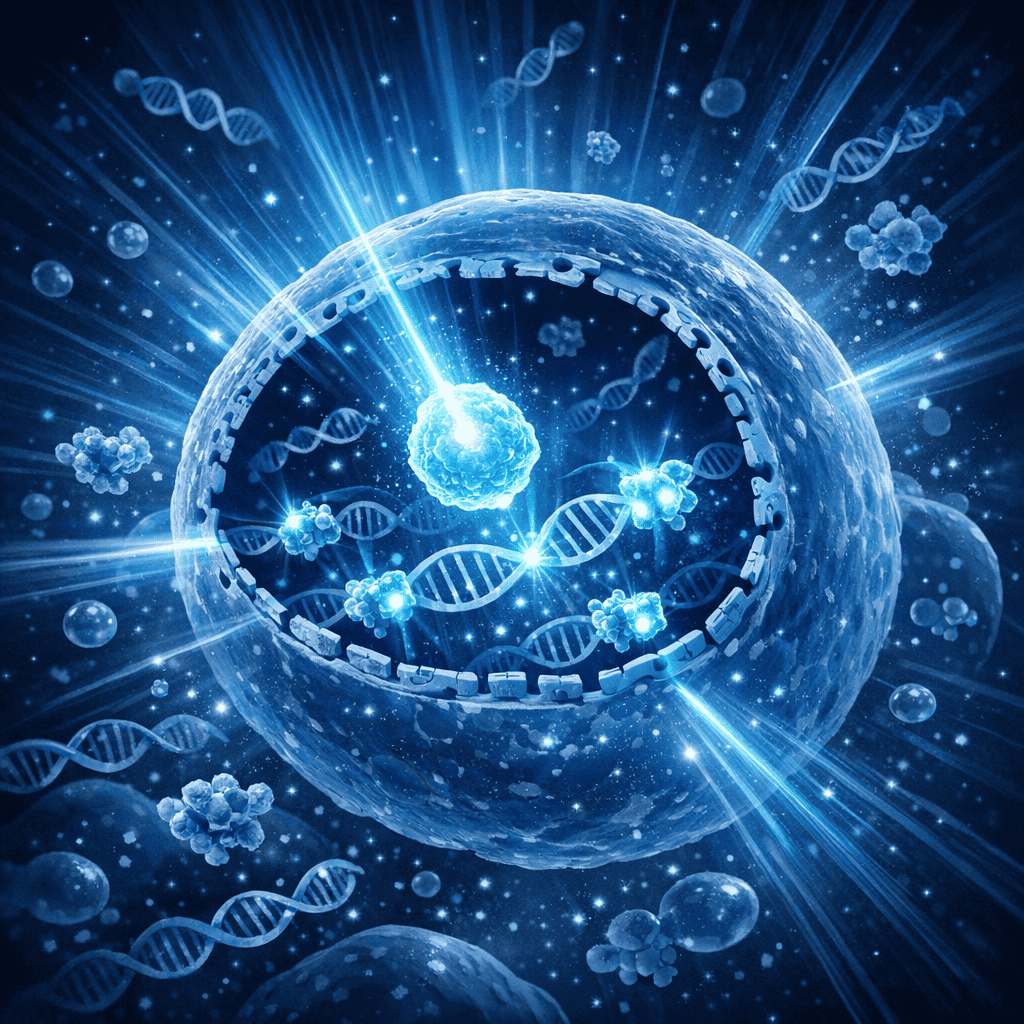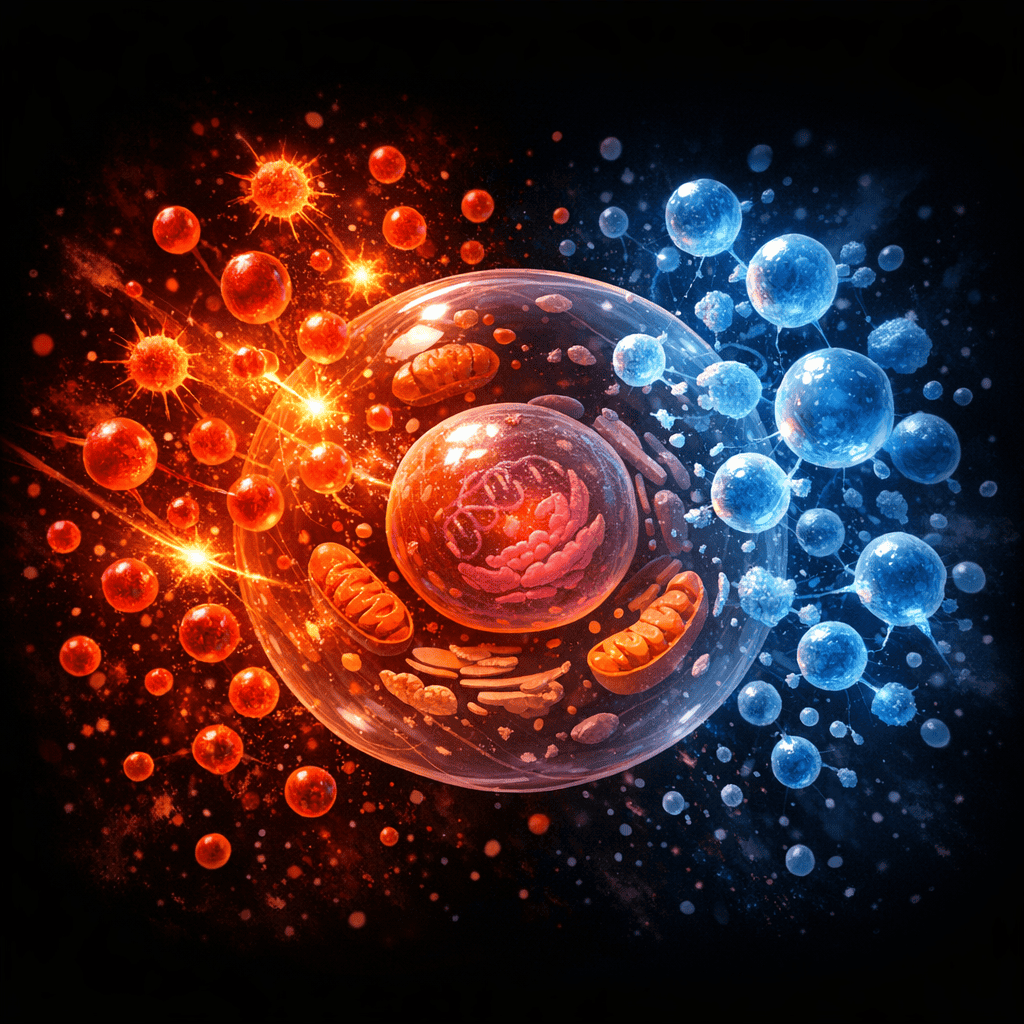

Your cells are under chemical attack right now. Reactive oxygen species, produced during normal metabolism and ramped up by stress, UV exposure, and inflammation, are colliding with your DNA. For decades, scientists assumed they knew the main casualty: guanine, one of DNA’s four bases, gets oxidised to form 8-oxoguanine, a well-studied lesion. But new research reveals the picture is far messier. Oxidative stress damages DNA through pathways involving other bases, strand breaks, and crosslinks that conventional thinking largely overlooked. These findings are reshaping how researchers understand cellular ageing, cancer development, and the body’s repair mechanisms.
What is oxidative stress and DNA damage
Oxidative stress occurs when reactive oxygen species overwhelm a cell’s antioxidant defences. These molecules, particularly hydroxyl radicals and superoxide, are produced during aerobic respiration and immune responses. They’re chemically unstable and react aggressively with whatever they encounter, including DNA.
DNA damage from oxidative stress takes several forms. Base modifications occur when reactive species attach to or alter the nitrogenous bases themselves. Strand breaks happen when the sugar-phosphate backbone snaps, either on one strand or both. Crosslinks form when oxidative damage creates abnormal bonds between DNA strands or between DNA and proteins.
The cell’s repair systems must recognise these lesions and fix them before replication. If repair fails, mutations accumulate. Unrepaired strand breaks can trigger apoptosis, where the cell essentially self-destructs rather than risk becoming cancerous.
What the research shows
Recent investigations using advanced chemical detection methods and genomic sequencing have found that oxidative stress generates a broader spectrum of DNA lesions than previously appreciated. While 8-oxoguanine remains the most abundant oxidative base modification, researchers now recognise significant damage at adenine, cytosine, and thymine as well.
Adenine, for example, can be oxidised to form multiple distinct lesions. Thymine produces thymine glycol and other derivatives when exposed to hydroxyl radicals. Cytosine undergoes its own oxidation pathway. Each of these lesions behaves differently during DNA replication and repair. Some are recognised quickly by base excision repair enzymes. Others escape detection more easily, potentially persisting through cell division.
Particularly striking is the discovery of oxidatively induced strand breaks occurring independently of base damage. These breaks can arise from direct attack on the DNA backbone itself, not just as secondary consequences of base damage removal. Researchers also found that oxidative stress creates tandem lesions, where damage occurs at two adjacent bases simultaneously. These clustered lesions pose special challenges for repair machinery because removing one lesion may expose or complicate the other.
Cell culture experiments and animal models show that the pattern of oxidative DNA damage varies depending on the type of reactive oxygen species involved, the availability of antioxidants, and the cell type being attacked. Cancer cells under metabolic stress accumulate different damage signatures than healthy cells. This suggests the pathways of oxidative damage are not uniform across biological contexts.
Why cells need to manage this
DNA is the cell’s instruction manual. Unrepaired damage corrupts those instructions. From an evolutionary perspective, cells that developed sophisticated surveillance and repair systems survived and reproduced. Those that didn’t accumulated mutations and either died or became cancerous.
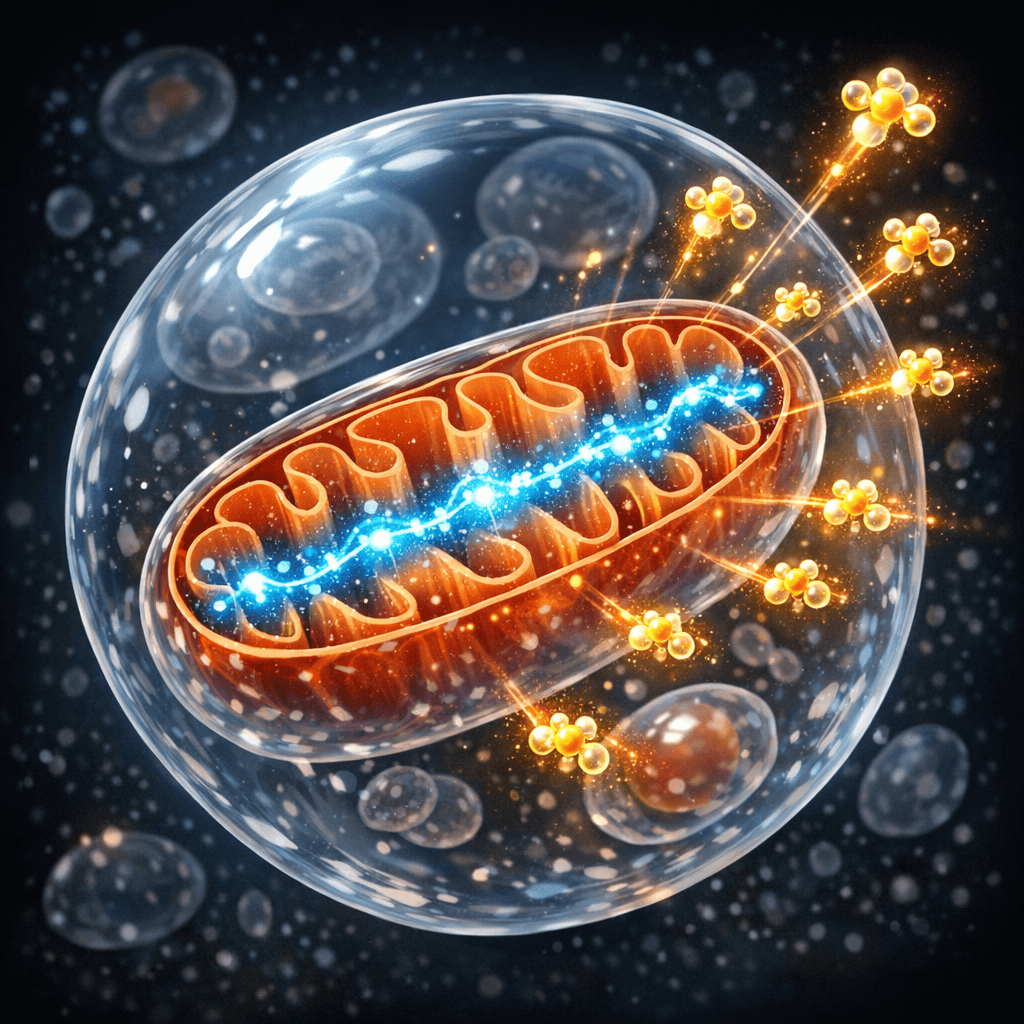
Oxidative damage is particularly dangerous because it happens constantly. Every cell generates reactive oxygen species during energy production. Mitochondria, where most ATP synthesis occurs, are hotspots for radical formation. Environmental stressors like pollution, radiation, and infections amplify this burden.
The cell’s response involves multiple layers. Antioxidant enzymes like superoxide dismutase and catalase neutralise radicals before they reach DNA. If damage occurs anyway, base excision repair, nucleotide excision repair, and mismatch repair systems spring into action. The discovery of diverse oxidative lesions explains why cells maintain multiple, overlapping repair pathways rather than relying on a single mechanism. Different lesions require different solutions.
What affects oxidative DNA damage
Age matters significantly. As organisms age, mitochondrial function declines and antioxidant enzyme activity drops. Simultaneously, oxidative damage accumulates. This creates a feedback loop where increasing DNA damage drives further metabolic dysfunction and more radical production.
Dietary factors influence this heavily. Cells exposed to high-calorie or high-sugar environments experience metabolic stress that increases radical production. Conversely, compounds from plant foods like polyphenols can donate electrons to radicals, reducing their chemical reactivity. Exercise stimulates antioxidant enzyme production, though paradoxically it also temporarily increases radical formation during intense activity.
Environmental exposures shift the balance too. UV radiation creates reactive oxygen species in skin cells. Cigarette smoke contains radicals directly and also impairs antioxidant defences. Air pollution particles trigger inflammatory responses that prompt immune cells to generate reactive oxygen species. Infections cause similar inflammatory bursts.
Genetics plays a quieter but important role. Variations in genes encoding antioxidant enzymes or DNA repair proteins influence how efficiently cells handle oxidative stress. Some people inherit versions of these genes that work particularly well. Others inherit less efficient variants, though lifestyle factors usually matter more than genetics alone.
What remains unknown
The full catalogue of oxidative lesions still isn’t complete. New detection methods keep revealing lesions researchers hadn’t specifically looked for before. The relative abundance and biological significance of different lesions across tissues and cell types remains an active research area.
Scientists also don’t fully understand the repair hierarchy. When a cell detects multiple types of damage simultaneously, how does it prioritise which lesions to fix first? Does the order matter, or is it arbitrary? Can certain lesions interfere with each other’s repair?
The relationship between oxidative damage and ageing is correlative but not fully mechanistic. Cells accumulate oxidative DNA damage as organisms age, and this correlates with disease risk. But causality remains muddled. Does the damage drive ageing, or does ageing simply impair the machinery that normally prevents damage accumulation?
Finally, researchers are still mapping how different cell types respond differently to oxidative stress. Why do some cell types seem more vulnerable than others? How do long-lived, non-dividing cells like neurons manage oxidative damage differently from rapidly dividing cells? Answering these questions requires more research across diverse cell and tissue types.
Understanding oxidative DNA damage pathways points toward deeper questions in cellular biology. How cells perceive and respond to chemical threats shapes their fate and function. The complexity here, far from being a frustrating obstacle, reveals that cells employ sophistication and redundancy by necessity. Evolution hasn’t produced a single solution to oxidative stress because there is no single solution. Instead, cells maintain overlapping, interconnected systems that collectively defend against a constant chemical onslaught. This resilience is precisely what keeps organisms functioning across decades of life.

Matt Elliott is the editor of Redox News Today, an independent publication covering peer-reviewed research on cellular health, redox signalling, and related biomedical science.