
Your cells face constant chemical assault. Free radicals from metabolism, pollution, and UV exposure bombard them daily, threatening to damage proteins and DNA. Most cells have a solution: a master control switch called NRF2 that, when activated, orchestrates the production of dozens of protective antioxidant enzymes. The interesting question is not whether cells can mount this defence, but what actually triggers it. And here’s where it gets curious: some of the most potent activators come from plants you might already be eating.
What is NRF2 signalling
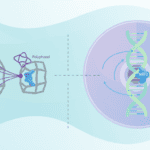
NRF2 sits inside your cells as a protein waiting for a signal. Under normal conditions, another protein called KEAP1 keeps it anchored in the cytoplasm, preventing it from doing anything. When oxidative stress arrives, or when certain chemical compounds interact with KEAP1, this anchor releases. NRF2 then travels into the nucleus, binds to DNA sequences called antioxidant response elements, and switches on genes that produce protective enzymes.
Think of it as a fire alarm system. The alarm doesn’t go off constantly (that would be exhausting). Instead, specific triggers activate it, and once triggered, the system mobilises a coordinated response. Glutathione S-transferases, superoxide dismutase, and catalase all ramp up production. These enzymes neutralise free radicals and repair oxidative damage. The system then quiets down once the threat passes. This isn’t chaos; it’s elegant cellular housekeeping.
What the research shows
Scientists have identified dozens of plant compounds that activate NRF2 through this pathway. Sulforaphane, found in cruciferous vegetables like broccoli, binds directly to KEAP1 and disrupts its hold on NRF2. Curcumin from turmeric works similarly. Green tea catechins, polyphenols from berries, and various isothiocyanates from cabbage and Brussels sprouts all trigger the same response through slightly different mechanisms.
The amino acid cysteine deserves special attention here. Cells use cysteine to manufacture glutathione, one of the most powerful antioxidants your body produces. When cysteine availability increases, glutathione production increases, and this itself signals NRF2 activation. N-acetylcysteine, a modified form of cysteine, has shown particularly strong effects in cell studies. Researchers have observed that cells exposed to these compounds show measurable increases in antioxidant enzyme activity within hours.
What’s remarkable is the dose-response relationship. Small amounts of these compounds trigger modest NRF2 activation. Higher concentrations produce stronger, more sustained responses. But there’s a ceiling effect: beyond a certain point, more compound doesn’t mean more activation. The system has built-in limits, which makes biological sense. Overactive antioxidant defence can become problematic in its own way.
Why cells need this
Evolution preserved NRF2 signalling across virtually all mammals because oxidative stress is relentless. Every time your mitochondria burn fuel to generate energy, some electrons leak out and form free radicals. Exercise increases this leak. Inflammation generates reactive oxygen species as part of immune defence. Even normal ageing increases oxidative stress as mitochondrial function gradually declines.
A cell with a broken NRF2 pathway accumulates damage. Proteins misfold. DNA suffers mutations. Lipids in membranes peroxidise and lose their integrity. Long-term, this contributes to cellular senescence and tissue dysfunction. By maintaining a responsive NRF2 system, cells can adapt to varying levels of stress. Low stress means low activation. High stress means high activation. The system scales to match the threat.
This is particularly relevant during periods of metabolic demand. Exercise, for instance, temporarily increases oxidative stress as muscles work hard. Cells that can rapidly upregulate antioxidant defences recover better. Whether that adaptive response comes from within the body’s own signalling or receives a boost from dietary plant compounds, the principle remains the same: matching protective capacity to oxidative burden.
What affects NRF2 activation
Age matters significantly. Young cells generally maintain responsive NRF2 pathways. As we age, this responsiveness declines. The system doesn’t break; it simply becomes sluggish. KEAP1 accumulates modifications that dull its sensitivity to activators. NRF2 protein production slows. This age-related decline occurs in most tissues, though it varies between individuals.
Genetic variation shapes NRF2 sensitivity too. Polymorphisms in the genes coding for NRF2 and KEAP1 exist across the population. Some people carry variants that make their NRF2 system more responsive to activators. Others carry variants that reduce responsiveness. This helps explain why the same dietary intervention might produce different antioxidant responses in different people.
Environmental factors influence activation rates as well. Chronic low-grade stress from pollution or repeated mild oxidative insults can actually desensitise NRF2 pathways over time. Conversely, regular exposure to mild metabolic challenges (like exercise) maintains pathway responsiveness. Temperature, light exposure, and circadian rhythm disruption all modulate how readily cells activate NRF2 in response to stimuli.
Nutritional status plays a role. Cysteine availability depends partly on dietary protein intake and methionine content. Minerals like zinc and selenium are cofactors for antioxidant enzymes that NRF2 activates. Without sufficient cofactors, turning on the genes means little if the enzymes can’t function properly.
What remains unknown
The field still doesn’t fully understand why some plant compounds preferentially activate NRF2 while others activate different stress response pathways. The molecular details of how specific compounds bind to KEAP1 continue to surprise researchers. Structural variations that seem minor sometimes produce dramatically different activation profiles.
Long-term consequences of sustained NRF2 activation remain incompletely characterised. Most research focuses on acute activation over hours or days. What happens when someone chronically consumes high levels of NRF2 activators for months or years? Does the system adapt and become less responsive? Does sustained activation cause unintended effects? These questions deserve more attention than they currently receive.
Individual variation in response to plant compounds is poorly predicted. Researchers cannot yet reliably predict who will experience strong NRF2 activation from a particular food or supplement, and who will experience modest activation. This matters because understanding this variation might eventually allow personalised recommendations rather than one-size-fits-all advice.
The interaction between NRF2 signalling and other stress response systems remains an active area of investigation. Cells don’t operate with isolated pathways; they coordinate multiple responses simultaneously. How does NRF2 activation influence heat shock response pathways, autophagy, and mitochondrial biogenesis? The full network remains incompletely mapped.
What emerges from cellular biology is a picture of adaptive capacity. Cells face genuine chemical threats constantly. They’ve evolved sophisticated sensing mechanisms and coordinated responses to manage these threats. Plant compounds don’t create antioxidant defences from nothing; they amplify detection systems that already exist. Understanding how these activation pathways work reveals something fundamental about how cells maintain stability in an unstable environment. That’s worth understanding in its own right, separate from any health application.

Matt Elliott is the editor of Redox News Today, an independent publication covering peer-reviewed research on cellular health, redox signalling, and related biomedical science.