
Your cells need iron to survive. It ferries oxygen through your bloodstream, powers your mitochondria, and helps build DNA. Yet the same metal that keeps you alive can turn toxic as you age. Iron accumulates in cells over decades, and when it does, it becomes a weapon against your own biology, triggering a cascade of damage that accelerates ageing at the molecular level.
What is iron accumulation and oxidative damage
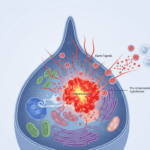
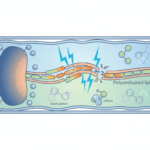
Iron is a transition metal, meaning it readily switches between two states: ferric (Fe3+) and ferrous (Fe2+). That flexibility makes it perfect for biological work, but it also makes it dangerous. When iron sits around in cells without proper containment, it catalyses the production of hydroxyl radicals through the Fenton reaction. These are among the most destructive molecules your cells face. A single hydroxyl radical can shred DNA, mangle proteins, and poke holes in cell membranes faster than your repair crews can respond.
Cells normally lock iron away in protective proteins called ferritin, which acts like a cellular vault. But ferritin has limits. As iron accumulates over years and decades, the storage system becomes overwhelmed. Iron leaks out into the free cellular space where it causes havoc. This uncontrolled iron becomes a major driver of what scientists call ferroptosis, a form of cell death distinct from apoptosis (programmed cell death). Unlike apoptosis, which is orderly and controlled, ferroptosis is chaotic. The cell essentially rusts from the inside out.
What the research shows
Studies examining tissues from older organisms compared to younger ones reveal a consistent pattern: iron accumulates in cells, particularly in long-lived tissues like the brain, heart, and liver. The accumulation correlates with markers of oxidative stress and cellular dysfunction. Researchers have watched this process unfold in cultured cells too. When they experimentally increase iron levels, cells show accelerated signs of ageing: their mitochondria function poorly, their DNA accumulates mutations, and they divide more slowly or not at all.
One particularly revealing line of research involves ferroptosis inhibitors. When scientists treat ageing cells with compounds that block ferroptosis, cellular function temporarily improves. The cells show reduced oxidative stress and restored metabolic activity. This doesn’t reverse ageing, but it demonstrates that iron-driven damage plays an active role in the ageing process, not merely as a passive bystander.
Iron levels also vary predictably across tissues and organs. The brain accumulates iron faster than most tissues, and certain brain regions associated with motor control and cognition show especially high accumulation in older people. This spatial pattern suggests iron accumulation may contribute to age-related decline in specific biological systems.
Why cells need this mechanism
The fact that iron accumulates as we age suggests evolution permitted or even favoured this outcome. That sounds counterintuitive until you consider the bigger picture. Early in life, the metabolic cost of maintaining perfect iron homeostasis outweighs the benefit. Cells invest energy in other priorities: growth, reproduction, repair. As organisms age and reproduction matters less, tight iron regulation becomes less critical from an evolutionary standpoint.
There’s another angle too. Controlled iron-driven oxidative stress might serve as a stress signal that keeps cells responsive. At low levels, oxidative stress triggers adaptive responses that strengthen cellular defences. It’s hormesis: a little damage makes the system more robust. But once iron accumulation crosses a threshold, the system shifts from adaptive to destructive.
What affects iron accumulation
Dietary iron intake matters, though the relationship is more nuanced than simply consuming less iron. Your body has no active mechanism to excrete iron in large quantities. You lose it only through bleeding, sweat, and the shedding of intestinal cells. This means iron accumulates progressively regardless of diet, though people who consume high amounts of iron rich foods will accumulate it faster.
Inflammation accelerates iron accumulation. When tissues are inflamed chronically, immune cells release iron from their stores as a defence strategy against pathogens. But in chronic inflammation, this becomes counterproductive: excess iron leaks into surrounding tissue and drives oxidative damage. This creates a vicious cycle where inflammation causes iron to accumulate, which causes more oxidative stress, which drives more inflammation.
Sex hormones influence iron regulation too. Oestrogen enhances iron transport and accumulation in some tissues while suppressing it in others. This is one reason iron accumulation patterns differ between men and women, and why the timing of menopause affects iron burden.
Exercise and fasting states influence cellular iron signalling through pathways we’re still mapping out. Physical activity appears to improve iron regulation in some contexts, possibly by enhancing mitochondrial quality control. Metabolic state also matters: cells in a fed state handle iron differently than cells in a fasted state.
What remains unknown
We still don’t fully understand why different tissues accumulate iron at different rates. The brain clearly accumulates iron faster than muscle, but we’re missing the complete picture of what drives this tissue specificity. Is it differences in iron transport, differences in antioxidant capacity, or something else entirely?
The relationship between iron accumulation and other hallmarks of ageing is murky. Does iron accumulation cause mitochondrial dysfunction, or do dysfunctional mitochondria cause iron to accumulate? Probably both, but the causal architecture isn’t clear.
We also lack good data on whether reducing iron accumulation in older humans actually improves health or function. Animal studies are suggestive, but human trials are sparse. The challenge is designing an intervention that reduces excess iron without disrupting the essential iron your cells need right now.
Closing thoughts
Iron accumulation represents something important about ageing itself: it’s not the result of a single broken system, but the inevitable consequence of how biology manages trade-offs over decades. A metal essential for life becomes toxic through sheer abundance. Understanding how cells handle this transition, from iron as a tool to iron as a poison, gets at something fundamental about why ageing happens. It’s not random decay. It’s the progressive failure of systems that once worked brilliantly under different evolutionary pressures.

Matt Elliott is the editor of Redox News Today, an independent publication covering peer-reviewed research on cellular health, redox signalling, and related biomedical science.