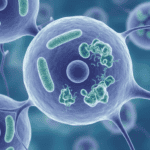

Your brain consumes roughly 20 percent of your body’s oxygen despite making up only 2 percent of your body weight. That hunger for fuel creates a problem: neurons generate enormous amounts of free radicals, the rogue molecules that damage cells. So they’ve evolved an elegant solution, a system of antioxidant defences that runs constantly, like a cellular cleaning crew. But this crew needs energy. When mitochondria, the cell’s power plants, begin to fail and ATP production plummets, something unexpected happens. The very defences that should protect neurons from oxidative stress start to collapse. This isn’t just theoretical. The cascade appears central to understanding why neurons die in Parkinson’s disease, Alzheimer’s disease, and other neurodegenerative conditions.
What is the ATP-antioxidant connection
Cells have evolved multiple layers of antioxidant defence. The most important ones rely on special proteins that patrol the cell, mopping up free radicals before they cause damage. These proteins include superoxide dismutase, catalase, and the glutathione system. They’re constantly active, constantly consuming energy in the form of ATP.
Here’s the thing most people get wrong: antioxidant defences aren’t passive. They require maintenance. Glutathione, one of the cell’s primary antioxidant molecules, needs ATP to be recycled after it neutralises a free radical. Antioxidant enzymes need ATP to maintain their structure and remain functional. When ATP becomes scarce, this entire system begins to starve.
Mitochondria produce ATP through oxidative phosphorylation, a process that ironically generates free radicals as a byproduct. In healthy cells, this creates a manageable equilibrium: mitochondria produce the ATP needed to run defences that neutralise the free radicals mitochondria create. When mitochondrial function deteriorates, this equilibrium shatters. ATP drops. Antioxidant systems falter. Free radical damage accelerates. The situation becomes self-perpetuating, a downward spiral.
What the research shows
Studies examining neuronal cells under conditions of mitochondrial stress reveal a precise temporal sequence. First, ATP levels decline. Within hours, researchers observe reduced activity of antioxidant enzymes. The glutathione recycling system becomes impaired. Meanwhile, free radical concentrations climb. Oxidative damage to proteins and lipids increases measurably.
Work using cultured dopamine neurons, the cells particularly vulnerable in Parkinson’s disease, shows this pattern especially clearly. When researchers experimentally reduce mitochondrial ATP production, antioxidant enzyme activity drops by 30 to 50 percent. The neurons become exquisitely sensitive to oxidative stress they would normally handle without difficulty. Modest amounts of free radicals that healthy neurons neutralise easily now trigger cell death.
Brain tissue samples from people with neurodegenerative diseases show hallmarks of this process. Mitochondrial DNA appears damaged. ATP synthase, the enzyme responsible for ATP production, shows reduced function. Simultaneously, markers of oxidative stress accumulate in these tissues. Antioxidant enzyme activity is diminished. The biochemical fingerprint matches what researchers observe in cell culture experiments.
What’s particularly striking is that this isn’t about a single point of failure. Rather, multiple antioxidant systems fail in concert when ATP becomes limited. It’s not that one defence collapses and others compensate. They all degrade together, leaving neurons progressively more vulnerable.
Why cells need this system
The brain’s metabolism is intense and specialised. Neurons rely almost exclusively on aerobic respiration, burning glucose with oxygen to extract energy. This generates substantial free radical production, particularly in mitochondria where electron transport chains handle oxygen metabolism.
Evolution has solved this problem by coupling energy production directly to antioxidant defence. The system that generates ATP also generates the threat, and the system also provides the resources to manage that threat. Neurons, with their high metabolic rate, maintained particularly robust antioxidant systems. This made sense when mitochondria functioned properly.
But this elegant solution contains a critical vulnerability. If the energy production system fails, the entire cellular defence strategy collapses. Neurons have invested in defences that assume ATP will be abundant. When that assumption breaks down, they lack alternative strategies. Other cell types with lower metabolic demands can survive on reduced ATP. Neurons cannot.
What affects mitochondrial ATP production
Genetic factors clearly play a role. Mutations in genes encoding mitochondrial proteins increase the risk of neurodegenerative disease. These mutations impair ATP production directly, triggering the cascade we’ve described. Some people inherit reduced capacity for mitochondrial function from the start.
Age is another major factor. Mitochondrial function gradually deteriorates across the lifespan. ATP production declines. Mitochondrial DNA accumulates mutations. By the time people reach their 60s and 70s, mitochondrial output in many tissues has dropped substantially. For neurons, this decline means reduced energy for maintaining antioxidant defences at a time when oxidative stress may be increasing from other sources.
Environmental and lifestyle factors influence mitochondrial health measurably. Physical inactivity accelerates mitochondrial decline. High caloric intake, particularly when paired with low physical activity, stresses mitochondrial function. Chronic sleep deprivation impairs mitochondrial repair mechanisms. Exposure to certain toxins damages mitochondrial DNA directly. Conversely, regular aerobic exercise improves mitochondrial function and ATP production capacity.
Metabolic conditions matter too. Diabetes and obesity both associate with reduced mitochondrial efficiency. High blood sugar levels and excessive fat storage impair the machinery of ATP production. Systemic inflammation, increasingly recognised as relevant to neurodegeneration, appears to interfere with mitochondrial function.
What remains unknown
Scientists still lack a clear understanding of exactly which aspects of mitochondrial failure trigger the antioxidant collapse first. Is ATP depletion the primary problem, or do other mitochondrial dysfunction signals matter equally? Some evidence suggests that calcium imbalance within mitochondria may be equally important. This isn’t settled.
The timing of these events remains fuzzy. How quickly does antioxidant system failure follow mitochondrial stress? Does it happen over hours, days, or weeks? Does the sequence differ across neuron types? Neurons in different brain regions have different vulnerabilities, but whether this relates to differences in the ATP-antioxidant coupling isn’t clear.
Researchers are also uncertain about whether interventions that boost mitochondrial ATP production might rescue antioxidant defences in neurodegeneration. Some experimental approaches show promise in cell culture, but translating this to living brains with already-damaged neurons poses substantial challenges. Can you restore function once cells have entered the cascade, or is the damage already irreversible by the time antioxidant systems fail?
Finally, the heterogeneity within neurodegenerative diseases complicates everything. Some people develop Parkinson’s disease with prominent mitochondrial dysfunction. Others develop it with different primary pathology. Understanding which patients have antioxidant collapse driven by ATP depletion, versus other mechanisms, requires better diagnostic tools.
The picture emerging from cellular and molecular research suggests that neuronal survival depends on maintaining a precarious balance. Neurons need continuous energy supply to run the defences protecting them from their own metabolism. When mitochondria fail, this balance collapses rapidly. Understanding exactly how this collapse happens, and whether it’s reversible, remains one of the more pressing questions in cellular neurobiology.

Matt Elliott is the editor of Redox News Today, an independent publication covering peer-reviewed research on cellular health, redox signalling, and related biomedical science.