
Your neurons are burning through energy. An active brain cell might consume its own weight in glucose in a single day, and mitochondria are the power stations doing that work. When those power stations start breaking down, you’d expect to see wreckage. The question researchers are now asking is whether we can spot that wreckage early enough to matter, by reading the fragments of mitochondrial DNA circulating in the blood.
What is mitochondrial DNA damage as a biomarker
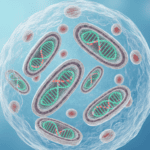
Mitochondria are bacteria that moved into our cells roughly two billion years ago. They kept their own small genome, separate from the DNA in the nucleus. This mitochondrial DNA (mtDNA) is roughly 16,500 base pairs long and encodes proteins essential for making ATP, the cell’s energy currency. It’s also exposed. Unlike nuclear DNA, mtDNA isn’t wrapped up in histones and other protective structures. When oxidative stress damages these genomes, the cell can’t simply repair and forget about it.
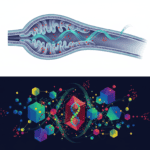
Sometimes cells release mtDNA into the bloodstream. This happens during normal cell turnover, but it happens a lot more when cells are injured or dying. Scientists have learned to measure these fragments circulating in plasma or serum. The amount and type of damage in these fragments tells a story about what’s happening inside cells. A broken mitochondria is like a factory floor with visible equipment damage. If you can measure how much equipment is broken, you might know when the factory is failing.
Biomarkers are biological measurements that reflect disease state. A good biomarker is stable, measurable, and correlates with what’s actually happening in the patient. Mitochondrial DNA fragments meet some of these criteria. They’re stable enough to measure in blood. They appear to change with neurological damage. But whether they’re useful in the clinic depends on whether they change before symptoms show up and whether they tell us something we can’t already see.
What the research shows
Studies comparing people with neurodegenerative diseases to healthy controls have found elevated circulating mtDNA in patients with conditions like Parkinson’s disease and Alzheimer’s disease. The levels tend to be higher in people with more advanced disease, though there’s considerable overlap between groups. This is the basic observation that makes the idea worth pursuing.
More specific findings suggest that certain patterns matter. The degree of mtDNA fragmentation, not just the total amount, appears to correlate with disease severity in some studies. Some research shows that mtDNA with particular damage signatures is associated with specific neurological conditions. Cerebrospinal fluid mtDNA levels also seem to track disease progression better than blood levels in some cases, which makes biological sense since CSF is closer to the brain.
The challenge is reproducibility across different populations and labs. Measurement methods vary. Patient cohorts differ in age, disease duration, and treatment status. One study might find a strong correlation with cognitive decline while another finds none. This doesn’t mean the idea is wrong. It means the signal is real but subtle, and we haven’t yet figured out how to extract it reliably.
Why cells need this damage signal
When a mitochondrion is damaged beyond repair, the cell detects this and sometimes initiates mitophagy, the selective destruction of broken mitochondria. This is quality control. When damage is too widespread to manage, the cell might die. In both cases, mtDNA ends up in the circulation.
From an evolutionary perspective, this makes sense. Damaged mitochondria generate excessive reactive oxygen species, which damage other proteins and DNA. Removing them protects the cell. But it also leaves evidence. Circulating mtDNA is essentially debris from that cleanup process. In a healthy brain with normal neuronal turnover, you’d expect low baseline levels. In a degenerating brain where neurons are dying faster or mitochondria are more damaged, levels should rise.
The body does have mechanisms to clear circulating mtDNA, mostly through immune recognition and degradation. So persistent elevation suggests ongoing damage that outpaces clearance. That’s the biological logic that makes researchers think this might be a useful signal.
What affects mitochondrial DNA biomarkers
Age clearly influences baseline mtDNA levels. Older people show higher circulating mtDNA even without diagnosed neurodegeneration, probably because cellular quality control declines with age. This means any biomarker needs to account for age.
Physical activity appears protective. Regular exercise reduces circulating mtDNA in some studies, likely by improving mitochondrial function overall and reducing cellular stress. Metabolic state matters too. People with poor glucose control or obesity tend to show higher mtDNA levels, suggesting metabolic stress damages mitochondria.
Acute stress also elevates mtDNA temporarily. A hospital visit, infection, or intense exercise can spike levels. This noise makes it harder to spot the signal of progressive neurological disease. Any clinical application would need to control for these confounders.
Genetic factors influence mtDNA mutation rates and repair capacity. Some people’s mitochondria are simply more prone to damage. Disease state obviously matters too. Active inflammation, which appears in many neurodegenerative conditions, correlates with higher mtDNA levels independent of neuronal loss.
What remains unknown
The biggest question is whether mtDNA biomarkers can predict disease onset or progression before clinical symptoms appear. Most research so far is cross-sectional, comparing sick people to healthy people at one point in time. Longitudinal studies following people over years are rarer and often have small sample sizes.
We don’t know which aspects of mtDNA damage matter most. Is it the total amount of circulating mtDNA? The size of fragments? Specific types of mutations? The cellular source? A single measurement captures all these things at once, but extracting the relevant signal is still experimental.
It’s unclear whether elevated mtDNA is cause or consequence. Does mitochondrial damage drive neuronal death, or is it a byproduct of neuronal death from other causes? If it’s purely a consequence, it might be a marker of disease but not a target for intervention. If it’s causative or contributory, it might matter more.
The technical challenge of standardising measurement across labs remains. Different organisations use different isolation methods, sequencing approaches, and normalisation strategies. Until those are standardised, comparing results between studies is difficult.
The concept of mitochondrial DNA biomarkers sits at an interesting intersection. The biology is sound. Damaged mitochondria should release DNA. That DNA should circulate. We can measure it. But translating that into something clinically useful, something that tells a doctor something they don’t already know and can act on, is harder. The research is exploring whether there’s a useful signal hidden in the noise of normal cellular turnover and the inevitable damage that comes with ageing. Whether that exploration pays off depends on work that hasn’t been done yet.

Matt Elliott is the editor of Redox News Today, an independent publication covering peer-reviewed research on cellular health, redox signalling, and related biomedical science.